Dawk l-Imgħarrqin Żewġ Ċagħkiet!

Darba waħda n-nanna kienet irrabjata bil-kbir għal Luca, wara li sabet xi ġugarelli żgħar tal-plastic fil-borma tal-istuffat. Aktarx li kien tefagħhom hemm minn wara daharha, avolja baqa’ jiċħad li għamilhom hu. In-nanna setgħet tobsor li din kienet xi biċċa xogħol minn tiegħu għax kienet taf biżżejjed x’kien isarraf. Bagħtitu ’l hemm, ma jmurx jivvintalha xi ħaġa ġdida, u hu tela’ fuq. Kien mingħalih li n-nannu kien se joqgħod iżiegħel bih, iżda dan ukoll kien mgħaddab għalih. Beda jaħseb ħażin fih meta sab l-istatwetta tal-kristall ta’ fuq l-iskrivanija f’elf biċċa. Kien tassew iddispjaċut, għax ma kontx issib tixtri oħra bħalha minn kullimkien. Luca għalxejn ħabbat mal-bieb tal-kamra. In-nannu ma riedx jiftaħlu. Rabba n-nervi għax in-nanniet ma riduhx ma’ saqajhom.

Luca tela’ jiġri fuq il-bejt għall-kwiet biex igawdi ftit ix-xemx. Dakinhar in-nannu ma kienx se jtajjarlu t-tajra u n-nanna ma kinitx se tilgħab miegħu bil-ballun. Kienu ħallewh waħdu bħala kastig. Qagħad bilqiegħda fejn il-bieb tal-bejt u qagħad jaħseb ftit. Issa kien wasal biex jagħmel il-preċett u ma kienx jixraqlu li jibqa’ daqshekk imqareb u jinkwieta lin-nanniet. Ħaseb li kellhom raġun jirrabjaw għalih, għax żgur li ma kienx ħaqqhom hekk daqskemm kienu jħobbuh. Wiegħed lilu nnifsu li jibda jrabbi l-għaqal mil-lum ’il quddiem.

F’daqqa waħda nstema’ ħoss kbir fis-sema li kiser is-skiet, li kont taqtgħu b’sikkina. Luca ħares ’il fuq u lemaħ ajruplan għaddej. Qam bilwieqfa biex jarah aħjar u resaq lejn iċ-ċint tal-bejt. Wara ftit sema’ lin-nanniet iwerżqu tweżiqa tal-biża’. Bla ma induna Luca kien laqat iż-żewġ ċagħkiet imdaqqsa ta’ fuq iċ-ċint waqt li kien qiegħed iserraħ dahru miegħu, hu u jħares lejn l-ajruplan għaddej fil-bogħod. Iċ-ċagħkiet waqgħu għal isfel u spiċċaw fil-bitħa. Dak il-ħin in-nanniet inzertaw qegħdin isaqqu l-qsari, u l-Bambin ħabbhom li ma ntlaqtux u ma waqgħux mejtin fuq xulxin! Minnufih bdew isejħu lil Luca, għax beżgħu li hu kien waddabhom minn fuq iċ-ċint tal-bejt.

Iżda Luca kien għosfor minn hemm fuq malli ntebaħ x’kien ġara. B’għaġeb kbir in-nanniet sabuh qiegħed taparsi jaqra ktieb fil-kamra tagħhom meta telgħu jfittxuh. Hu għamel tabirruħu li ma kien jaf b’xejn.

Allaħares kellu jgħidilhom il-verità kollha ta’ kif seħħet il-ġrajja, għax kieku ma kinux jemmnuh li m’għamilx hekk apposta! Malajr kien ikollu jrabbih l-għaqal imbagħad, għax min jaf x’kienu jagħmlulu! Ħassu kuntent li tal-inqas kien irnexxielu jiżgiċċa minn dil-biċċa. La ma kellhomx f’min iwaħħlu, weħel magħhom ir-riħ li kien ċaqlaq dawk iż-żewġ ċagħkiet, meta dakinhar lanqas żiffa ma kienet għaddejja. Luca tahom raġun għax hekk qabillu jagħmel.

Żwieġ tal-itwal xbejba

altL-itwal xbejba tal-Brażil kellha tkun l-itwal għarusa tad-dinja wara li n-namrat  tagħha pproponielha ż-żwieġ.
 
Il-mudella Elisany da Cruz Silva, li hi twila sitt piedi u tmien pulzieri, kienet ilha toħroġ mal-għarus tagħha Francinaldo da Silva Carvalho, li hu twil ħames piedi u erba’ pulzieri, għal aktar minn tliet snin.
 
Minkejja d-differenza ta’ pied u erba’ pulzieri bejniethom, Francinaldo ma sab ebda problema biex inkina fuq sieq waħda f’xatt il-baħar u jitlobha ssir martu.
 
Il-koppja kienet ilha sena tgħix flimkien f’dar żgħira, fil-belt Brażiljana ta’ Salinopolis, u qed tispera li ma ddumx ma tisma’ l-ħsejjes ta’ saqajn żgħar iduru fid-dar.
 
altElisany tant tixtieq li jkollha tarbija, li qalet li jekk ma tinqabadx tqila malajr, lesta tadotta. Dan għalkemm għad għandha biss 18-il sena.
 
Iżda l-biża’ tagħha hu li jkunx jista’ jkollha tfal minħabba l-iġgantiżmu li beda jifforma fiha, wara li kibrilha tumur fil-glandola pitwitarja. Madankollu, il-koppja, xorta waħda qed tfittex li jkollha ħajja twila b’relazzjoni ta’ mħabba li nsibu fl-istejjer tas-sħarijiet.
 
Għall-bidu, il-ġenituri ta’ Elisany ma ridux jemmnu li riedet tiżżewweġ. Issa qed ilestu bis-sħiħ għal din il-festa ta’ binthom.
 

Ixibħuħ ma’ xadina alla

Charles B. Spiteri

BDL Books - Laqtiet

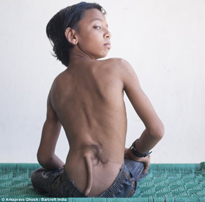
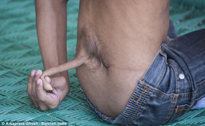
Adolexxent Indjan qed jitqies bħala alla u jkun adurat minħabba li għandu denb ta’ seba’ pulzieri. Arshid Ali Khan, ta’ 13-il sena, sar meqjus bħala simbolu divin fl-istat tal-Punjab.

In-nies tal-lokal jagħrfuh bħala r-riinkarnazzjoni tal-alla xadina Ħindu, Ħanuman, u jirreferu għalih bħala Balaji. Madankollu, minħabba denbu, Arshid qed ikollu juża siġġu tar-roti u qed jaħsibha li jkollu d-denb li għandu, imneħħi.

Hu qal: “Dan id-denb tahuli Alla. Qed inkun adurat għax nitlob lil alla u x-xewqat tan-nies qed iseħħu. Bih, la nħossni superjuri u lanqas inferjuri.”

Mindu miet missieru, meta kellu biss erba’ snin, Arshid jgħix ma’ nannuh, Iqbal Qureshi, u żewġ zijiet irġiel.  Ommu reġgħet iżżewġet. Id-dar fejn jgħix Arshid inbidlet f’tempju, fejn in-nies devoti jirrikorru għandu u biex jirċievu l-barka u jmissulu ‘denbu’.

BDL Books - Laqtiet

Uħud minn dawn kienu koppji bla tfal. Iżuruh, iberikhom u wara jsibu li nqabdu tqal. Arshid jemmen li hi x’inhi r-reliġjon li jħaddan kull individwu, hemm triq waħda li twassal għall-ispiritiżmu divin.

Madankollu jsibha kemxejn diffiċli biex ilaħħaq fil-ħin tiegħu mad-devoti li jmorru għandu, mal-istudju edukattiv tiegħu u xi ftit ħin ta’ logħob ma’ ħbiebu.

Kull nhar ta’ Ħadd biss, ikollu bejn 20 sa 30 ruħ li jżuruh id-dar. Barra minn hekk Arshid jemmen li bid-denb jew mingħajru, in-nies xorta tibqa’ żżuru għall-ħtiġiet tagħhom, għax issa saru jemmnu fih.

Clara Barton (1821–1912)

Charles B. Spiteri

BDL Books - Nisa Magħrufa

Clara Barton kienet tifla kwieta, iżda bħala adolexxenti, dejjem stqarret li riedet tgħin lis-suldati feruti u lill-vittmi ta’ diżastri. Ipperswadiet ukoll lill-Istati Uniti tingħaqad mas-Salib l-Aħmar Internazzjonali.

Clara twieldet f’Massachusetts u kienet dejjem ħsiebha f’nies inqas tat-tajjeb minnha. Hi fetħet waħda mill-ewwel skejjel bla ħlas għall-pubbliku fi New Jersey, iżda rriżenjat meta ntbagħat raġel biex imexxi fuqha.

Fl-1861, faqqgħet il-Gwerra Ċivili Amerikana. Clara marret fil-kampijiet tal-battalja biex tara kif setgħet tgħin. Ġabret numru ta’ bgħula, li għabbiethom bl-ikel, ilma u provista mediċinali li setgħet tqassam lis-suldati. Ħafna drabi rat il-mewt hi stess.

Fl-1869 marret fl-Ewropa biex tistrieħ, iżda minflok ivvoluntarjat fl-għajnuna li kien hemm bżonn fil-gwerra bejn Franza u l-Prussja.

Organizzat l-għajnuna li kellha tagħti l-Assoċjazzjoni tas-Salib l-Aħmar, li kienet għadha kemm stabbilixxiet ruħha u nsistiet li l-Istati Uniti tingħaqad magħha. Meta fl-1874 irritornat f’pajjiżha għamlet kampanja iebsa u twila biex introduċiet is-Salib l-Aħmar Amerikan. Hi kienet tal-fehma li l-għajnuna ma kellhiex tingħata biss lil suldati feruti, iżda lill-vittmi tal-għargħar, tal-ġuħ u diżastri oħra.

Ix-xewqat tagħha rnexxew u fl-1881 saret l-ewwel President tas-Salib l-Aħmar Amerikan.

Is-Salib l-Aħmar Internazzjonali tnieda minn Henri Dunant fl-1864. Fl-1859 fil-battalja bejn il-Franċiżi u l-Awstrijaċi Dunant baqa’ skantat bl-għajnuna fqira li ngħatat biex ikunu megħjuna s-suldati feruti. Is-Salib l-Aħmar jieħu ħsieb il-ħtiġiet tas-suldati kollha indipendentement min-nazzjonalità jew twemmin tagħhom.

The Italian

It was just three years ago since her husband, God rest his soul, had left to the other world. He had come into her life to steal her heart and disturb her soul. He was the only man in the world that she had wanted as her companion for life. They had spent thirty wonderful years together. Many times now, sitting in her favourite armchair sipping a hot cup of coffee, she remembered the places they had visited together, the joys and the heartache of everyday life, the charming words he said to amuse her, so many things. How she missed him. 

Ella, her only daughter who had married and was living abroad for the last eighteen years, encouraged her when she phoned to go on outings which the Local Council organised frequently for elderly persons. “We both loved Dad, but we cannot bring him back. You should think of yourself and move on now Mum,” she often told her. She did go for a couple of outings, not because she felt like doing so, but because she did not like to displease her daughter. 

Her new life began when Gianfranco walked into her life. He was born in the Tuscan region of Italy. Life was so much simpler and less hectic over there. “Don’t be sad”, he would tell her, “I want to see you happy and enjoy life”. His English, with a marked Italian accent, uplifted her spirits and brought a smile to her face. 

The first night he stayed at her house in London, she cooked him a hearty English meal of roast beef and Yorkshire pudding. He enjoyed it immensely. He then made her sit down, brought her a glass of wine, sat down beside her and both talked for a long time of this, that and the other. 

One lovely summer evening they went to the park together, sat down on a wooden bench and looked at the stars shining in the sky. He told her the names of the stars, how far away they were from our world and other things he had learned at the University in Pisa. She was mesmerised as she had scarce knowledge of the immense universe that surrounds us. On the way back home, he held her arm in his and they walked slowly together to her house, engrossed in each other’s company. 

He felt such a mystery to her, so different, yet every time she looked into his eyes, he filled her with hope. They chatted and got to know each other a little better every day. He told her about his native Tuscany – the lovely little churches, the paintings and sculptures, the sprawling countryside, the food and wine and so many other things. 

After a few days of getting to know him, she observed his easy going way of looking at life. She thought that the hustle and bustle of London life would tire him and he would surely return back to the hills and valleys of his Tuscany. He was never in a hurry; he did a bit now, a bit later and has some fun and rest in between. 

“Why don’t you sit down and enjoy your garden?” he would ask. “Why don’t you stop and look at the flowers?” He charmed her with his dark skin and ebony eyes. “Yes, I should. I did not have so much time before” she replied nostalgically. “I had a job, a husband and a daughter to look after. I’ve spent my life rushing around. Now I’m retired I should relax. You are right dear”. 

She had grown to love him immensely. She had never experienced this kind of love before. There was something special that thrust them together. While previously her time passed slowly by, now it flew so quickly it left her breathless. She enjoyed her time with him so much; she wished he’d never leave her.  

Her daughter often phoned her from abroad to see how she was getting along. Her mum seemed enthusiastic, she was enjoying herself. Her daughter was very pleased that she and Gianfranco had hit it off together, that they like each other and that he was settled with her.

On her part, once he was now to live with her, she showed him the London where she was born and grew up – the changing of the guard at Buckingham Palace; the evening band concerts at St. James Park; the flow of the Thames from the railings of Tower Bridge; lounging on deckchairs in Hyde Park watching the squirrels hurry to and fro; the beautiful facades of the theatres along The Strand; the multi-coloured river boats on the canals of Little Venice.

She had met him three weeks ago at the airport. He came over to attend a year’s course at the London School of Economics. He had lived in Italy with his parents since he was just two years old. Her daughter had asked her to look after him during his stay in London. When they saw each other and embraced at Heathrow, his first words were like balm to her “It’s so nice to see you Gran, you look wonderful!” 

Skerzi fid-dinja annimaleska

altSkerz, nofs kelb u nofs qażquż, li twieldet b’numru ta’ fatturi ħżiena għal saħħitha, sabet kenn f’dar f’Alabama.
 
Sidtha, Kim Dillenbeck adottat lil din l-annimal li ngħatat l-isem ta’ Pig waqt vjaġġ li għamlet f’Atlanta biex iżżur lil oħtha.
 
Tirrakkonta li fi żmien il-Milied, marret ma’ oħtha għand xi ħbieb biex jieħdu kolazzjon u xi ħadd semma l-istorja ta’ Pig. Ilkoll marru fid-dar ta’ din l-persuna biex jarawha. 
 
altAppena ratha, u ntqalilha bil-problemi ta’ saħħa li kellha, Kim iddeċidiet li trabbiha sakemm tmut. Kulħadd ħaseb li ma kellhiex ħajja twila minħabba li l-organi tagħha kienu b’mod li setgħet tifga.
 
Pig, li twieldet fis-selvaġġ, ittieħdet ma’ ħutha, minn mara li semgħethom jinbħu. Meta ħadet lil Pig għand veterinarju, qalilha li għandha kustilji neqsin, ġogi mdawrin ħażin u x-xewka ta’ daharha mhix kif għandu jkun.
 
Minkejja l-qies tagħha, li hu ta’ nofs kelb, Pig, li għandha tmien xhur, tista’ tikber aktar. Sidtha l-ġdida tinsab f’dilemma: bejn tixtieqha tikber ftit ieħor, iżda fl-istess ħin tibża’ li jekk tikber, tasal biex tmut.
 

Adam, Eve and the Apple

It is an accepted fact to all Christian faiths that Adam and Eve were the first man and woman created by God. According to Luke “God created Adam from dust, and then breathed life into him”. Then, in the first-ever ‘surgery’, God removed a rib from Adam’s side and from it he created Eve. When God pronounced judgements for their disobedience, he told the serpent that he would crawl on his belly and eat dust; he told Eve that she and all women after her would have pain in childbirth; and he told Adam that he and all his descendants would experience painful toil on earth until death. When bad Cain murdered good Abel, our fore-parents had another son, Seth, from whom, it must be, we are descended.  

And what about the apple? Was it really an apple? There are different interpretations of this incident that happened at the Garden of Eden. Some say that the word ‘apple’ is symbolic; it means God forbade our fore-parents to do something, but not exactly not to eat an apple. Others say that it was the ‘Tree of the Knowledge of Good and Evil’ that was forbidden, and others hold that it was truly an apple fruit. I sometimes wonder what today’s picture would be if our fore-parents had not disobeyed God’s wishes. The idyllic life of no labour, no disease and no death, would have meant that today there is no need for work, for hospitals, for cemeteries, for doctors and for undertakers. It would also mean that men and women, thousands of years old, would be roaming the streets of town! I don’t know what to think really. 

But all that was in the very remote past. Today, as it happened, Adam and Eve were drifting smoothly on cloud 9. They had, so many thousands of years ago, by hook or by crook, made it to the Heavenly Gates and into Paradise, but only just. As they looked down on the world below them, they saw 7 billion people on planet Earth spread out over the five continents. All these people were family members but so different in appearance, language, religion, ideologies, culture, skin colour and way of life.  

They noticed how things have progressed since their early and primitive time – skyscrapers in every city, nuclear energy, medical advances, sending rockets to the stars, computers, fashion, entertainment and so many other things besides. But they also saw that the people were in a race to dominate each other and were often intent on hating and hurting each other – wars, killings, burglaries, injustices, accidents and other catastrophes. These self-inflicting sufferings have been repeating themselves so many times over and over again. They never learn. 

Eve elbowed Adam as she pointed downwards. “But there are some very good men and women around. Look at that humble man from Argentina preaching love, peace and brotherhood to everybody; and several others who, unknown and behind the scenes, work tirelessly to help those in need of assistance – the poor; the sick; the elderly, children, those living in war-shattered zones. These are only a few, I know, but they are so good people who need and deserve our support.”  “Yes. It’s a pity that the good ones are only a few”, replied Adam, “What can they do against all those others, intent on making their own world such a bad place to live in?”

Suddenly Adam, still handsome despite the years, turned towards Eve and said to her, “Why did you do it Eve?”  “Do what?” she replied taken aback by his sudden question. “Give me the apple, in the Garden of Eden, remember?” he retorted. “Oh, that”, exclaimed his wife. “It was the ugly serpent. He tempted me and I believed him”. “You know something Eve?” said again Adam, “I didn’t even like it. I have not eaten another one during all these years!” 

“And that damned apple has brought us and our descendants so many troubles and tribulations” said Adam. “Yes, Yes”, replied Eve, “As a result of our folly we and all the members of our family, had to toil for our living, we contacted all kinds of diseases and we had to die”. “Imagine if we had not eaten that apple, what a wonderful life we would have had Eve” said the first man on earth. 

But there is one thing that puzzles me” retorted Adam again. “What?” asked Eve. “Its’ that today, so many thousands of years after we had eaten that apple, the learned doctors on earth tell their patients that ‘an apple a day keeps the doctor away!”  

Elizabeth Fry (1780–1845)

Charles B. Spiteri

BDL Books - Nisa Magħrufa

Elizabeth Fry kienet mara mhux tas-soltu. Ħafna nies kienu jaraw kif jevitaw il-ħabs iżda hi daħlet fih biex tara b’għajnejha l-ħajja li kienu qed iqattgħu hemm in-nisa u t-tfal. Tant indiehxet b’li rat li qatgħetha tagħmel xi ħaġa biex tbiddel il-qagħda.

Elizabeth twieldet f’Norfolk u l-membri tal-familja tagħha kienu Quakers. Kien fl-1813 li semgħet dwar il-kundizzjonijiet fil-ħabs ta’ Newgate, u ma’ grupp ieħor ta’ Quakers marret iżżur l-agħar ħabs fl-Ingilterra.

Nisa u tfal inġemgħu madwar Elizabeth. Hi osservat kif kienu jilagħbu, jixorbu u jisirqu lil xulxin il-priġunieri, għax ma kellhomx ħaġa oħra x’jagħmlu. Elizabeth marret kemm-il darba b’mod regulari żżur il-ħabs ta’ Newgate.

F’ċella vojta, introduċiet skola għat-tfal u lin-nisa ħaditilhom xogħol ta’ ħjata, li għalih kienet tħallashom. Aktar tard, Elizabeth introduċiet għaqda ta’ għajnuna lill-ħabsin u ppruvat tipperswadi lill-Parlament jibdel il-ħabsijiet. L-awtoritajiet semgħu minnha. Emmnu li l-metodi tagħha ħadmu. U l-ħabsijiet fl-Ewropa, kif ukoll fl-Ingilterra, bdew jinbidlu għall-aħjar.

Il-Quakers huma grupp Kristjan li jemnu immens fil-paċi u fl-għajnuna lil nies oħra. Anki meta kienet ċkejkna, Elizabeth kienet iżżur nies morda u tgħallem kemm tista’ lit-tfal foqra.

Fl-1780, is-sena li fiha twieldet Elizabeth, fil-Ħabs ta’ Newgate kien hemm rewwixta. L-għamara u l-bini ngħataw in-nar u 300 priġunier inħelsu.

The Librarian

Helen and Margaret were sisters but they were as different as chalk and cheese. Helen was outgoing, extrovert, friendly, confident, talkative, noisy, exuberant and always laughing. She was also beautiful with a fine delicate complexion, high cheekbones and long auburn hair that seemed to be always shining. Margaret, on the other hand, was introvert, timid, lonely, more of a listener than a talker and unsure of her place in the world. She was also rather common-looking with a pallid face, slightly protruding nose and mousy black hair which seemed always needing to be combed. 

And yet they were as inseparable as twins – always together, looking after each other, going out together. They had no secrets between them so much so that oftentimes they recounted their dreams and expectations of life. Very often they were in each other’s room, swooning over records of their favourite singers. Helen liked modern singers and bands like One Direction and Rihanna while Margaret favoured the old singers like Elvis Presley, Dean Martin and Johnny Ray. 

Margaret ran single-handedly the town’s library with dedication and fervour that put a smile on her face every day. She was passionate about books, reading everything that came her way, whether they were ‘classics’ or ‘comics’. She knew all there was to know about books and their authors. Clients told her that she was ‘a walking reference book’. She had purposely sought work at the library because she genuinely loved books. She felt calm and at ease in the quite atmosphere of the library surrounded by shelves and shelves of all kinds of books. 

In the evening, when her sister was out with her boyfriend, Margaret liked lounging in the small sitting room engrossed in a new publication while her father smoked his pipe or read the newspaper. The picture-frame on the mantelpiece showed a photo of her mother who had died five years ago. It was, in fact, her Dad who saw to their up-bringing, watching them emerge from teens to young women. And Margaret was Dad’s favourite. “You know Marge”, he told her as he put his newspaper down for a moment, “You may think that beautiful people have an advantage over the likes of you and me. But if Helen’s got beauty, you have brains. You’ll always have a good brain to rely on while beauty fades with age. Just remember that when you feel sometimes envious”. “I’m not envious Dad, but sometimes wish that life is more generous with me, that’s all” replied his daughter. “That’s why you must use the talents you’ve been given Marge, to get what you want from life” retorted her Dad. He patted her affectionately on the knee but he could see that she had more than her fair share of lemons and therefore could understand her attitude to life.

When Helen took up with Ben, she encouraged her sister to go out on dates with friends of her boyfriend. She did go out with a couple of boys but there was no follow-up interest and, therefore, she returned back to her old routine of library work and home by her father. One evening, while smoking his pipe, her Dad noticed that his young daughter was staring at the ceiling. “A penny for your thoughts Marge”, he said. “They aren’t worth a penny Dad”, she replied. “A half-penny then”, he again responded. “They aren’t even worth that much either”, said Margaret in a subdued tone, fed up and feeling miserable. “Some aspects of life are sad dear, but there is nothing we can do to change them”, said her father in an effort to cheer her up. 

One day at the library, she noticed a man looking for a book in the ‘classics’ section. It looked as if he had not found what he was looking for. She left her desk, went over to him and asked if he needed any help. “I’m looking for ‘The Black Arrow’ by Robert Louis Stevenson, but I can’t find it under the ‘S’ shelf”, he replied. She went to check the movement of books loaned out to clients in her computer and found that the book had been loaned out two weeks ago. “It’s out Mr, but it should probably be returned by next week, shall I hold it for you?” she asked. 

When he returned the following week, she gave him the book but they also started chatting about the ‘classics’, what books they liked, their favourite authors and other subjects. His name was Steve and he worked as an accountant. They found that they had a lot in common, especially books. He came frequently to the library and their conversations about books and about life in general continued. Margaret found that she liked him and looked forward to see him. He was decent, intelligent, book lover and, of course, good-looking men don’t come along very often. This could be her spark of happiness. She also hoped that he liked her, despite that she was not beautiful like her sister and that eventually he would invite her for coffee or something. With such small things does love begin, she thought. 

Their unscheduled meetings and literature gossip continued for some weeks. She still harboured hope of a romantic ending with Steve. One day, after discussing the merits of an author and his novels, he asked her – “Are you free next Saturday Margret?” She was stunned. Her heart beat faster than usual; the words she had hoped to hear had finally been said. This was the beginning of something special. “Yes, yes, I am”, she replied. “In that case, I want to invite you to my house for tea, would you accept Marge?” her new-found friend asked. ‘He is serious in his intentions’, she thought and immediately accepted his surprise invitation. She waited, in anticipation for his next words. Then he continued “I want you to meet my wife! She’d be pleased to meet you”.  

Il-Poeżija Rebbieħa

Charmaine Tanti

Matul is-sajf, il-mamà kienet taħdem bin-nofstanhari. Kien ikollha aktar ħin liberu mix-xitwa, li fih setgħet tnaddaf id-dar, taħsel il-ħwejjeġ u tistrieħ xi ftit. Kif tasal id-dar mix-xogħol, kienet tiekol xi ħaġa żgħira tal-ikel u l-frott, u wara tintefa’ fuq is-sodda għax is-sħana kienet tħalliha bla saħħa. Is-skiet ta’ madwarha kien idejjaqha u għalhekk kienet tiftaħ ir-radju ta’ fuq il-komodina biex ikollha kumpanija.

Ta’ kuljum, fost il-ġimgħa kien ikun hemm programm fuq wieħed mill-istazzjonijiet tar-radju, li dejjem kien jibda għall-ħabta tal-erbgħa ta’ wara nofsinhar. Il-programm kien jismu “Lenti Fuq Il-Malti” u kien iddedikat kollu kemm hu lil-lingwa u lill-poeżija Maltija.

 Il-mamà kien l-għors tagħha tisimgħu għax kien iġibilha bosta memorji sbieħ tal-lezzjonijiet tal-Malti ta’ tfulitha, li kienet tattendi għalihom b’tant ħerqa l-iskola. Anki għall-eżamijiet tal-Malti dejjem stinkat u studjat għalihom bil-ħeġġa u ta’ kull sena kienet tiġi l-ewwel fihom minn fost xi disgħin studenta. Elise kienet fula maqsuma magħha minħabba li fil-Malti kienet tibbrilla wkoll u tkaxkar il-premjijiet l-iskola. Dnub li fil-ħin tal-programm ma kinitx tkun hemm, iżda fil-vaganzi hi u ħutha ma tantx kienu jfittxu l-kenn tad-dar.

Darba minnhom, il-preżentatur għamel kompetizzjoni ferm interessanti għas-semmiegħa tiegħu. Kienet tikkonsisti f’kitba ta’ poeżija qasira u min kien imħajjar, kellu biss ġimgħa ċans biex jieħu sehem fiha. Il-mamà ħatfet l-opportunità u daħlet għall-kompetizzjoni b’ruħha u b’ġisimha. Riedet tittanta xortiha u tikteb poeżija ta’ ftit versi għall-ewwel darba f’ħajjitha dwar uliedha li għaliha kienu kollox. Damet taħseb x’versi se tikteb, u n-nannu Ġużi għamlilha kuraġġ ta’ sur biex tipparteċipa. Meta l-versi kienu ċari f’moħħha, qagħdet bilqiegħda u ħarbxithom fuq karta:

                                                       Uliedi   

                                                     Uliedi tassew ħelwin.

                                                     Jinkwetawni mhux ħażin

                                                     Għax ftit jew wisq imqarbin.

                                                     Iżda huma tfal tajbin

                                                     Kif iridhom il-Bambin,

                                                     Għax iħobbu lil xulxin.

Wara li lestiet din il-biċċa kitba li semmietha “Uliedi”, il-mamà marret tiġri turiha lin-nannu Ġużi, li tgħidx kemm ferħilha tal-isforz li għamlet għax tassew kellha xogħol tajjeb. Kienet poeżija sempliċi għall-aħħar, li kienet tikxef kemm il-mamà kienet kburija b’uliedha. In-nanna Marija u l-papà wkoll ħadu gost jaqraw din il-poeżija hekk ħelwa. Imbagħad il-mamà ttajpjatha pulita u bagħtitha bid-dettalji tagħha mehmużin magħha lill-programm tar-radju.

L-eċċitament tagħha beda jiżdied dejjem iżjed ma’ kull jum li jgħaddi, u meta waslet il-ġurnata tant mistennija, il-mamà kellha seba’ mitt sena sakemm jibda l-programm. Qalbha bdiet tħabbat sitta sitta xħin il-preżentatur kien se jħabbar ir-rebbieħ tal-kompetizzjoni, u waħħlet widintha mar-radju biex tisma’ sew. Kif intqal l-isem tar-rebbieħ, il-mamà ma riditx temmen lil widnejha u kienet għoddha mietet bil-ferħ. Minnufih, ċemplulha l-papà u n-nanniet biex jgħidulha prosit għax kienu għadhom kemm semgħu isimha jissemma’ bħala r-rebbieħa tal-kompetizzjoni tal-aqwa poeżija. Dakinhar il-papà kompla jikkonferma kemm il-mamà kienet tinqala’ għal kollox, u bis-saħħa tal-kapaċita` tagħha, Elise, Luca u Peter gawdew il-premju li rebħet. Il-vawċer ta’ tmenin ewro f’xiri ta’ kotba, li rċeviet xi ħmistax wara bil-posta mingħand l-isponsor tal-kompetizzjoni, nefqitu kollu għalihom biex ikollhom ħafna kotba x’jaqraw u b’hekk tgħinhom jitjiebu iżjed fil-Malti.

                                                               TMIEM