L-irbit tal-mażżri u x-xħit fil-baħar

altminn Charles B. Spiteri

Waqt prietka kontra l-korruzzjoni, il-Papa Franġisku kien ferm iebes, u kkowta passaġġ mill-Evanġelu skont San Luqa, fejn Ġesù qal lil xi midinba, li ħaqqhom jintrabtu ma’ mażżra u jinxteħtu fil-baħar.

Din tqieset bħala omelija mill-aktar qawwijin lill-Insara, minn meta f’Marzu li għadda, kien elett il-Papa Arġentinjan. Hu enfasizza li min qed jgħaddi ħajja ‘doppja’ billi jagħti l-flus lill-Knisja waqt li jisraq lill-Istat, ikun qed jidneb u ħaqqu jkun ikkastigat.

Waqt li ma aċċennax direttament għall-korruzzjoni fi ħdan il-Knisja Kattolika, ir-rimarki tiegħu saru ftit jiem wara li faqqa’ skandlu f’ordni reliġjuża antika, marbuta mal-Vatikan. Madankollu l-Papa wera li hu determinat jieqaf lill-korruzzjoni u jeqred irregolaritajiet finanzjarji li sa tappnu lill-Bank tal-Vatikan.

Hu ddeskriva wkoll lin-nies imdaħħlin fil-korruzzjoni bħala ‘oqbra mbajda’ u qal li “minnbarra jidhru sbieħ, iżda minnġewwa huma gozz għadam mejjet u jinten.

Hu magħruf li l-Papa Ġiżwita kapaċi jkun ġentili f’diversi suġġetti sensittivi, bħall-omosesswalità u d-divorzju, iżda sa minnmeta ġie maħtur f’Marzu li għadda, il-prietki u l-omeliji tiegħu dejjem inkludew kliem iebes u referenzi għall-ħidma tax-Xitan.

Papa Franġisku għamel dawn ir-rimarki waqt il-quddiesa ta’ filgħodu f’Casa Santa Marta, id-dar għall-mistednin fil-Vatikan, fejn għażel li jgħix wara li rrifjuta l-appartamenti aktar kbar fin-naħa l-oħra tal-Bażilika ta’ San Pietru.

Kienet it-tieni darba fi ftit jiem, fejn hu attakka l-ħażen tal-korruzjoni. L-ewwel darba mar kontra l-Kattoliċi li stagħnew mill-korruzzjoni politika biex saħansitra jixtru rigali lil uliedhom u jibagħtuhom fi skejjel li jiswew ħafna flejjes.

L-aktar skandlu riċenti li laqat lill-Knisja Kattolika kien żvelat ħmistax ilu, fejn Dun Renato Salvatore ta’ 58 sena, u li jmexxi ordni reliġjuża ta’ 440 sena, kien arrestat fuq suspett li ħoloq xnigħat foloz kontra żewġ saċerdoti li kienu kontra n-nominazzjoni tiegħu biex jerġa’ jingħażel bħala s-Superjur Ġenerali tal-Camilljani, jew aħjar l-Ordni tal-Ministri tal-Morda.

Dun Salvatore kien magħżul għall-kariga mill-Papa Benedittu XVI biex jipparteċipa fis-sinodu ġenerali tal-isqfijiet f’Ottubru tas-sena l-oħra; ħames xhur qabel mal-Papa Ġermaniż iddeċieda li jirriżenza mill-papat.

The Case of the Missing Wife

George Hurley and his petite blonde wife Rebecca never saw eye to eye. They had been married for ten years but their union was always turbulent. They quarreled practically every day and neighbours heard their shouts and accusations even during the night. George and Rebecca Hurley’s marriage was definitely not a happy affair.

They had two children; a boy and girl, now five and six respectively. Neighbours wondered how they found time to make love. “Probably”, some said ironically, “they must have been drunk at the time!” Others said that maybe both children were the result of Rebecca’s many extra-marital affairs.

It was undeniably true that while George was at work, Rebecca was entertaining other men. This was no secret as practically everybody in town knew of her exploits. As also did her husband, of course. She did not hide what she was doing and did not care a penny who knew of her love affairs.

One day Rebecca was reported missing. She was not seen for a whole week while her husband continued as if nothing had happened. She was reported missing not by her husband but by the neighbours. When questioned by the Police, George told them that it was not the first time that she walked out of the house and returned some days later. He also told them that he was glad to have got rid of her. But the Police were not convinced. They continued with their investigations to see what had happened to Rebecca Hurley. They discovered that George had told his children, when they had asked him about their mummy, that she has gone away and maybe would not return back.

Neighbours reported to the Police that George had made a large bonfire in his back-garden where they saw him burn Rebecca’s clothes. Furthermore, the Police also learned that someone with a detailed knowledge of the missing woman’s bank accounts had forged her signature and took everything out of her savings accounts. The Police found that George had tapped the telephone at home to record conversations between Rebecca and her lovers. The Police inspector questioned him thoroughly. They told him that they knew that his wife had a string of lovers and was a bad wife. “We can understand that sometimes pressure like that can drive a man to murder,” he told George. But he denied murder or that he knew what happened to his wife.

George Hurley, who had a history of poor health and heart ailments, never faltered once during the long sessions of interrogations. Although they pressed him, the Police did not want to use excessive pressure because of his health condition. The Police dug out his garden and searched his bungalow and surroundings in an attempt to find the body but they did not find any clues whatsoever. They knew that circumstantial evidence pointed directly at him – the frequent quarrels; the fact that he did not report her missing; that he told his children that their mother would not return; that he burned her clothes in the garden; that his wife’s bank accounts were withdrawn by an unknown person with intimate knowledge of her particulars.

But where was the body? Unless the Police found the body and examined it for clues like fingerprints, they would have difficulty in putting up a case of murder against him. But they did not lose heart. They went to the bungalow again. They ripped the floorboard, probed the brickwork for hidden cavities, scanned the gardens around the house using tracker dogs and plugged lakes, streams and ponds in the vicinity. They interrogated him repeatedly hoping that he would finally break down and admit to the murder. But they did not find anything and he did not admit. George had told the Police that she had walked out of the house and he did not know where she was. In the circumstances, the Police through newspapers, television and radio, issued calls for her or for people who might have seen her, to contact them immediately. But they failed to produce any response either from the missing woman or from people who might have seen her. The Police were therefore convinced that she was murdered and her body was hidden somewhere. 

After three months, George Hurley could not stand it any longer. He was under continuous pressure from the Police and shunned by his neighbours. Everybody was convinced that he had murdered Rebecca. No, he did not admit to the murder but he died of a heart attack. The murder inquiry on Rebecca Hurley was closed, the Police case file was marked ‘suspect deceased’.

George Burley’s funeral after the ceremony was carried out in a quiet chapel outside the town. The police saw no useful purpose to attend. They never saw the wreath besides his coffin with the strange message – “Have a nice flight to Paradise George – R.”
When the funeral service was over, the last prayers said, the earth sprinkled on top of the coffin, the stone slabs laid down and the grave closed and sealed, none of the few people present noticed the petite blonde woman across the road who, with a broad smile on her face, turned and went away.

The Survivors

I looked forward to meeting my two friends Shirley and Norma at the restaurant on the High Street this morning. I put on my favourite red knee-length dress, my pearl ear- rings and matching necklace and looked in the mirror. I liked my appearance.

It was a reunion lunch. We did it every year for the last five years. Each one of us recounting what happened to her during the past twelve months. We would talk about our children, our grand children, our likes and dislikes. We would bring back memories of long years past. We would enjoy being together another year.

We had met for the first time at St. Mary’s Hospital in London – there was also Sally – while we were having treatment for breast cancer. We were together during the long-suffering ordeal – surgery, ward patient, hospital visits and recuperation. All four of us gave encouragement and hope to each other. We had cried and laughed together. We held hands when the end of the road seemed to be near. We laughed when things looked brighter and we seemed to be winning. We were there for each other. And we survived!

We had all four of us met for lunch every year, since our discharge from hospital five years ago. But this year we would be three. We would miss Sally. She had been the life and soul of the group. She was always recounting some funny story, or cracking  a joke, or waving her hands in dramatic fashion. She was the conductor during these lunches. It was the first year that we would be meeting without her. She would definitely be missed, terribly missed this year.

An image of her face filled my mind – blue eyes, blonde hair, rosy cheeks, upturned nose – a jovial, laughing face which would make all around her happy. “Keep your chin up” she would say to any of us who were passing through a rough patch. I was amazed how she could joke about even the darkest of things. That was Sally.

We had promised that, rain or shine, we would try to make this reunion every year. For old time’s sake. For becoming friends when we needed so much love, comfort, encouragement and understanding. We gave all of these to each other as we battled with that life-threatening disease. And we survived!

Shirley and Norma were waiting at the restaurant when I arrived – Shirley with her white wide-brimmed hat on her head and several bangles around her wrists, and Norma the quite one, looking prim and proper, always listening and smiling in agreement, but always positive. Shirley, Norma and I all had different characters. But Sally, bless her, had the best character of us all. She always used to make us laugh.

The place had started to fill up around us. The waitress bustled over for our order. “Are you waiting for someone else?” she said looking at the empty place. I shook my head but when she moved to clear the extra cutlery I stopped her. “Please could you leave them?” The waitress looked puzzled but nodded and left.

For the next half hour we talked on this, that and the other. We brought ourselves up to date with each other’s life during this past year. As I looked with pride at my two friends, I could not help but think how lucky we all were. That bad experience of the past had bonded us together like childhood friends.

After we had eaten, we ordered champagne as was our custom at the end of the meal. “Could we have four glasses please?” I asked the puzzled waitress. “What are you celebrating?” she asked us as she laid out the glasses and then, at my request, put the fourth glass in front of the empty space.

It was Shirley who spoke in her exuberant melodious voice. “We are celebrating being alive. We’re all survivors of breast cancer, you see. We met for the first time in hospital and went through our treatment together.”

“We encourage each other. Each year we get together and celebrate another bonus year”, I added. “This is our fifth year” put in Norma. The waitress looked at us, admiration on her face now. “That’s amazing”, she exclaimed. Then she looked at the empty chair, the unused cutlery and the empty champagne glass. “Oh I’m very sorry, I ……..” She broke off, clearly did not know what to say.

I looked at my two smiling friends, then at the bewildered waitress and said. “Sally got married and emigrated to Canada last year. She could not make it this year but we hope that she would join us again next year. We promised that we would always save a place for her.”

It was at that moment that Shirley made a toast. “To our dear friend Sally, whatever she’s doing, wherever she is, wishing you good health, see you next year!”  

Kaxxi Sofor

minn Joseph Henry Abela, Qassis

It-toroq iżjed ma jkunu meħlusin minn gandotti, karozzi weqfin, inċidenti, protesti, u bejjiegħa weqfin f’kantuniera iżjed in-nies jiltaqgħu.

Inqas nervi, għadab u ġenn u l-kotra tas-sewwieqa jkunu f’sikkithom. Imma f’moħħna jrid ikollna li hemm sewwieqa oħrajn. Hemm sewwieq iżomm max-xellug u l-ieħor li ġej bil-maqlub jagħmel l-istess, jista’ jkun hemm wisgħa f’nofs it-triq biex tgħaddi, ambulanza jew karozza tal-pulizija jew ħaddieħor li jrid jasal l-isptar.

Jekk ma taħsibx minn qabel tista’ teħel. Hemm żebgħa fl-art fit-triq biex ma tieqafx fuqha, kaxxa safra waħda minnhom, oħrajn il-faxxi bojod tal-passiġieri jew kaxxa safra merfugħa għal min għandu diżabilita. Il-mitt xejn qatlu ħmar.

Forsi wasal il-waqt li tagħlim u t-tagħrif fuq il-karozza, fuq sewqan bil-karozza jibda jsir minn għaxar snin sa ħmistax-il sena. B’hekk regoli u mġieba jkunu daħlu żgur fil-moħħ u nħarsu bosta ħajjiet ta’ sewwieqa u passiġieri.

Discovering the real art of a new culture

written by Fiona Vella

altChina’s art sector is probably one of the most dynamic today since Chinese artists are constantly re-imagining the boundaries of art as they question their country’s role in the world. These artistic works can be viewed in the several popular art districts, key galleries and museums which are located in various areas around China.

751D Park – Beijing

I had thought that a visit to Beijing would only comprise an itinerary to historical sites. Therefore, this bustling contemporary art centre proved to be quite a surprise.

Having been transformed from an industrial plant into an artistic hub, 751D Park boasts an area of 40,000 square metres and is now a very renowned area for art lovers. Its distinguished Bauhaus-style architecture has succeeded to blend harmoniously with the places’s new character which now houses many art galleries, bookshops, cafes and restaurants.

Although I am not an avid art enthusiast, a stroll around the various shops and art exhibitions of this park served as a portal to another facet of China and its culture. Each outlet provided the opportunity to discover and purchase works of unique styles, original designs and ultimate creativity.

alt

Liu Fei – An enchanting war (1) – Photo by Fiona VellaI was particularly captivated by Liu Fei’s artistic exhibition named ‘An Enchanting War’. The artist described his sharp creations as his contemplation of future wars. Through them, he attempted to engage in social and political life in order to express his distaste and criticism on war. His main theme examined whether future warfare would be a performance of pretences? In his strong and bizarre artworks, there was no boundary between beauty and ugliness, and violence and contention were combined cruelly.

The National Art Museum of China – Beijing

The National Art Museum of China is dedicated to collection, research and exhibitions of modern and contemporary artistic works in China. Although this structure started to be constructed in 1958 and was open to the public in 1963, its architecture features the traditional Chinese style as the main building is roofed with yellow glazed tiles and surrounded by corridors and pavilions.

This museum covers an area of more than 18,000 square meters and it includes 17 exhibition halls throughout its 5 storeys. It prides itself with more than 100,000 pieces of various collections, most of which are representative works of different periods and great artworks of Chinese art masters from the end of the 19th century till today.

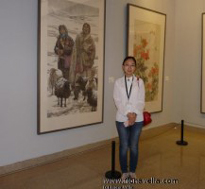
Artist Liu Xia besides her work at the National Art Museum of China – Photo by Fiona VellaSince its establishment, this national museum has organized thousands of various artistic exhibitions which reflect the development of Chinese art. These activities have attracted millions of visitors each year and so this museum has also served as a significant platform for the artists involved.

During my visit, amongs its selection of expositions, this museum was holding the exhibition ‘Beautiful China: Call of Humanism’ which entailed the First National Fine Art Exhibition to help the disabled. The ensemble of 200 pieces of artworks included masterpieces of top artists of the contemporary art world,as well as works of disabled calligraphers and painters. Funds from the sales of these artworks were collected in order to assist the needs of the thousands of disabled Chinese individuals.

M50 – Shanghai

50 Moganshan Road or M50 art district as it is more popularly known, was a former textile mill in central Shanghai which has now been converted into a major zone of artistic galleries and exhibition spaces.

altThis quarter started to become popular with artists in the year 2000 when the first individuals were initially attracted by the cheap rent of the disused industrial space. Soon, other artists followed suit and nowadays this complex has become known for its trendy and high art quality.

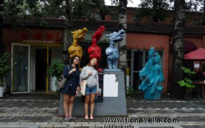
Outdoor sculptures at 751D Park – Photo by Fiona VellaArt lovers who visit this place get a chance to enjoy and purchase some fantastic and unusual works directly from the artists themselves. The allure of this zone lies in the variety of displayed works using several mediums.Prices range from affordable to really expensive but one is expected to negotiate.

Popular with both local and international visitors, this art quarter is unpretentious but interesting and often thought provoking. Amongst the wide selection of creations, it is engaging to notice also some works of a rebellious nature.

(This article was published in the Travel, Leisure and Food Supplement in the Sunday Times of Malta dated 15 March 2015)

L-Album tal-Priġunieri tal-Gwerra

altMiktuba minn Fiona Vella

Ġurnata minnhom, fil-binja tal-Arkivji Nazzjonali ta’ Malta fir-Rabat, tfaċċat mara anzjana mill-Kanada. F’idejha kellha xi dokumenti, fosthom album ta’ missierha, li kien imur lura għall-Ewwel Gwerra Dinjija. Hi xtaqet tkun taf jekk l-arkivisti tagħna kinux isibu xi interess fl-oġġetti li ġabet magħha. Stenniet b’attenzjoni biex tara r-reazzjoni tal-arkivista. U hekk kif dan beda jqalleb il-paġni, għajnejh xegħlu…..

George H Salter

Missier Marylyn Peringer kien George H Salter. Huwa kien Ingliż u matul il-perijodu tal-Ewwel Gwerra Dinjija, kien jifforma parti mill-armata Brittanika. Xogħolu ġabu Malta meta huwa ngħata r-responsabbiltà li jieħu ħsieb il-Kampijiet tal-Priġunieri tal-Gwerra li nfetħu f’pajjiżna. Fost id-dmirijiet tiegħu, huwa kien iżomm rendikont tal-flus li kienu jirċievu l-priġunieri mingħand qrabathom u ħbiebhom u mbagħad kien jgħaddihomlhom għall-użu tagħhom.

Mir-rimarki li ħallewlu wħud mill-priġunieri fl-album tiegħu, fosthom il-Prinċep von Hohenzollern, jidher li Salter kien bniedem ġust f’xogħolu. Għall-kuntrarju, uffiċċjali oħrajn kienu jabbużaw mir-rati tal-kambju meta kienu jbiddlulhom il-flus, filwaqt li numru ieħor kienu jitolbuhom kummissoni esorbitanti biex jaqduhom.

Malta – in-Ners tal-Mediterran

Għalkemm Malta ma nvolvietx ruħha direttament f’din il-gwerra, xorta waħda hija kellha rwoli sinifikanti mmens. Fosthom diversi binjiet pubbliċi ġew mibdula fi sptarijiet sabiex pajjiżna jirċievi għadd ta’ suldati midruba. Infatti, għall-ħabta ta’ Jannar 1916, f’Malta kien hawn madwar 20,000 sodda mqassma fi 28 sit għal dan il-għan. Mhux ta’ b’xejn li f’dan iż-żmien, pajjiżna sar magħruf bħala in-Ners tal-Mediterran.

Malta tilqa’ l-priġunieri tal-gwerra

Sehem ieħor li ngħata lil pajjiżna kien illi jilqa’ fih il-priġunieri tal-gwerra li kienu qed jinqabdu waqt l-attakki. B’hekk f’Malta bdew jinfetħu diversi Kampijiet tal-Priġunieri fosthom fil-Forti Verdala, f’San Klement, f’San Salvatore u fil-Polverista.

Fatt interessanti huwa illi flimkien mal-priġunieri li kien hemm fil-Kamp ta’ Verdala, fis-7 ta’ Mejju 1917, ingħaqad ukoll Dr Enrico Mizzi, li snin wara sar Prim Ministru ta’ Malta, minħabba li kien favur it-Taljani. Huwa nżamm f’dan il-post sat-13 t’Awwissu 1917 sakemm ittella’ ġuri.

Priġunier ieħor kien il-Ġermaniż Karl Doenitz. Huwa ntbagħat fil-kamp ta’ Verdala wara li l-U Boat tiegħu UB 68, li tagħha kien il-kmandant, għerqet fit-3 t’Ottubru 1918 lejn in-naħa tax-xlokk ta’ Sqallija. Skont dokumenti li rrefera magħhom Giovanni Bonello, jidher li Doenitz kellu karattru pjuttost riservat u ta’ ftit kliem. Fil-kamp kien waqa’ f’dipressjoni akuta għax bħal donnu li kien daħħalha f’rasu li l-U-Boat intilfet minħabba xi żball li għamel hu. Intant, aktar tard fit-Tieni Gwerra Dinjija, Doenitz laħaq Gran Ammirall u wara s-suwiċidju ta’ Hitler, kien huwa li sar il-Kanċillier tat-Tielet Reich.

L-album ta’ Salter
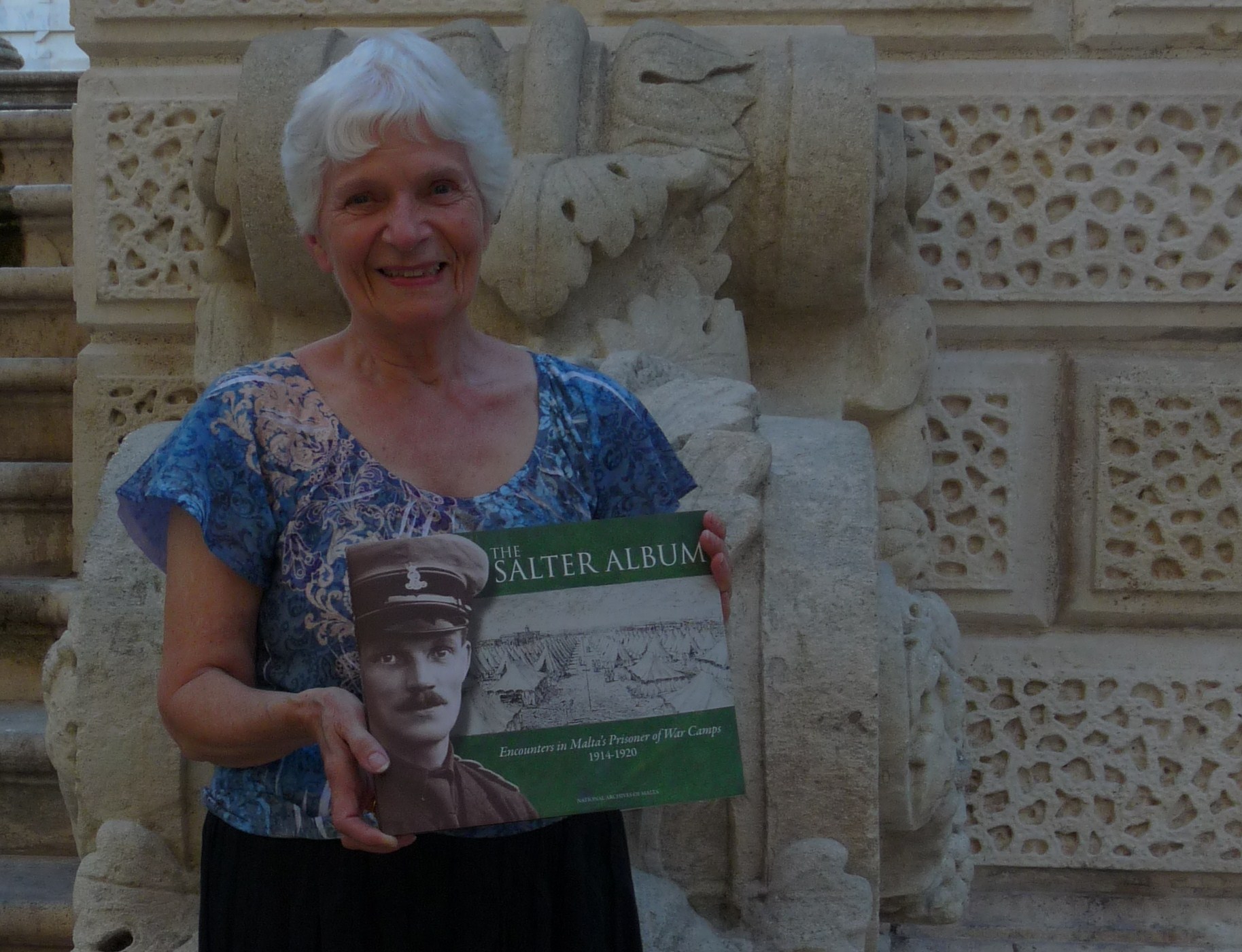
altGħalkemm f’diversi kotba nsibu informazzjoni dettaljata dwar dak li seħħ matul dawn il-gwerer, l-album ta’ Salter serva bħala mezz sinifikanti sabiex jitfa’ dawl fuq dak li kien qed jiġri f’dawn il-Kampijiet tal-Gwerra, partikolarment fejn tidħol ir-relazzjoni tal-uffiċċjali tal-armata ma’ dawn il-priġunieri.

Fost il-paġni tiegħu, wieħed isib għadd ta’ kummenti b’lingwi differenti, firem, diżinji u tpinġijiet. Mill-kitba tal-priġunieri, wieħed jista’ jinnota li għalkemm dawn kienu ġejjin minn pajjiżi, kulturi u livelli tas-soċjetà differenti, huma kienu jaqsmu l-istess fehmiet fejn tidħol ix-xewqa kbira li jirritornaw lejn pajjiżhom u lejn djarhom, in-niket minħabba li nħonqot il-libertà tagħhom u d-dwejjaq peress li fil-kampijiet ma tantx kien hemm wisq x’tagħmel.

Fatt ieħor interessanti li wieħed jista’ jsegwi huwa kif żvolġiet ħajjet dawn il-priġunieri li ġew maqbuda u sfurzati jgħixu flimkien f’dawn il-kampijiet ma’ nies li ma kienux jafu, filwaqt li għadd ta’ suldati oħra minn pajjiżhom kienu qed jiġġieldu u jitqatlu matul il-gwerra.

Dawn in-narrazzjonijiet flimkien ma’ għadd ta’ informazzjoni, illustrazzjonijiet u dettalji oħra siewja, inġabru mill-Arkivji Nazzjonali ta’ Malta ġewwa l-ktieb li ġie ppubblikat dan l-aħħar bl-isem ‘The Salter Album: Encounters in Malta’s Prisoner of War Camps 1940 – 1920′.

Il-ġrajja tal-koppja Salter

Waqt it-tnhedija ta’ dan il-ktieb, attendiet ukoll bint Salter li llum għandha 78 sena. Naturalment, ħtaft l-opportunità sabiex nisma’ ġrajjietha direttament minn għandha. Wara kollox, ħajjet Marylyn hija marbuta mill-qrib ma’ pajjiżna minħabba li ommha kienet Maltija.

Infatti, il-ġrajja ta’ omm Marylyn ġiet ukoll irrakkuntata u nkluża f’dan il-ktieb, hekk kif permezz ta’ awtobijografija li hija ħalliet li bintha, din setgħet tgħaddi aktar informazzjoni lill-arkivji tagħna.

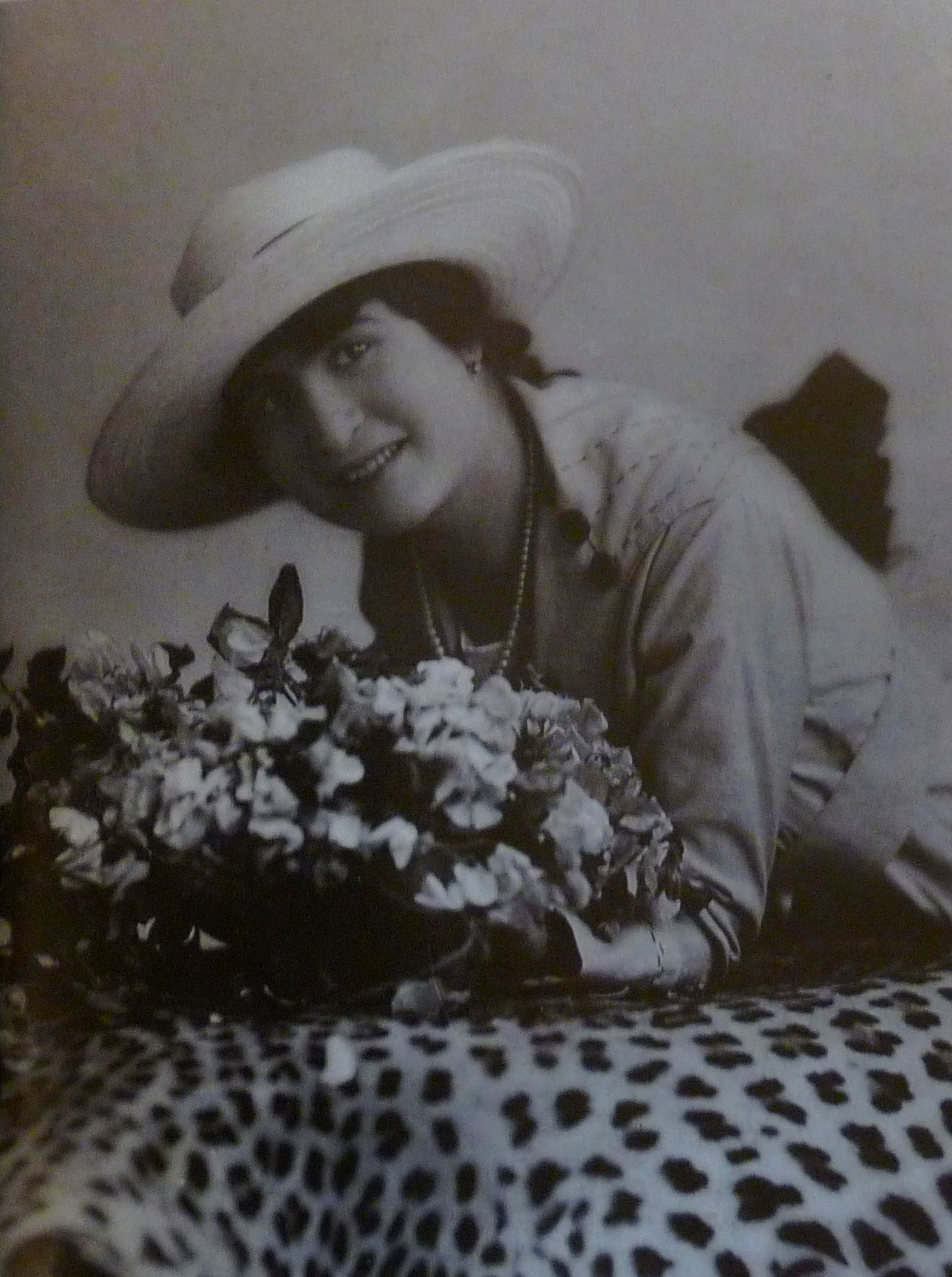
Kien fl-1917 meta Mary Tabone applikat sabiex tibda taħdem fil-Kamp tal-Priġunieri tal-Gwerra ġewwa Verdala u wara li qagħdet għall-eżami meħtieġ, hija u tfajla oħra ntagħżlu meta ġew l-ewwel fir-riżultati. Iżda hawnhekk inqala’ l-bużillis hekk kif uħud mill-Maltin tkażaw kif kien qed jingħata x-xogħol lin-nisa meta kien hemm tant irġiel tal-familja li kellhom bżonn jaħdmu. Tant tqajjmet polemika illi wara li dawn iż-żewġ tfajliet ġew aċċettati, ħarġet regola ġdida li għal dan ix-xogħol, irġiel biss setgħu japplikaw.

Sadanittant, Mary sabet ruħha taħdem flimkien ma’ Salter li b’paċenzja kbira ħarriġha f’xogħolha. It-tfajla ma damitx ma nġibdet lejn dan ir-raġel tant ġentili u tal-galbu li kien iħobb il-mużika bħalha. U meta ntebħet li hu ma kienx qed joħroġ ma’ sħabu meta dawn kienu jmorru jixorbu fil-ħwienet tax-xorb, darba minnhom, hija stednitu għall-ikel ħalli jiltaqa’ mal-familja tagħha.

altHekk bdiet din il-ħbiberija bejn dawn it-tnejn u ftit ftit dawn bdew jinġibdu lejn xulxin. Madanakollu, huma kellhom iżommu l-emozzjonijiet tagħhom mistura f’qalbhom minħabba li Salter kien miżżewweġ u kien jinsab waħdu hawn Malta peress li martu ma xtaqitx takkumpanjah fi gżiritna.

Is-snin gerrbu u l-gwerra ntemmet. U hekk kif bosta nies madwar Malta bdew jiċċelebraw, qalb Mary infniet hekk kif f’tebqa t’għajn, wara li għalaq il-Kamp tal-Priġunieri tal-Gwerra, hija tilfet xogħolha u anki lil Salter li kellu jħalli lil pajjiżna.

Ħajjet dawn iż-żewġ individwi kompliet għaddejjha separatament għal bosta snin fejn Mary żżewġet Malti li kien jgħix l-Amerika u telgħet tgħix hemmhekk. Iżda wara sena, hija sfat armla minħabba li żewġha miet f’inċident. Xi żmien wara mietet ukoll mart Salter wara marda li kellha.

B’mod jew ieħor, id-destin reġa’ laqqa’ lil dawn it-tnejn flimkien u huma ntebħu li kienu għadhom jinħabbu, tant li żżewġu wara ftit. Minn dan iż-żwieġ twieldet Marylyn u ħajjet il-koppja kienet sabiħa, sakemm bdiet it-Tieni Gwerra Dinjija li firdithom mill-ġdid, did-darba, għal dejjem.

Dan ġara wara li Mary u bintha telqu lejn l-Amerika meta l-Ingilterra sofriet l-ewwel bombardament, filwaqt li Salter baqa’ f’pajjiżu biex jgħin f’din il-gwerra li reġgħet inqalgħet. Iżda fl-1942, huwa miet bit-tuberkolożi u Marylyn sfat orfni ta’ sitt snin.

Xi ġranet wara, ommha Mary rċeviet l-affarijiet li kien ħallha żewġha warajh, fosthom dan l-album b’tant rikordji. Kien hemm li hija bdiet tirrakkonta lil bintha dwar il-ġrajja tagħha u ta’ żewġha.

L-awtobijografija ta’ Mary Salter

alt

Għadda ż-żmien u Mary iddeċidiet li tikteb l-awtobijografija tagħha sabiex tħalli rikordju ta’ dak li għaddiet minnu. Meta lestietha, ittantat kemm il-darba biex tippubblikaha imma qatt ma rnexxielha. Finalment, hija rregalat dan ix-xogħol lil bintha waqt ċelebrazzjoni ta’ għeluq sninha u sena wara l-omm mietet wara li daħlet għal operazzjoni u ma ħarġitx ħajja mill-isptar.

“Min jaf kemm tkun kuntenta ommi li kieku kellha tara dan il-ktieb li fih jinkludi l-ġrajja tagħha flimkien ma’ dik ta’ missieri u dak li għaddew minnu fil-Kampijiet tal-priġunieri tal-Gwerra,” qaltli Marylyn b’tonn nostalġiku.

Kien tassew mument sinifikanti meta Marylyn irregalat kopja ta’ dan il-ktieb lill-Ambaxxatur tal-Ġermanja, Klaus-Peter Brandes, li apparti li attenda għal din il-funzjoni, huwa għen ukoll sabiex dan il-proġett seta’ jitwettaq.

(Dan l-artiklu ġie ppubblikat fis-sensiela KOBOR IL-MALTI (27 Parti) fit-Torċa tat-30 ta’ Novembru 2014)

Ganni Comes Home

After thirty years in the land of the maple leaf, John was returning back to his roots, the isle of Calypso. It was a cold January evening as the ‘Malita’ ferry boat cut through the waves across the channel between the two little islands. The sea was relatively calm, the sun was hiding behind the clouds and some seagulls were hovering overhead.

Thirty years! His first visit since he had emigrated at the age of 25. His name was then Ganni. He had worked hard, did not indulge in any luxuries and took great care of his money. As a result he was now a relatively wealthy man. He was still a bachelor. He had dated several girls, had short relations with some others, but he never married. Maybe he was looking for the perfect woman. Maybe he did not thrust these sophisticated and independent Canadian girls. But there was a nice and gentle lady he wanted so much to see in Gozo and for whom he still carried a flame in his heart. She was, in truth, the only one he never forgot throughout his years away from his beloved island. He recalled seeing her the day he left for Canada. He remembered the loving smile on her face. His separation from her was the only thing that made his departure from the island difficult to bear. But it had to be done. There was no other choice. He could see no prospects on the little island and, on the other hand, there were new opportunities of work in the new land.

For thirty whole years he had carried a small photo of her in his wallet. How often had he looked at it with admiration, and how many times had he showed it to his friends with pride? The photo had now become tattered and yellowish with the years but he could still see her lovely smiling face on it. Now, after all those years, John was looking with anticipation to see her once again. The boat was full up with passengers, mostly Gozitans returning home from work. John bought a coffee and two ‘pastizzi’ from the cafeteria on board and sat down on a chair looking through the glass windows eager to get the first glimpse of Gozo. He intended to buy a house in his home town of Nadur and pass his retirement years in peace and quiet. His friends had told him that many returning migrants had proudly named their house for their country of adoption – Uncle Sam, Stars and Stripes, USA, Maple Leaf, Canada, Niagara, Down Under, Waltzing Matilda and so forth. But he had other ideas for the name of his house.
His roving mind took him back to the place he had just left – Canada. The little bungalow not far from the Dundas area where Maltese still met regularly, eating ‘pastizzi’ and ‘qassatat’ bought from the Maltese Bakery Shop. When they met in the afternoons, they still talked about Malta and Gozo, about the patron saints of their towns and villages, about the relatives and neighbours they had left behind.

“May I use this chair?” asked a young man. “Of course, no problem” replied John as he looked at the youth holding a cup of coffee in his hands. “Is the boat always full at this time?” asked John. “Yes. Most Gozitans working in Malta are now returning back home for the weekend” replied the young man. They struck a conversation and John learned much about new developments taking place in Gozo. “Where are you from?” asked the young man. “I was born in Gozo but have lived in Canada these last thirty years. In fact this is my first visit since,” replied John. “Canada?” exclaimed the young man. “It is so far away I would never dream of going there. You see, I am afraid of flying, afraid that the plane would crash!”
“Nonsense,” replied John. “God won’t let you die in a plane crash if He means you to die of some other thing.” The youth looked at the older man in a pensive way and said – “But that’s the rub friend. I won’t know what God has in mind for me!”

As the ferry approached Mgarr harbour both men prepared to go below. They shook hands, wished each other ‘good luck’ and separated. John could see, even from a distance, how his little island had changed. Then as it berthed in port, he took his bags, went through the new terminal, hailed a taxi and went straight to his rented accommodation in Nadur. All the time he noted the widened and smooth tarmaced roads, the roundabouts with multi-coloured flowers and landscaping all around.
He woke up on Saturday morning feeling fine and brisk. He’ll be meeting her today, the lady who was always on his mind during his long absence from Gozo. He went to ‘Piazza San Pietru u San Pawl’, the centre of activity in the town. He phoned a taxi and gave the driver directions. When he arrived at the destination, he paid the taxi-driver and looked around him.

He walked over to the majestic and imposing baroque church, went inside, kept to the left of the colonnades and headed straight towards the area behind the main altar. Even though it was January, he was sweating with anticipation and excitement. And then he saw her – Il-Madonna ta Pinu! The gentle Lady was wrapped in a blue cloak and a silver crown above her head. He went down on his knees and prayed as he had never prayed before – thanking her for keeping him safe all those years he had been away from his beloved island of Gozo.  

Jingħalqu fergħat tal-Banek

altminn Charles B. Spiteri

Bl-iskuża li jżomm il-fergħat tiegħu miftuħin il-ħin kollu, il-Bank Barclays ħabbar li se jagħlaq uħud mill-fergħat tiegħu u jiftaħ uffiċini fis-supermerkati Asda.

Tmienja minnhom se jaraw din il-qalba tul is-sena d-dieħla u oħrajn aktar tard; hekk kif beħsiebhom jagħmlu Banek oħra.

Għalkemm b’din iċ-ċaqlieqa, Barclays se jdaħħal fortuna; għax ikun jista’ jinnegozja l-bini li minnu kien jaħdem; ħafna mill-klijenti leali se jieħdu daqqa ta’ ħarta.

Barra minn hekk se jintlaqtu ħażin ukoll il-ħwienet fit-toroq ewlenin fejn kienu l-istess Banek, u li kienu jgawdu ftit negozju min-nies li jużaw il-fergħat u l-maġni awtomatiċi tagħhom.

altIn-neguzjanti qed isostnu wkoll li n-numru ta’ servizzi offruti s’issa, jkollhom jonqsu, minħabba l-ispazju limitat li l-Banek se jkollhom fis-supermerkati. Iżda ma’ kull uffiċċju se jkunu stallati wkoll il-makni, biex il-klijenti jkunu jistgħu jħallsu kontijiet, jiddepożitaw jew jiġbdu flushom.
Din iċ-ċaqlieqa ta’ Barclays qed issir wara d-deċiżjoni meħuda mill-Posta, li għalqet l-uffiċċji tagħha u fetħithom fil-ħwienet ta’ WHSmith – bidla li ma kellhiex is-suċċess mixtieq. Il-klijenti bdew jilmentaw min-nuqqas ta’ ħaddiema u kjuwijiet twal f’xi fergħat.

Iżda esperimenti simili mill-Banek, ukoll ma kellhomx suċċess. Bejn l-1997 u l-2002, Lloyds ipprova jiċċaqlaq u jmur fl-Asda wkoll, waqt li l-HSBC għamel xi ħaġa simili ma’ Morrisons. Madankollu, dawn il-fergħat tagħhom, ilkoll kellhom jerġgħu jagħlqu.  

Shop around for the best look at life on the streets

altwritten by Fiona Vella

The cities of Beijing and Shanghai are definitely a mecca for those who love shopping. Never ending roads brim with hundreds of shops which offer an endless choice of all sorts of products.

Ancient shops of different traditional trades stand side by side to modern ones which sell famous brand commodities. Flea markets provide the opportunity to look out for unusual items or for a good bargain but one must always keep in mind that most of the items are not genuine.

Shopping can also be a way of getting closer to the locals especially in those areas where one is expected to negotiate the price. At times language could be a barrier since not all the Chinese can communicate in English. However, somehow, if you really want to purchase something, you’ll surely find a way to get across.

Qianmen Street – Beijing

altQianmen pedestrian street runs south from Tiananmen Square, just along the Beijing central axis for about a kilometre.

This popular zone bears its origin to the ancient times of the Ming and Qing Dynasties when it was already renowned for its lantern fairs, theaters and tea-houses. Yet unfortunately, in 1900, this area was burnt down to ashes when Beijing was ransacked by the Eight-Nation Alliance.

The present Qianmen Street has been rebuilt into four zones with particular areas designated for culture, food, shopping and entertainment. Stepping from one shop to another is like entering into a different world altogether.

Elegant shops selling expensive jewellery with a particular focus on jade stand next to bargain outlets bursting with a multitude of souvenirs and knick knack objects. Popular Western fast-food outlets like Mc Donalds and KFC compete with traditional Chinese cuisine such as Qianmen Quanjude Duck Restaurant for the attention of hungry clients.

An old style tram runs from north to south of Qianmen Street. However, for those who really want a taste of Chinese culture, walking is definitely better.

Wangfuying – Beijing

Wangfujing is very famous both with locals and with tourists as its outlets extend over a total length of about two kilometres. This flourishing business quarter dates back to 1260 and it has a long interesting history.

In the wide main street, once again, West meets East since one finds huge shopping malls with international designer brands standing next to Beijing renowned trades, such as Shengxifu hat store, Tongshenghe shoe shop, and the Wuyutai tea house.

However, here, the real delight for tourists lies in the narrower side streets which look rather like a busy beehive. Indeed, this zone is definitely not recommended for those who hate crowded places or for those faint at heart. For this is where you’ll witness the roots of the traditional Beijing, especially through some of the exotic foods which you will be offered.

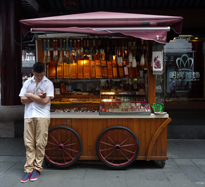
The different smells coming out of the numerous food stalls will entice you to look closer and maybe to try out something. The vast choice will consist of fresh fruit, dumplings, fried foods, and plenty of kebabs with all sorts of meat including lamb, chicken, pork, starfish, seahorse, worms, insects and live scorpions!

Nonetheless, if you lose appetite, there is still more to see and buy in the other outlets which boast the true colours of China. Your preference and the amount of money which you are ready to spend will be the only limits. Exquisite shoes, silk scarves and ornaments, clothes, wood creations, colourful masks, stuffed pandas and toys, and a torrent of souvenirs are some of the items available in a much longer list.

At the end of this visit, you’ll feel as if you have just been through a whirlwind of experiences. Definitely unforgettable!

Nanjing Road – Shanghai

altShanghai is a different world altogether from Beijing and this is clearly evident whilst walking along Nanjing Road. Believed to be the first shopping street in China, this road stretches for more than five kilometres with hundreds of different shops on each side.

Here, shopping malls, department stores and boutiques with luxury brands like Dior, Chanel, Armani, Prada and Calvin Klein compete for clients’ attention with elegant and costly products. In fact, more than a pedestrian shopping street this area has also become a zone for both locals and visitors in order to experience the culture of modern Shanghai.

It is best to visit Nanjing Road in the evening when the area is fully lit and quite spectacular.

Yuyuan Bazaar – Shanghai

This is an outdoor bazaar which stands next to the famous Yuyuan Garden. Its attraction lies in the wooden architecture of the shops and market stalls and in the traditional items which they sell.

Since Shanghai is close to Suzhou, one will find a good choice of silk products here. Moreover, amongst the amazing array of traditional Chinese products, one can select amongst paintings by folk artists, calligraphy works and tools, including ink, paper, brushes, pens, and ink slabs, bamboo and wood carvings, bronze wares, porcelain tea-sets, jade pieces and pearls from Taihu Lake, to mention only a few.

There are no boundaries to what you can actually find whilst exploring this bazaar. Indeed, in offhand corners, you might see people selling small animals and reptiles, and also bracelets of simple but fragrant flowers.

A food market in Shanghai

It is very easy to find yourself completely enthralled by the exciting and dynamic city of Shanghai, thereby feeling urged to explore also other areas which are outside the usual guided tours.

altParticularly endearing is the sheer contrast between the ultra-modern neon-lit high rises lying at the background of the raw and coarse atmosphere of meagre street food stalls where many locals gather to buy their grocery needs.

Once again, your senses will be fully assaulted with unusual activities, smells and sounds. Here you can observe the wide choice of foods available which includes eggs of different poultry, river and sea fish and crustaceans, vegetables and fruit of whatever type and size, and various herbs and tea leaves.

Live chicken and ducks look out from cages whilst one of them is being killed and cleaned there and then for a customer. Cute puppies look out expectantly from other cages, their destinies depending on who’s going to buy them.

Surely, a visit to any of these markets should be included in one’s itinerary in order to experience the real China.

(This article was published in the Travel Supplement of The Sunday Times of Malta dated 11th January 2015)

Nistrieħ fuq ħaddieħor

altWeħidna l-ħajja bla ħajra! Flimkien inħossuna aħjar u niksbu iżjed saħħa u qawwa. Jiġri minħabba f’hekk li nieħdu s-saħħa u nitħabbtu jekk insibu rifda, għajnuna u sehem min ħaddieħor. Għalkemm dan ta’ minn ifaħħru jista’ jtaqqalna u jbikkimna.

Il-ħajja dderrina nqumu fuq saqajna u nibqgħu għaddejjin meta sħabna jħalluna: mewt, mard, jew jaqilbuhielna jew jgħiru għalina. Wisq nintelqu għax inħossu l-weġgħa u nintebħu li għamlulna l-ħsara u daħku bina. Din ma tiswa ta’ ebda ġid. Iżda nibqgħu għaddejjin! Din mhux ta kemm tgħidha għax iebsa bil-bosta.

Imma jekk naħsbu għaliha u jekk nsaqsu fuqha nkunu nistgħu nidħlula. Se tiġi żgur għax l-istorja tad-dinja turina dan minn żmien għal żmien. Tkunx dawl mitfi, tknunx għadira la ilma , imma fawwara li tarmi l-ħsibijiet: għalik !