Kliem u Paroli

Joseph Henry Abela, Qassis

Il-Malti jgħid: Asħaħ kelmet il-Malti minn kelmet is-sultan u kieku kull min għandu daqna raġel kieku l-bodbod missier l-irġiel.

Fihom x’ taħseb u fl-istess waqt iserrħulek rasek li fid-dinja ssib minn kollox. Tkun żgħir: temmen u toħlom u tibla’ wkoll. Maż-żgħożija tibda tnaqqi u tara min iwiegħed u ma jasalx, u min fommu sieket u ssibu miegħek.

Hemm nies li tismagħhom u tifraħ għax kliemhom balzmu u tassew tħossok il-ġenna magħhom u tfittex tkun qribhom u ħdejhom. Oħrajn ipinġu bi kliemhom u jfasslu u milli għedna ma hemm xejn. Dawn ikunu nies tal-paroli.

Ġorġ Preca il-qaddis Malti kien jgħid ‘Għandna paroli’. Fil-ħajja trid tagħraf tagħżel, tkompli ma’ kulħadd u min hu paroli iżżomu talli hu. L-oħrajn mexxi magħhom (in-nies tal-kelma) kemm tista’.

Dejjem tista’ tiżloq u tiżgarra, imma ma tkunx  waqgħet id-dinja. Tagħmilx plejtu: uża moħħok u dawwar ir-rotta; il-kliem (dak li tgħid u temmen) tridu, il-paroli evitaħ.

Saħħa !

Il-Festa

Kien beda Awwissu u l-festa ta’ Santa Liena kienet fil-qrib. Xi jiem qabel, il-mamà ħadet lil Luca u lil Elise sa Tas-Sliema, u xtratilhom libsa u żarbun mis-sbieħ nett. Imbagħad lejlet il-festa, marru għand in-nanna Marija u n-nannu Ġużi. Malli dalam, in-nanniet u t-tfal irħewlha lejn il-pjazza ta’ Birkirkara biex igawdu l-atmosfera tal-festa. Kullimkien kien maħnuq bin-nies. In-nannu refa’ lil Luca fuq spallejh biex jara l-murtali li bdew ifaqqgħu waħda f’waħda fis-smewwiet. In-nanna u Elise qagħdu jħarsu lejn il-vetrini tal-qubbajt. It-tiżwieqa ta’ kuluri tas-sigarri tal-qubbajt imkebbin fil-fidda roża, ħadra, blu u vjola kienet iżżid mal-atmosfera allegruża tal-festa.

Mat-tokki ta’ nofsillejl beda l-ġigġifogu. Kulħadd sab postu fuq iz-zuntier tal-knisja u fil-pjazza biex isegwi l-ispettaklu. Luca u Elise baqgħu ċċassati jħarsu lejn ir-roti jduru bin-nar ikkulurit għax tassew kien fihom gost x’tara. Kien tard ħafna xħin in-nanniet u t-tfal marru lura d-dar u daħlu jorqdu mill-ewwel.

L-għada kulħadd qam kmieni u libes f’ħakka t’għajn. Elise kienet donnha pupa bil-libsa bajda silġ kollha fjuri roża żgħar u bil-kappell tat-tiben f’rasha li kien jaqta’ sew mal-kulur qastni ta’ xagħarha. Lil ħuha wkoll xeraqlu l-qalziet qasir jagħti fiċ-ċelest u l-qmis oranġjo bil-rigi bojod. In-nanna Marija żanżnet libsa roża l-ġmiel tagħha u n-nannu Ġużi libes qalziet griż u qmis bajda.

Wara ftit tal-ħin il-familja kollha marret fil-Bażilika ta’ Santa Liena. Luca u Elise kienu aktar ħsiebhom fil-marċi milli fil-paniġierku. Malli ntemmet il-quddiesa bdiet il-purċissjoni bl-istatwa ta’ Santa Liena fost l-għajjat, iċ-ċapċip u d-daqq tal-marċi. Wara ftit, Luca ntefa’ bilqiegħda ħdejn il-papà u kważi raqad, iżda Elise kompliet iddur qalb il-karti mitfugħin mit-twieqi tan-nies u tiżfen mal-marċi. Sadanittant in-nannu qagħad jixrob il-birra mal-ħbieb tiegħu u n-nanna u l-mamà qagħdu jitkellmu ma’ xi ġirien.

Wara d-dħul tal-istatwa u l-barka sagramentali kulħadd telaq lejn id-dar u poġġa madwar il-mejda tal-ikel. Ir-riħa tfuħ tal-istuffat tal-fenek kienet ilha tinxtamm minn filgħodu. Issa kien imiss li jittiekel flimkien mal-ispagetti. Meta l-familja kollha kienet kielet u xorbot bil-qalb, in-nanna ħarġet il-plattini u serviet is-suflè. Kif  raw lil kulħadd medhi jitkellem, Luca u Elise marru baxx baxx fis-salott biex jiskopru x’kien hemm fiż-żewġ pakketti żgħar miksijin bil-karta minn lewn il-fidda li kienu lemħu aktar kmieni fuq l-armarju tal-kewba. Iżda kienu qegħdin fil-għoli wisq u ma setgħux jilħquhom. F’daqqa waħda semgħu lin-nanna tgħajtilhom b’dak il-leħen ħelu tagħha. Huma ħarsu lejn xulxin, u ftehmu li mal-ewwel ċans li jkollhom jerġgħu jiżgiċċaw sas-salott.

Kienu saru madwar l-erbgħa ta’ wara nofsinhar xħin il-mamà u l-papà bdew jaħsbu biex imorru lejn id-dar. In-nanna Marija refgħet lil Luca u lil Elise u tathom bewsa fuq il-warda ta’ wiċċhom. In-nannu Ġużi mar fis-salott, ħa ż-żewġ pakketti minn fuq l-armarju, u newwilhom lit-tfal. Wiċċhom xegħel għax saflaħħar kienu qabdu l-oġġetti misterjużi b’idejhom. Tahom ferħ ta’ ġenn sakemm qattgħu l-karti tal-fidda, u xħin sabu żewġ kotba bil-Malti tgħidx kemm qabżu bil-ferħ, u għannqu waħda kbira lin-nannu. Wara ftit, il-mamà, il-papà u t-tfal rikbu fil-karozza, u n-nanniet baqgħu jxejrulhom sakemm tbiegħdu sew mit-triq.

Oh Danny Boy!

Laura was taking a strong cup of Earl Grey tea in her small kitchen, thoughtfully and calmly. The family photo, mounted on a small silver frame, looked down on her from the mantelpiece. It showed a beaming man posing on a sandy beach. A woman beside him was holding on to his arm. A ten year old girl, in a red bathing costume, was perched on his shoulders. 

How well she remembered that day. It was in Blackpool, during their summer holiday some twelve years ago, when her father was on leave from his naval base in Portsmouth. She used to look forward so much to her annual holiday by the seaside. What a happy family they were then. How time flies!

It was now two years since both her parents had died within a few months of each other leaving her alone in this house in Chester. Both her parents would have approved of Daniel, especially Dad who was, like him, a keen football follower. She had met Daniel Johnson six months ago when they were both following a short computer course at the Polytechnic in her home town. She had then just turned 21. They used to have coffee together during lesson breaks. They opened up to each other and talked about a hundred and one different things. They knew, after only a short time, that it was the beginning of something special for both of them. 

Daniel was not a handsome man. Hardly! His nose was large, his mouth stretched too much and his eyes drooped on both sides of his face.  But he had a winning smile. Every time he smiled his face shone, changing its configuration completely. Being a keen singer herself, they attended karaoke nights at the Carlton Club where she would enjoy herself singing ballads and other songs especially ‘Danny Boy’ which was undeniably Daniel’s favourite. He told her about Edinburgh, his home town in Scotland. It is, he said with pride, one of the most beautiful cities in Europe draped across a series of rolling hills overlooking the sea. 

Their romance prospered and, after a short time, he invited her to come with him for a short visit to his birth town. There he showed her around this historic capital city which was listed as a UNESCO World Heritage site in 1995. Daniel drove her around quaint little villages that nestle around the city. They walked hand in hand along narrow country lanes; window shopped in busy main streets and looked around lovely public gardens. She enjoyed it immensely especially because she was close to the man she had grown to love so much. She vowed that she will continue to remember that day forever. When the computer course ended and he had to go back to Edinburgh, he promised to phone her and continue their love story.     Days, weeks and months passed since his departure. She waited for the promised call or letter. Her new-found happiness was slowly ebbing away. But he never phoned and he never wrote.

Laura did not believe that he must have met another girl and that their own love was over. Their love was short but it was too genuine for him or for her to forget so easily. She was sure that there must have been a plausible reason for him not to contact her. But, subconsciously, she was certain that Daniel still loved her.  In time, which is a great healer, she put her love experience behind her and immersed herself in her work. There was so much to do. Following the computer course she was appointed as supervisor and was having great satisfaction in her work. She made new friends and had dates with different young men from her office. Six months passed. She decided to go on a holiday. But where? London was very metropolitan and too chaotic. Blackpool and other seaside resorts would be too crowded and full of children. No, she wanted somewhere else. Edinburgh? Why not? It would give her the chance to see the sites which Daniel had shown her and which she had loved so much. And maybe look him up or make enquiries about him somewhere.

She arrived at Edinburgh station on a cold January morning and, following directions from a tourist map, set out on her visits – Princess Street, the Castle, the Royal Mile, the magnificent monument of Sir Walter Scott. Daniel had told her that Edinburgh was very closely connected with Alexander Graham Bell, the engineer and telephone pioneer; Sir Arthur Conan Doyle, the creator of the famous Sherlock Holmes; J.R. Rowland, the author of the Harry Potter books; Robert Louis Stevenson, who wrote Treasure Island and other classical books; Sean Connery and others. 

One evening, while strolling down Princess Street, she heard singing coming from a pub sited nearby at the end of the street. A Karaoke was on. She entered the place filled with jovial Scots lads and lasses singing their hearts out and enjoying themselves immensely. The announcer was shouting through the microphone. “Any one here game for a solo song?” Caught in the joyful atmosphere of her surroundings, Laura went up the stage, whispered to the band leader, took the mike in her hands and said – “This song is for one who is very close to my heart, wherever his is today !” Then she began to sing Daniel’s favourite song. 

“Oh Danny Boy, the pipes are all now calling,

From glen to glen and down the mountain side.

The summer’s gone, and all the flowers are dying.

If you must go, then go and I must wait and bide,

But come you back when summer’s in the meadow

Or when the valleys hushed are covered white with snow,

I’ll be here waiting in sunshine or in shadow.

Oh Danny Boy, Oh Danny Boy, I love you so.

And if you come when the flowers are all dying,

And I am dead as dead I well may be,

You’ll come and find the place where I’m lying,

And kneel to say an ‘Ave’ there for me. 

Then I shall hear how soft you tread above me

And all my dreams will warm and sweeter be 

If you’ll not fail to tell me that you love me,

I’ll simply sleep in peace until you come to me.

Oh Danny Boy. Oh Danny Boy, I love you so. 

The crowd was enthusiastic. They cheered, clapped and shouted for more. They had not heard such a lovely voice for a long time. Everyone was familiar with the powerful words of this song but never before had they heard it sung in such a way. There was not a sound while Laura was singing. Even the barmen stopped their service and, spellbound, concentrated on the heavenly voice. Laura’s caressing words bathed the cool night in soft gentle warmth, weaving a magical spell all around. “But come you back when the summer’s in the meadow, or when the valleys are white with snow.” Her lovely voice rang out clear and fine, as now the folks began to sing along with her, until the chorus swelled so strong that it could have been heard many miles away. “For I’ll be here in sunshine or in meadow – Oh Danny boy, Oh Danny boy, I love you so ….

The song had never moved her so deeply. Where was her Daniel? If only he could hear her sing his song. When her sad eyes scanned those faces all reaching out to her, she saw one other who stabbed her heart. It was an old man who appeared to be isolated from the crowd – a small solitary figure lost in his thoughts, his face creased with anguish. But through the tears which ran heedlessly down his face, there shone a defiant pride which lit up his features with a haunting beauty and which made Laura wonder whether he also was thinking of his beloved one, now gone away from him. When the song drew to a close, the crowd stood transfixed, then, of a sudden, the silence was broken. The cheers that had caught in the choking fullness of their thoughts broke through in waves of shouts and cheers, all praising Laura and all wanting more. She thanked them all but went down the stage and sat at a table to compose herself. The melancholic lyrics of this beautiful song had brought up so many memories of her Daniel that she needed to rest. Then slowly and discreetly she went out of the side door. 

On the last day of her visit, tired from her walks, she entered St.Mary’s Cathedral and sat down admiring the architecture and paintings of this lovely church.  Then she followed other visitors who wandered to the churchyard alongside the same church. The grass here was green and fresh. A place that spoke of peace and rest. She passed the time reading the epitaphs mounted on the rows of graves, people who had lived and died in this northern town – “Shaw”, “Gilbert”, “McCulloch”, “Spencer”, “McTavish”, “Williams” …………….

Then she saw it. The epitaph on a white marble headstone – “Daniel Johnson, born 20.6.1986. Died in a car accident on 15.4.2009. Rest in Peace.”  She gasped. Daniel was dead! This was his grave! At that very moment she realized what had prevented him from writing or calling her. She turned blindly away, the tears, stemmed for so long, flowed unheeded down her cold face.  

Il-kumpanija Kodak sejra għal ‘għajnha’

Charles B. Spiteri

alt

F’dawn l-aħħar snin, Kodak taf irrekordjat l-agħar żminijiet tagħha. Iżda 120 sena ilu, kienet il-pijuniera għall-fotografija tan-nies komuni.

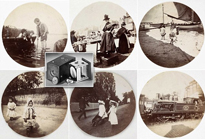
Fl-1888 ħolqot il-Kodak No 1, li tat lill-klijenti ċ-ċans li jiġbdu xeni rilassanti u li qabel kien jinġibdu biss minn fotografi professjonali. Minn dawn ir-ritratti għad hawn fl-idejn. Ritratti li nġibdu fis-seklu 19.

Il-camera No 1 kienet tkun mimlija b’negattivi biżżejjed biex dak li jkun jiġbed mitt ritratt. Meta l-fotografu jiġbed ir-ritratti kollha,  li kienu jkunu tondi, kien ikollu jieħu l-camera b’kollox lil Kodak, li appena tiżviluppalu r-ritratti, terġa’ timlielu l-camera b’negattivi oħra. Din l-istess camera, li kellha kisja ħoxna tal-ġild kienet tinbiegħ bis-slogan “Int tagħfas il-buttuna u aħna nagħmlu l-kumpalment!”

Il-kumpanija Eastman iddisinjat il-cameras flimkien ma’ Frank A. Brownell, mastrudaxxa, li beda l-produzzjoni tal-fabbrika.

Snin wara, Kodak qed titqies bħala li baqgħet lura milli tħaddan it-teknoloġija moderna bħalma hi l-fotografija diġitali, li kienet l-invenzjoni tagħha stess. Sentejn ilu l-Kodak applikat għall-protezzjoni kontra l-falliment u ħabbret li se tieqaf milli tipproduċi l-cameras diġitali; il-video cameras tal-but u l-frames diġitali tar-ritratti. Dan kollu biex taqta’ l-ispejjeż.

Kien rappurtat ukoll li l-kumpanija, issa se tikkonċentra fuq il-bejgħ tat-tagħmir għall-istampar u servizzi għan-negozji.

Il-Papa se jmexxi għal riforma

Charles B. Spiteri

alt

Il-Papa għadu kif akkuża lil bosta mill-predeċessuri tiegħu bħala nies narċiżisti, li ħallew lilhom infushom ikunu mfaħħrin mill-ajjutanti tagħhom infushom.

Il-Papa Franġisku, riformatur ewlieni tal-Knisja, wiegħed li se jagħmel ħiltu kollha biex ibiddel il-mentalità tal-Vatikan, u qal li s-Santa Sede kienet wisq iffukata fl-interessi tagħha stess.

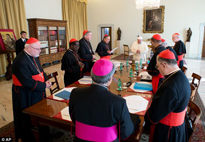
Waqt li kompla jattakka t-tradizzjonijiet passati tal-Vatikan, li issa jidhru li għamlu żmienhom, f’intervista mal-Editur tal-gazzetta xellugija Taljana La Repubblica, il-Papa qal li l-Qorti Papali kienet il-lebbra tal-Papat. Din l-intervista xxandret fl-istess waqt li l-Papa beda żjara privata ta’ tlett ijiem biex jiltaqa’ ma’ tmien kardinali minn madwar id-dinja biex jgħinuh jirriforma l-amministrazzjoni tal-Vatikan, magħrufa bħala l-Kurja.

Dan għax il-Papa jemmen li l-Kurja preżenti aktar qed tagħti kas tal-interessi temporali, waqt li mhix tagħti kas tal-ħtiġiet veri li tabilħaqq huma meħtieġa madwar id-dinja. Hu wiegħed li se jagħmel dak kollu possibbli biex joħloq il-bidla meħtieġa.

Il-Papa Franġisku qal li t-tmien kardinali li għażel, se jinħatru biex jagħtuh il-pariri meħtieġa, u l-għażla tagħhom saret għax m’għandhomx motivi egoisti. Permezz tagħhom il-Papa jrid li l-Knisja jkollha organizzazzjoni li ma tkunx biss vertikali iżda wkoll orizzontali.

Rigward it-twemmin tal-fidi personali, il-Papa Franġisku kien rappurtat li qal: “Ma jeżistix Alla Kattoliku… Jien nemmen f’ Ġesù Kristu u fl-inkarnazzjoni tiegħu. Ġesù hu s-sid  u r-ragħaj tiegħi, iżda Alla u l-missier… id-dawl u l-kreatur. Dan hu li nemmen jien.”

Briju

Joseph Henry Abela, Qassis

alt

Il-ħajja ta’ kuljum tindera u ssir qisha rota bla kisra, bla heda, bla ferħ, bla gost, bla ħajra.

Għalhekk aħna nfittxu l-ġdid, il-ħoss, il-pjaċir, ix-xorb, il-briju. Briju jagħmel il-ħajja ferrieħa, siewja, iġennek. Ikliet, daqq, żfin, sparar tal-festi, baned.  Imma jekk ma noqogħdux attenti malajr naqbżu l-qies. Il-ħaġa, l-għemil, l-imġiba jitlef il-gost tiegħu għax jibda jdejjaq, ikidd, imarrad, jinnervja.

Jekk ikun l-għaqal, minnek, minni, minna, ikollna ċertu ġieħ għal xulxin u jkun hawn wisa’ għal kulħadd. Jekk le, tikber it-tensjoni, id-dwejjaq u l-inkwiet.

Ta’ kuljum iweġġa’ r-ras u jekk ma tilqgħux issa, tista’ ssir straġi li ma tistenniex.

Kaxxi Sofor

minn Joseph Henry Abela, Qassis

It-toroq iżjed ma jkunu meħlusin minn gandotti, karozzi weqfin, inċidenti, protesti, u bejjiegħa weqfin f’kantuniera iżjed in-nies jiltaqgħu.

Inqas nervi, għadab u ġenn u l-kotra tas-sewwieqa jkunu f’sikkithom. Imma f’moħħna jrid ikollna li hemm sewwieqa oħrajn. Hemm sewwieq iżomm max-xellug u l-ieħor li ġej bil-maqlub jagħmel l-istess, jista’ jkun hemm wisgħa f’nofs it-triq biex tgħaddi, ambulanza jew karozza tal-pulizija jew ħaddieħor li jrid jasal l-isptar.

Jekk ma taħsibx minn qabel tista’ teħel. Hemm żebgħa fl-art fit-triq biex ma tieqafx fuqha, kaxxa safra waħda minnhom, oħrajn il-faxxi bojod tal-passiġieri jew kaxxa safra merfugħa għal min għandu diżabilita. Il-mitt xejn qatlu ħmar.

Forsi wasal il-waqt li tagħlim u t-tagħrif fuq il-karozza, fuq sewqan bil-karozza jibda jsir minn għaxar snin sa ħmistax-il sena. B’hekk regoli u mġieba jkunu daħlu żgur fil-moħħ u nħarsu bosta ħajjiet ta’ sewwieqa u passiġieri.

Discovering the real art of a new culture

written by Fiona Vella

altChina’s art sector is probably one of the most dynamic today since Chinese artists are constantly re-imagining the boundaries of art as they question their country’s role in the world. These artistic works can be viewed in the several popular art districts, key galleries and museums which are located in various areas around China.
751D Park – Beijing

I had thought that a visit to Beijing would only comprise an itinerary to historical sites. Therefore, this bustling contemporary art centre proved to be quite a surprise.

Having been transformed from an industrial plant into an artistic hub, 751D Park boasts an area of 40,000 square metres and is now a very renowned area for art lovers. Its distinguished Bauhaus-style architecture has succeeded to blend harmoniously with the places’s new character which now houses many art galleries, bookshops, cafes and restaurants.

Although I am not an avid art enthusiast, a stroll around the various shops and art exhibitions of this park served as a portal to another facet of China and its culture. Each outlet provided the opportunity to discover and purchase works of unique styles, original designs and ultimate creativity.

alt

Liu Fei – An enchanting war (1) – Photo by Fiona VellaI was particularly captivated by Liu Fei’s artistic exhibition named ‘An Enchanting War’. The artist described his sharp creations as his contemplation of future wars. Through them, he attempted to engage in social and political life in order to express his distaste and criticism on war. His main theme examined whether future warfare would be a performance of pretences? In his strong and bizarre artworks, there was no boundary between beauty and ugliness, and violence and contention were combined cruelly.

The National Art Museum of China – Beijing

The National Art Museum of China is dedicated to collection, research and exhibitions of modern and contemporary artistic works in China. Although this structure started to be constructed in 1958 and was open to the public in 1963, its architecture features the traditional Chinese style as the main building is roofed with yellow glazed tiles and surrounded by corridors and pavilions.

This museum covers an area of more than 18,000 square meters and it includes 17 exhibition halls throughout its 5 storeys. It prides itself with more than 100,000 pieces of various collections, most of which are representative works of different periods and great artworks of Chinese art masters from the end of the 19th century till today.

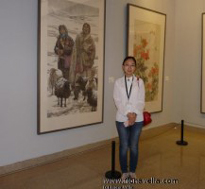
Artist Liu Xia besides her work at the National Art Museum of China – Photo by Fiona VellaSince its establishment, this national museum has organized thousands of various artistic exhibitions which reflect the development of Chinese art. These activities have attracted millions of visitors each year and so this museum has also served as a significant platform for the artists involved.

During my visit, amongs its selection of expositions, this museum was holding the exhibition ‘Beautiful China: Call of Humanism’ which entailed the First National Fine Art Exhibition to help the disabled. The ensemble of 200 pieces of artworks included masterpieces of top artists of the contemporary art world,as well as works of disabled calligraphers and painters. Funds from the sales of these artworks were collected in order to assist the needs of the thousands of disabled Chinese individuals.

M50 – Shanghai

50 Moganshan Road or M50 art district as it is more popularly known, was a former textile mill in central Shanghai which has now been converted into a major zone of artistic galleries and exhibition spaces.

altThis quarter started to become popular with artists in the year 2000 when the first individuals were initially attracted by the cheap rent of the disused industrial space. Soon, other artists followed suit and nowadays this complex has become known for its trendy and high art quality.

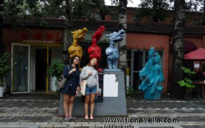
Outdoor sculptures at 751D Park – Photo by Fiona VellaArt lovers who visit this place get a chance to enjoy and purchase some fantastic and unusual works directly from the artists themselves. The allure of this zone lies in the variety of displayed works using several mediums.Prices range from affordable to really expensive but one is expected to negotiate.

Popular with both local and international visitors, this art quarter is unpretentious but interesting and often thought provoking. Amongst the wide selection of creations, it is engaging to notice also some works of a rebellious nature.

(This article was published in the Travel, Leisure and Food Supplement in the Sunday Times of Malta dated 15 March 2015)

Logħba tal-biċċiet

alt

Ħajjitna tiġbor ħolm, stħajjil, ħsibijiet, xewqat, kilbiet, ħlewwiet, imrar, dieqa, hena u stennija – kollha stampi żgħar li jgħaqqdu xbieha kbira.

Jista’ jkollna qrusa għax ma rnexxejniex f’li xtaqna u ninsabu ssikkati meta kieku konna ferħana.

Il-kokka ’l uliedha tara l-isbaħ, u fil-ħajja moħħok jgħinek iżżid jew ifixklek. Tħallix lil moħħok jgħasrek imma ntelaq u ħadmu moħħok. Jekk għadek ma fhimtx, fittex kemm kemm lil EPICURUS (Twieled 341 BC u miet 270 BC), filosofu li jagħtik tagħrif li jista jkun ta’ siwi.

Ħajtek tifhimha meta aktarx tħares lura. Bħalissa madwarek tara ċaflis maż-żmien joqgħod kollox, u tibda tara li rnexxejt int ukoll mhux kif ħsibt imma aħjar!  

Ħalli f’idejja

altAħna min aħna neħtieġu lil ħaddieħor, jew parir, jew xogħol, jew ħidma, jew għajnuna, jew ħdejna. Xi drabi nersqu bil-ħerqa għall-għajnuna u jkollok nies li bil ħlewwa jgħidulek “ħalli f’idejja”.

Ibża’, twerwer, iksaħ għax aktarx tibqa’ fejn kont għax fil-fatt ikun: milli għedna m’hemm xejn.

Int trid tieħu ħsieb tiegħek innifsek. Int trid taqdef, int trid tisħaq u tinsisti. Dak li temmen fih int mhux bilfors jgħożżu ħaddieħor u dak li tixtieq int mhux bilfors iridu ħaddieħor daqsek.

Ilqa’ u ħares lilek innifsek, staqsi, ipprova dur, għarbel, erġa’ agħti daqqa t’għajn għax ħafna straħu fuq ħaddieħor u baqgħu b’xejn. Idejk qegħdin hemm, użahom. Ipprova biċċa u tasal, u uġigħ tal-qalb ikollok mill-inqas u xejn.
Â