
Joe Lanzon
In the spring of 1942 Rita was helping her father Ganni run his bar in Valletta. She was off from school that day and enjoyed the hustle, bustle and excitement of the many British servicemen – sailors, soldiers and airmen stationed on the Island – who frequented her father’s bar when they were not on duty.
When war had broken out in 1939, Ganni had volunteered for the Army and was posted with the Royal Malta Artillery. After a brief training period, he was stationed at Fort St. Elmo, not far from his own house in the City, manning the Bofor guns facing the Grand Harbour. This is from where the German air-raiders usually came and where enemy naval vessels would try to penetrate the harbour defences.
Rita and her father were born and bred in the City built by the Knights of St. John in 1571 on the orders of Grand Master Jean De la Valette following the Great Siege of 1565 when the Turkish armada of 153 galleys with 39,500 men assaulted the Island but were repulsed.
Ganni and his teenage daughter loved Valletta and, even against the advice of the authorities, chose to remain within the city walls. Most of the other residents preferred to evacuate to towns and villages in the north of the Island. These localities were far from the harbour and the dockyard which were often the targets of the enemy. Holes dug in the high bastion walls offered safety to the stubborn citizens during the air raids.
Rita was an intelligent child. Her teacher, who also hailed from the capital, had told Ganni several times that his daughter was an intelligent person, has an exceptional memory and the potential to achieve something in life. She advised him to encourage her in her studies.
You could always find her with a book and pencil during the long hours spent in the shelter awaiting the ‘all clear’ siren to sound. But her father also insisted that it was equally important to have a character built on love, values and integrity. He used to tell her – “The best and most beautiful things in the world cannot be seen or even touched. They must be felt within the heart!”
During her hours at the bar, Rita noticed a young airman looking at her while he drank his beer alone in the corner. He seemed to be a shy sort of person as he did not mix much with the other servicemen. One day she went to his table and asked – “Hello! How are you? If you need anything just call me OK?” He smiled at her. “Thanks Rita”, he replied. “You remind me of my sister in Harrogate, she’s the same age as you and has the same sparkling eyes.”
Rita and Jack Andrews became friends. He told her about his family, about his pals with whom he flew to combat the German bombers. They began to look forward towards seeing each other during which both would pour out their thoughts about life and how they see it. They were two of a kind.
One evening when the bar was full of servicemen and Rita was near Jack, the singer on the little make-shift stage was singing Anne Shelton’s war song – ‘Silver Wings in the Moonlight’. She and Jack often sang it together when they were alone. It was a truly emotional song.
A thousand voices joined the singer, as her melodious plea to the Spitfire aircraft to take care of her lover, echoed around the bar.
“Silver Wings in the moonlight,
Flying high up above.
While I‘m patiently waiting,
Please take care of my love.
If you love him like I do,
Take him safely, and then
Silver Wings in the moonlight,
Bring him homeward again.”
A few days later Jack gave her a small wrapped gift. She opened it anxiously. It was a chain to which was attached a pendant – a small shining silver spitfire. He undid the clasp and hung it around Rita’s neck. “It’s lovely darling,” she said. “I’ll always keep it close to my heart to remind me of you.”
He held her in his arms and kissed her. “Life is short Rita,” he whispered. “We have to grasp it with both hands and make the best of it”. He showed her photos of his mother and sister, described the lovely English countryside of North Yorkshire and the spa town of Harrogate, his birthplace, which is famous for its award-winning flowers. He also told her of his dreams and his expectations from life.
Rita took him to interesting places around the little island – to Mosta to see the famous Rotunda church; to Rabat to roam at Chadwick Lakes, abounding with frogs and tadpoles; to Sliema to walk along the busy strand and then take the ferry back to Valletta.
On the afternoon of the 7th of April 1942, the shrill sound of the air-raid siren warned the citizens that an aerial attack was on the way. Immediately, the people remaining in Valletta took to their nearest shelters within the bastions.
Rita clutched her books and found a corner place where she could read and study. All around her the shelter was alive with movement. Most people were saying the rosary, praying for their safekeeping. Others were talking and shouting, while children ran about and played games. Here, in this rock-hewn place, it was a different world.
When the ‘all clear’ sounded in the evening, they all came out of the shelter wanting to smell the fresh air of that April evening. But a terrible scene awaited them. There was devastation everywhere.
In upper Kingsway, the majestic building of the Royal Opera House, built on the designs of the renowned English architect Edward M. Barry in 1866, was in ruins. It had received a direct hit from the German bombers and was totally destroyed. Heaps of broken stone and twisted iron girders were strewn about. All that remained of that beautiful building were the terrace and parts of the columns.
The Opera House was considered to be one of the most beautiful and iconic buildings in Valletta and had established a famous reputation all over Europe. It gave an invaluable boost to the artistic and cultural lives of all Maltese. It was the launching pad for many singers and conductors who later became world famous.
On that fateful day Ganni, with his RMA colleagues, was manning the guns at Fort St. Elmo, firing furiously at the German invaders as they dropped their bombs over the city. Also on that day, Jack Andrews was on his Spitfire fighter plane which battled bravely, though heavily outnumbered, the German fighters escorting the deadly enemy bombers.
Ganni had previously played an important part as a gunner in two separate episodes from this same post at Fort St. Elmo. In January of 1941 when hordes of German bombers and fighter bombers attached ferociously the aircraft carrier ‘Illustrious’ which had sought shelter beneath the bastion walls of the Grand Harbour, and in July of the same year, when a number of Italian E-Boats attacked the defense lines of the harbour entrance, destroying the breakwater structure.
During the numerous air-raids, when Rita was deep in the shelters, Ganni was exposed to enemy fire at St. Elmo and Jack was up in his Spitfire, she would clutch the pendent tightly in her hands and pray. “Please God; please keep my father and my Jack safe!”
The years passed. The war had long ended. The people started to build their shattered lives again. The destroyed buildings started to rise again, the suffering and heartache of the population was slowly being forgotten, but the thousands casualties of the war – civilians and servicemen – remained buried below ground.
Rita walked slowly along the much trodden gravel path, holding little Johnnie by the hand. The sun’s rays on her pendant made the silver spitfire sparkle on her neck. She looked on both sides of her. There were beautiful marble monuments all the way. And it was quiet, so quiet that the sound of her footsteps and those of Johnnie seemed as if they were trespassing the sacred ground.
Up on the hill, the gothic church looked down on the vast silent population stretching many generations. She lived in England with her Jack now and she was a teacher at St. Alban’s in Harrogate. When Rita came to the place she was seeking – her dear father’s resting place – she stopped, said a prayer and placed a posy of flowers on his grave, remembering his wise words of many years ago – “The best and most beautiful things in the world cannot be seen or even touched. They must be felt within the heart!”

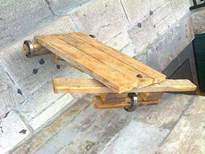 KARETTUN TAL-BOLREJS Dan kien ikun tista’ tgħid meqjus bħala l-ġugarell tal-avventuri tat-tfal. Kien ikun magħmul minn injama, x’aktarx tavla żgħira ta’ madwar 40 ċm x 30 ċm, ċatta imma soda, li tkun tiflaħ tifel li joqgħod bilqiegħda fuqha. Minn taħtha jgħaddu żewġ injamiet bħal kurrenti kull naħa tat-truf fil-wisa’ biex mat-truf tagħhom jintrabtu l-bolrejs biex dawn jintużaw bħala roti żgħar li jkunu b’saħħithom. Imbagħad kienet titwaħħal, minn taħt din it-tavla jew twavel, injama żgħira u dejqa fin-nofs minn taħt, u bi skorfina tifforma maqbad li jiċċaqlaq u b’hekk idur skont id-direzzjoni kif jinġibed mill-ħabel irqiq jew lenza, kif ikun hemm bżonn, minn dak li jirkeb il-karettun. Ir-roti ta’ dan il-karettun kienu dejjem ikunu tal-bolrejs (ball bearing races). Dawn il-ball races kienu jkunu meħuda minn xi spare parts ta’ xi ger tal-karozza jew tal-ajruplani li jkunu ġew skrappjati.
 Dawn x’aktarx kienu jinxtraw mingħand xi regettier tal-iskrapp. Bi tlieta jew b’erbgħa minn dawn ir-roti tal-ball bearing imwaħħlin waħda ma’ kull tarf tal-kurrenti, u ġieli oħra fin-nofs taħt il-maqbad forma ta’ salib, dawn il-karettuni kont toqgħod bilqiegħeda fuqhom u tiġri fit-toroq, naturalment fejn it-triq tkun lixxa, u l-aħjar fejn it-triq tagħti għan-niżla. Dan il-karettun żgħir kien ipaxxi lit-tfal għax kienu qishom qegħdin isuqu xi karozza ta’ veru. Ir-roti tal-ball races iħokku mal-art kienu jagħmlu ħoss tremend, u minħabba f’hekk malajr kont tara xi ġirien ħerġin għal dawn it-tfal biex ifittxu jmorru band’oħra. (Informazzjoni miġbura kemm mill-esperjenza tal-awtur innifsu kif ukoll minn oħrajn li kitbu fuq Facebook, eż. Guido Michael Tabone u Lawrence Fenech.)
