Joseph Lanzon
It was a nice spring day and people had escaped from their confined houses to enjoy the day in the warm sun. The grandfather was taking his six year old grandson to the park where he would play football with his friends, while he would relax sitting on a bench reading a book.
More than two hours later the little boy returned to his grandfather sweating and tired from kicking the ball about. After a few minutes puffing and devouring a bar of chocolate, he relaxed on the bench besides his grandfather and asked him “Grandpa, could you tell me a story before we go back home?”
The old man smiled. He liked recounting stories while his grandson enjoyed listening to a good adventure. “Yes, I will tell you a little story about the war which I know that you will like because it has the thrills of an adventure.”
“There was a man by the name of Ġużeppi. He worked at His Majesty’s Dockyard in Bormla during the war. The dockyard, then, was a beehive of activity. It was where crippled battleships, cruisers, submarines and aircraft carriers entered for repairs to enable them to continue the Allied fight on the high seas.
Bormla, being so near to the Naval Dockyard and the harbour, had been a prime target for enemy bombers. As a result, most of its houses and buildings were destroyed or heavily damaged while several people were killed and others gravely injured.
Many of the residents had left the town to reside with relatives or friends in towns or villages in the north of the island, areas which were not subject to the incessant bombings like the south.
Ġużeppi’s family had, in fact, settled in Rabat and he had to travel the long distance from Rabat to Bormla every morning and returning back in the evening. Sometimes, because of the intensive bombing or because of blocked roads, the buses did not work and he had to make the journey on foot.
One particular day in July of 1942, Ġużeppi went to work as usual at the dockyard. But that day was not to be a usual day. Bormla had just received a horrific hammering from German bombers which caused devastation to this old town.
Those who came from various other towns and villages to work here every day described Bormla as a ‘ghost town’ where dogs, cats and large rats roamed the streets and alleys for food. How it had changed! Before the war, Bormla was one of the busiest places in the whole of Malta where people came from all over the island to do their shopping. It was now an eerie place to visit.
When Ġużeppi finished work he went to check on the old family house where he lived before the evacuation to Rabat. He was astonished to see that it was destroyed and brought to rubble. He remembered that he had done so much work in this house, including all the furniture, plumbing and electricity. He cried when he witnessed this absolute destruction.
Among the stones, rubble and pieces of wood from the broken furniture, he retrieved a wooden crucifix which had hung on the bedroom wall. Then, despairingly, he went his way to return to his family in Rabat.
The old rambling bus was filled with workers who lived in the northern part of the island. They were returning home after a day’s work in very dangerous circumstances. Sometimes during air raids they had to keep repairing warships because of the urgency of the situation. Sometimes, during heavy bombing, they took refuge in dug-out shelters.
It was a long and uphill journey practically crossing the whole island. The workers on board the bus were grim-faced, their eyes filled with pity and, at the same time, angry at what they had seen all around them. Nobody spoke.
As the bus rambled on, passing Marsa, Ħamrun and Attard, it started up the hill for its final lap to Rabat. The passengers were watching the tree-lined country road and the green fields behind them. They were anxious to reach home.
Without them knowing, a lone German fighter plane was hovering around like a hungry vulture seeking his prey. The pilot saw the old bus filled with people rambling its way up the hill. He dived down, engines screaming creating a frightening noise. The bus passengers looked up, saw the plane coming straight at them, and were terrified to death. The German pilot started machine gunning the bus riddling it with bullets.
The driver of the bus, afraid for his life, stopped the bus and everybody got out in a hurry making out for the nearby fields, hiding behind low rubble walls and small farmhouses.
Ġużeppi, with the crucifix close to his chest, jumped a rubble wall, ran to the field and hurled himself face down on the grass with the crucifix under his body.
The German pilot, looking on from above, seeing these helpless people scattering in all directions, started machine gunning them as they ran for cover. It was an eerie scene. There was utter silence except for the noise of the aeroplane engine and the rat-tat-tat of the machine gun.
Ġużeppi lay still, holding his breath, while spread-eagled in the field. He was praying to God, to the Holy Mary and to all the saints to let him live and go back to his family. He heard repeatedly the deadly rat-tat-tat of the machine gun and the occasional scream of other passengers.
The bus was now ablaze like a great ball of fire in the deserted country road. The plane was still flying low, circling the horrible scene, the pilot looking for survivors to shoot them from above. Then he flew up, turned tail and went away.
When the still frightened workers did not hear the sound of the plane and of the machine gun, they came out of their hiding places, grouped together and walked up the hill to Rabat.
As the weary men walked away from the scene, they heard the anti-aircraft guns open up from Ta’ Qali airfield. A barrage of guns was shooting at a target in the sky. Then they saw the plane in flames, going down and down until it crashed in the field a distance away. They stopped, cheered and clapped.
They walked on and on until they arrived in town. Ġużeppi headed straight to his family, still visibly shaken, shocked and angry.
As he entered the house he found his wife Dela and his two sons Johnnie and Joey waiting anxiously huddled together. They sprung up when they saw him, ran up to him and he gathered them lovingly in his outstretched arms.
Then he sat down and told them that their house in Bormla had been bombed flat. He showed them the wooden crucifix which he had retrieved from the destroyed house. Then, slowly, he recounted the terrible ordeal of the airplane attack on the bus and the passengers as they climbed the hill towards Rabat. Despite this terrible experience, they were all extremely happy that he was still alive and back with them.”
As the old man finished his story, the child looked up and saw tears falling down his cheeks. “Why are you crying Grandpa?’ he asked him tenderly. “I’m remembering child, things I had almost forgotten which happened some fifty years ago. I want to tell you that this is a true story. The little boy Joey was then, like you, only six years old. He is, you know, actually myself! Ġużeppi is your great grandfather! He was a small man but in my child’s eyes of fifty years ago, he was as big as a mountain!”
The sun was now setting and it would soon get dark. The old man and the small boy got up from the bench; the child’s small hands held tightly in his grandfather’s wrinkled ones and, slowly and silently, started walking towards home.

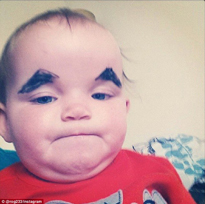 Jidher li fi ftit żmien saret moda ġdida l-vidjos tat-trabi jduqu lumija għall-ewwel darba jew b’xi dehra stramba għall-aħħar.
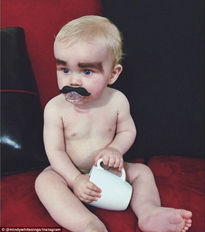 Kien hemm bosta li rriferew għal dan kollu bħala ‘krudeltà’ mat-tfal, waqt li l-ġenituri qed jinsistu li b’hekk mhuma jonqsu xejn lil uliedhom.
 ma kien se jagħmel xejn li ’l quddiem ikerrah id-dehra tal-istess bintu. Żied jgħid li min juri nuqqas ta’ qbil ma’ dak li wettaq hu, hu bniedem marid.
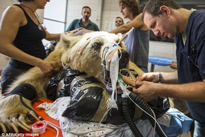 Lil ors ta’ 19-il sena, bl-isem ta’ Mango, ftit żmien ilu saritlu operazzjoni ta’ slip disc f’Iżrael, peress li minħabba l-uġigħ li kellu, ma setax iċaqlaq saqajh ta’ wara. Ħaddiema taz-zoo ndunaw li l-ors kannella Sirjan, ta’ 550 libbra, kellu problema meta rawh miexi b’mod stramb.
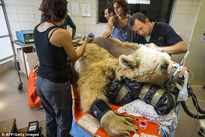 ħalqu. Anki rabtulu ċ-ċinga tal-apparat tal-pressjoni, ma’ idu l-leminija. Waqt li proċeduri simili mhumiex komuni fuq annimali oħra fiċ-Ċentru Zooloġiku ta’ Ramat Gan, din kienet l-ewwel waħda lil qatt saret fuq ors.
  Xjenzjati fil-Ġermanja jinsabu qrib li jsibu d-data ta’ statwa antika tal-injam li skont huma fiha marki għal kodiċi sigrieti miktuba madwar 9,500 sena ilu – aktarx l-eqdem oġġett tax-xorti tiegħu, li nsibu fuq il-pjaneta. L-idolu tal-biża’ Shigir hu darbtejn eqdem mill-piramidi tal-Eġittu u kien imħares bħal kieku kien f’kapsula taż-żmien, fit-truf tal-Punent tas-Siberja.
  QAMAR Rif. għal darba f’qamar. L-espr. t-tajba hija darba f’mitt qamar, u tfisser rarament.
 SKUFJA Kappa tas-suf jew tal-għażel maħduma b’mod li tagħfas mar-ras minn fuq u b’żigarella tinżel mal-għonq u tinqafel taħt il-geddum. Din tintlibes l-aktar min-nisa u għaldaqstant tkun iddekorata mit-tarf bil-bizzilla. Tintlibes ukoll mis-sorijiet u tista’ wkoll tinħiet għat-trabi. L-espressjoni figurattiva ‘għadu jilbes l-iskufja’ tfisser li għadu qisu tarbija fl-imġiba tiegħu. Il-qawl ‘Kieku kelli nbigħ l-iskufji kieku t-trabi jitwieldu bla ras,’ jirreferi għal xi ħadd li fin-negozju jsofri dejjem.
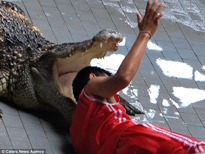 Wrestler li tħobb tipperikola ħajjitha ma’ kull ġurnata li tgħaddi, billi ddaħħal rasha f’ħalq kukkudrill għal €4.92, qed tiġbed folol kbar ta’ nies f’zoo Tajlandiż.
 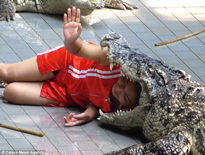 Ian Maclean, li ġibed il-filmat waqt żjara staqsa: “Fadal nies li lesti jipperikolaw ħajjithom f’dan ix-xogħol għal €4.92 kuljum?”