Għana has been used to draw attention to issues varying from petty squabbles to religious-political situation which had evolved at various times in Malta.
It has really never been the subject of serious discussion and analysis at an academic level. It is therefore refreshing to see this publication by Manuel Casha which invites us to have a new and unprejudiced look at what Għana really stands for. He himself states that he started to write this book ‘with the intention of understanding the techniques, ethics, traditions and customs of this music and the community that engages in it, as an outsider looking in’, and he invites us to do likewise. It is not often that a book dedicated to Maltese folk singing (Għana) comes to hand, and for this we have to thank Manuel Casha who has strived hard for decades to ensure that this unique form of self-expression is not lost forever. As he says in his introduction, ‘the soul and psyche of a nation are often embodied in its folkloric past’.
This type of folk singing was limited to a certain aficionados, and was frowned upon by the educated elite. It is not surprising therefore that it was foreigners who published what is arguably the best collection of Maltese folksong (by Bertha Ilg and Hans Stumme in Germany) over a century ago.
It has been stated that singing preceeded speech in the development of human interaction. It is certainly likely that Għana was the first attempts at Maltese literature and versification. In this book Casha explains the background of this art form, and how it has filled a niche within the life-style of those who, while not usually over-educated, can yet express themselves so eloquently in song.
One good definition of Għana could well be: Working class men enjoying themselves in song. This emphasises the origin of the singing, highlighting the fact that it was originally invented by unschooled and illiterate but highly intelligent men who needed a poetic outlet to express their feelings and to entertain their friends. There is nothing unique about this development. All people around the world have the same needs to develop their own style of expressing them. The author compares Maltese Għana as a musical form similar to Blues music in America, Flamenco in Spain, Rebitika in Greece or Fado in Portugal, all of which form part of a global musical heritage. He goes so far as to predict that ‘once Għana music is discovered universally, outside of the Maltese archipelago, it will contribute a great deal in telling the story of the contemporary development of Mediterranean music, as we know it today’.
With the massive wave of migration that took place in the immediate post-war period, many folksingers left Malta to settle in places like Australia and elsewhere. They brought with them their guitars as well as their love of Għana, which they enjoyed to display, to entertain their friends, in their homes, or even garages, to remind themselves of the Malta they had left behind and still hankered for. By the mid 20th century, thousands of Maltese emigrated to other countries in search of a better life, carrying with them their musical heritage in the countries of their settlement.
It is interesting to note how Għana in Australia might have diverged from that in Malta. Over the past half-century, Malta has had a very close contact with the outside world, and this has had a dramatic effect on the language spoken in towns and villages alike. On the other hand in Australia, Maltese language has been put in deep freeze, and has retained the characteristics and dialects that were standard in Malta more than half a century ago. It is refreshing to hear young children using their limited Maltese vocabulary expressed in unmistakable dialect derived from the village or town where their parents came from, and where such dialects have all but disappeared.
In a chapter on migration Casha remarks: ‘They now sung about their homeland, family, and friends they left behind. They sang about their battle with homesickness. They sang about the prejudices they encountered in the new countries where they were merely outsiders seeking acceptance. Some sang about the inequality and harsh working conditions. Some about the freezing climate to which they were not accustomed, having come from the Mediterranean, or conversely the oppressing heat they toiled in. Many sang about the loneliness of living in rural areas, in isolation on their farms or working as farm hands. Others, who were employed in sugarcane plantations, engaged in backbreaking work and suffocating heat and sang about their difficult plight. One must remember that many Maltese had to face the culture shock of leaving a generally urbanised environment in Malta, to surviving in a vast land where in some cases your next-door neighbour lived miles away.’
Other songs deal with the tragedies of war which some singers experienced personally. Perhaps the most poignant is one about a tragedy which occurred in an air-raid shelter in Malta. The author cannot erase from his mind the faces of the dead children which he helped to pull out from under the rubble and he transformed his grief into a heart-rending song.
Casha states that, as a musician, he entered the Għana field ‘to understand, discover and try and preserve and cultivate a very special part of Maltese culture in Melbourne.’
The question of course arises: will the second and subsequent generation be interested in this type of music? Casha is optimistic about this. He remarks: ‘It might not be commonly known that 95% of ‘għannejja’, past and present, living in Melbourne started their careers after they emigrated….It is just as remarkable to discover that most lead guitarists (primi) in Melbourne were actually born and bred in Melbourne suburbs and some have never seen Malta.’
So the future of playing Maltese folksongs seems to be assured. The same, however, cannot be said about the art of actually creating the songs themselves, which depends, among other things. on a deep grasp of the Maltese language together with the necessity of being able to provide impromptu rhyming. Casha states: ‘it is a fact that while Australia produced some wonderful players, no indigenous għannej has been produced… so far’ . Even so, the interest shown by these young players has helped to maintain a level of command of the language. Casha says: ‘while young players ‘cannot sing and rhyme, [they] can speak the language a lot more fluently since taking up the Maltese guitar’.
In this book we find a comprehensive section on writers of and Għana singers in Australia. They came in large numbers in the post-war period, particularly in the 1950s and 60s. While their experience of life in Malta still informs a lot of the topics treated in their songs, with time, the local element starts to find its way into the song. He writes: ‘Many writers in Australia ‘kept writing on traditional lines and on topics, which related more to the Maltese environment even though they had lived in Australia for a number of years…. [ and particularly] to a Malta they remembered from childhood.
It is curious to note that the vast majority of folk-singers are men. This is not surprising in view of the origin of Għana, which occurred mostly in bars to which few women were welcome. The aggressive nature of the interaction between different folk-singers was also more suitable to the male rather than the female character. However, several women did take part in folk singing, inventing their own particular brand, known as Għana tal-banju, (or ‘washer-women folksongs’). Their songs were usually much less aggressive, they did not indulge in contests to prove who is the better singer. Interesting also, Casha comments, that women sing in a different key to men, female singers sing in higher register. Men prefer the more aggressive key of G which ‘creates the anticipation of the contest or battle’ whereas women prefer the key of C which ‘creates a happier anticipation.’
Casha has analysed the structure of these Għana in great detail. He goes over the various types of Għana, explaining the structure of this art form, for those of us who have never really bothered to enquire into the intricacies and genius behind the ability of extemporising rhyming verse in an impromptu fashion. He analyses the varieties of this genre which has been adapted to suit a variety of situations from the humorous to the tragic, from the political repartee to engagement in downright insult. The author lists a whole glossary of terms used by għannejja which are unique to this genre, and which are most likely to be lost but for this collection.
He also delves into the intricacies of tuning the guitar in different keys to achieve a more poignant harmony, a technique which is unheard of in any other kind of musical ensemble. He also gives us an introduction to the mysteries, secrets and techniques used by the various participants to achieve their unique effects.
He also provides profuse examples of Għana to illustrate various points of technique, style and content. He has also ensured that the text of several of these Għana is given in translation so that non-Maltese readers can at least get an idea of the meaning of the verse, even though a lot of their significance is unavoidably lost in translation.
Even in absence of anything else, this book would have been of value as a photo-album of Għana singers over the years. The book contains a unique collection of photographs, an album of the protagonists who have practiced this art form over the years, both in Malta and in Australia. The book is a useful publication just for the photographic collection alone, containing a mass of information about the more prominent singers in Malta and Australia.
One can also appreciate the importance of the nickname in individualising the performers: all the għannejja referred to in this text are given a nickname through which they are immediately recognised. Time was when a family nickname served the useful purpose of identifying a whole clan within a village or town, something that no surname can do. Nicknames are unique identifiers invented specifically for each għannej , and which disappear with his passing away.
Maltese folk singing has a particular value apart from entertainment:
- Casha insists that ‘In Australia [this genre] remains an effective instrument in documenting the heritage of a group of people who migrated between the late 1940s to the mid-1970s when thousands of Maltese left their homeland to make a new life in Australia. …. One day this Għana source will help tell the story of this sector of Maltese migrants whose stories are still not well documented.’
- On aspect which the author emphasizes is the role of Għana in preserving the purity of the Maltese language. He writes: ‘the Maltese language has been served well by the għannejja in keeping its purity of form and expression. One of the sacrosanct rules in Ghana singing is that no foreign words and expressions are acceptable.’ Moreover, he says, it has helped to keep alive proverbs and sayings that would otherwise have long since disappeared. Casha writes: ‘Old Maltese proverbs, idioms and old sayings, are very much the tool of a clever għannej’ ,
- It encourages young people to maintain an interest in music and Maltese culture,
- It helps them to improve their language skills,
- It helps to create cohesion among groups of young persons playing together,
- It maintains and encourages an abiding interest in performing music.
Mr Casha has been very active in ensuring that Għana continues to flourish in Australia. He describes his own role in ensuring the preservation of this type of music. His involvement in broadcasting in Australia during which he has promoted Għana to the best of his ability, is indeed a part of the history of Maltese settlement in this continent.
There was a real risk that with the passage of time, and as these pioneers grew older and passed away, the future generation might not have the capacity or the will to continue this tradition. It is particularly here that Mr Casha has made his most important contribution to this art-form. He has travelled up and down the country, carrying his recording equipment, saving on tape all the most important practitioners of the guitar. He has succeeded in ensuring that several members of the younger generation have taken up the instrument and now can take the place of their elders. Some have become quite accomplished playing the guitar. Unfortunately, while their music is advanced, their grasp of the Maltese language will never allow them to express themselves in song, particularly not that brand of unique extemporising typical of the clever għannej.
Manuel Casha has done a sterling job in collecting a vast library of Ghana which is now preserved on CDs and other electronic media, and is made available for all to appreciate, even when the protagonists have long gone. He is encouraged by the interest shown by young members of the community who not only learned the technique of guitar playing, but also were keen enough to engage in the theoretical and academic aspect of this art form. Casha remarks: ‘ I am encouraged, of late, by the number of students who choose Għana and Prejjem for their thesis for their degrees of PhDs. This has shown that a new generation Maltese see this music genre as their heritage and not something to sweep under the carpet.’
Casha himself is largely responsible for this resurgence. Through his interest, involvement in recording and documenting these songs he has been a prime mover in the resurgence of Għana in Australia. He has made sure, through his published CDs, and by ensuring that all this heritage is now archived in The National Library of Australia that future generations would be in a position to share and possibly enlarge on this heritage.

 Arkeologi fl-Amerika t’Isfel, dan l-aħħar sabu qabar mhux mimsus li jagħti dawl fuq iċ-ċivilizzazzjoni qadima u misterjuża tal-Wari. Dan wara li kixfu l-iġsma mummifikati ta’ tliet irġejjen, qrib teżori tad-deheb u sagrifiċċji makabri umani.
 Dan il-qabar jagħti minjiera ta’ informazzjoni fuq l-imperu enigmatiku tal-Wari, li ħakmu ’l-Andes ħafna qabel is-suċċessuri magħrufin tagħhom, magħrufin bħala l-Incas.
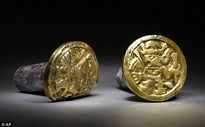 Ir-riċerkaturi qalu li din is-sejba se tgħinhom jgħaqqdu flimkien it-tip ta’ ħajja fl-Andes, sekli qabel ma nħoloq l-imperu tal-Incas, li nkiteb ferm fuqhom mill-Ispanjoli li rebħulhom u ħadulhom l-artijiet.
 L-arkeologa Patrycja Przadk qalet li n-nisa kienu midfunin b’imsielet ta’ metalli prezzjużi mnaqqxin, li hu mifhum li dari kienu jintlibsu biss mill-irġiel. Fost l-artefatti misjuba maġenb l-irġejjen mummifikati nstabu għodod tal-insiġ, magħmulin mid-deheb, skieken u mnanar ritwali, kikkri, kontenituri għall-weraq tal-coca, u numru sabih ta’ kontenituri taċ-ċeramika mżejnin b’mod sabiħ.
 Il-bioarkeologu Wieslaw Wieckowski qal li sitt skeltri ma kinux imlibbsin, u dan jixhed li ntużaw bħala sagrifiċċji umani għall-elit mummifikati.
 Jidher li fi ftit żmien saret moda ġdida l-vidjos tat-trabi jduqu lumija għall-ewwel darba jew b’xi dehra stramba għall-aħħar.
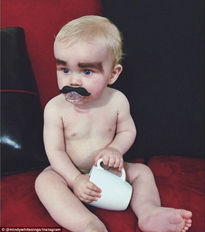 Kien hemm bosta li rriferew għal dan kollu bħala ‘krudeltà’ mat-tfal, waqt li l-ġenituri qed jinsistu li b’hekk mhuma jonqsu xejn lil uliedhom.
 ma kien se jagħmel xejn li ’l quddiem ikerrah id-dehra tal-istess bintu. Żied jgħid li min juri nuqqas ta’ qbil ma’ dak li wettaq hu, hu bniedem marid.
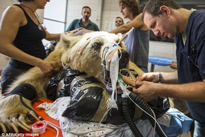 Lil ors ta’ 19-il sena, bl-isem ta’ Mango, ftit żmien ilu saritlu operazzjoni ta’ slip disc f’Iżrael, peress li minħabba l-uġigħ li kellu, ma setax iċaqlaq saqajh ta’ wara. Ħaddiema taz-zoo ndunaw li l-ors kannella Sirjan, ta’ 550 libbra, kellu problema meta rawh miexi b’mod stramb.
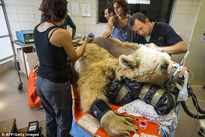 ħalqu. Anki rabtulu ċ-ċinga tal-apparat tal-pressjoni, ma’ idu l-leminija. Waqt li proċeduri simili mhumiex komuni fuq annimali oħra fiċ-Ċentru Zooloġiku ta’ Ramat Gan, din kienet l-ewwel waħda lil qatt saret fuq ors.
  Xjenzjati fil-Ġermanja jinsabu qrib li jsibu d-data ta’ statwa antika tal-injam li skont huma fiha marki għal kodiċi sigrieti miktuba madwar 9,500 sena ilu – aktarx l-eqdem oġġett tax-xorti tiegħu, li nsibu fuq il-pjaneta. L-idolu tal-biża’ Shigir hu darbtejn eqdem mill-piramidi tal-Eġittu u kien imħares bħal kieku kien f’kapsula taż-żmien, fit-truf tal-Punent tas-Siberja.
  Aktarx min ikollu l-ġid jiġbru, iħarsu, iżommu banda waħda biex ikun jista’ jieħu ħsiebu.
 L-ewwel ma ntebaħ kien KILIN, Mikiel Spiteri (20 ta’ Awwissu 1917 ir-Rabat, Malta – 8 ta’ Lulju 2008) * kittieb Malti li ħabb l-ilsien u d-djalett. Beda jħażżeż id-disinn tagħha u kiteb regolari fil-