An Act of Jealousy

Those who are conversant with the profondities of love will appreciate better the sorrow of the parting. ‘Love’, it is often said, ‘lies on the border of hate and is adjacent only to madness’.  I wonder sometimes why the noblest of virtues should be so frail and so mysterious. How often has it also been said that ‘he who loves as an adolescent, learns to hate as a grown up’. 

There are instances in life when man will ponder on bygone memories and learn to criticize his own folly from the logical point of view. And so, in this manner, he pondered.

……….Yesterday she was mine; my wife; vowed she loved me; promised to make me happy; we laughed, loved and made merry………

………..How many evenings did we spend with each other? She loved me then; but now she is gone, gone forever; an intruder had won her love; she forgot all about me now; why should she keep remembering me? What did I do, for her to disinherit me from her heart?…………

She appeared fresh in his mind; an enchanting queen; smiling as she used to pass from under his balcony. He looked; they smiled; they talked; he won her.  They met afterwards nearly every night, breaking the monotony of the village routine by varying their outings – now to the seaside, then to the theatre, sometimes to the disco and more often than not, to the cinema. 

Love had played its part between two feeble hearts and governed all their thoughts and deeds. It was responsible for their omissions to duty and to friends because, as they say, ‘love is blind’.

He would burst in anger, if at times, as she often did, she would not wait for him on his return from work. He loved her madly and that, he reasoned, was credit enough to own her, to patronize her, to feed his eyes on her beauty.  But he was now losing his love and, without his knowledge, he was beginning to transform his love to hate. Yes, hate her! The same woman he had so much adored a short while before!

For what is jealousy? Is it not mistrust? Is it not the doubt in the integrity of the second person? It is, in fact, more than that. It is egoism on the part of the doer and annoyance on the part of the receiver.  Jealousy is the destroyer of love and the stepping stone to madness. 

Involuntarily, our young lover was destroying the love he himself had pained to create. She felt annoyed; without freedom of action; he was enslaving her and that is, by far, more than a woman’s pride can bear.  He had lost her forever. He wept, was confused and, in this state, did not know what he was planning and doing. She was like a bird flying further away from him. He never recovered normality again. Once the passions of hate are aroused there is no remedy to sooth them. He had to do what had to be done. There was no alternative. 

For a full three years he had loved her. But could he say the same for her? Did she reciprocate his love? She had kept his company for three whole years. Or she kept him chained by the lure of love. Now, finding better company, she discarded him like a woman discards old clothes!

Weeks passed and his hate grew without bounds. He now hated her walk (when once he thought it was elegant); her looks (which once he so devotedly revered); her beauty (once so fresh, so noble, so charming, and so heavenly); hated himself for ever once loving her (once he thought himself fortunate in holding her hands).

He hated that tall, bony, painted, cheap, good-for-nothing skeleton who was once his lover. He hated her words, her face, her eyes, her perfume. Unnoticed, he often followed the steps of the merry couple as they made their romantic walk in the moonlight. He followed them to the theatre, to the cinema, everywhere. Yesterday he was in her arms; now he became a lurking dog. One moonlit night, he went to the abandoned cottage near the unused mill. He knew the place very well. He used to make love to her there every night, tenderly, lovingly, passionately. Now he was there spurned by hate and vengeance. 

He looked from the half-opened window of the cottage and saw the silhouette of the two lovers lost in each other’s arms, kissing and vowing their love for each other. He recognized the woman’s silhouette as that of the tall, bony, painted, cheap, good-for-nothing skeleton that once was his own lover. 

Cautiously he crawled near them and held his breath. She was speaking in a hushed voice but he heard her. “Let’s leave this town together ……I can bear him no longer ……… my love is only for you”. 

These words made him madder. He had to do something. He could bear this no longer. He wielded the rusty iron bar and hit them both on their heads. They fell to the ground instantly, lay motionless and no further sound was heard except for the hurried steps of the jilted madman. 

You have visitors” thundered the guardian as he unlocked cell 39 of the State Prison. At the visiting room, the solicitor defending his case made all sorts of enquiries, but the prisoner remained silent. 

Then came the day of the great trial. The court room was full with all kinds of people and journalists. The accused faced the men of the jury who held the balance of his life in their hands. He waited; only to hear one thing; either “guilty” or “not guilty”.  The jurymen retired. The accused conversed impatiently with his solicitor. Then the court was in its second session. 

….. “Have you reached your verdict?” asked the Judge.

….. “Yes, your Honour” stammered the chief juryman.

….. “Then let the court hear it” replied the Judge.

….. “GUILTY your Honour” pronounced the chief juryman. 

….. “Silence” hammered the Judge and, after going through a long speech which would have benefited more a funeral occasion, he concluded:-

“ …….and the Court sentences you to die by the electric chair!

What on earth can describe that brief moment between the death sentence and its execution? Who can describe the feelings of the accused? Hours, minutes, seconds ticking away one by one! Hopes fading like the mist; memories of his life that haunt the accused to his death; desperate hours of his last precious minutes taking him to his end. His doom! A beacon of light ready to be put off! A life that was once so precious and now so cruelly to be ended!

And then it came. He stood erect on the chair – cold, shocks, tremors, death. He had paid dearly for his crime. “Is there any one to claim the body?” shouted the officer in charge of the execution. No one spoke. The body lay there silent, covered with a white shroud with the number 39 stamp on it. Love had shadowed his life; hate had led him to the electric chair; death had carried him into oblivion.

Suddenly the alarm clock started ringing. It was eight o’ clock in the evening. He threw away the bed sheets and got out of bed. He was sweating profusely; and shivering. But he was alive! What a bad dream that was! He washed, dressed hurriedly and went out to meet his girl.  

Sejba u aktar għarfien fuq il-Wari

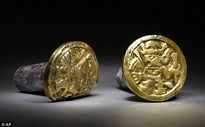
altArkeologi fl-Amerika t’Isfel, dan l-aħħar sabu qabar mhux mimsus li jagħti dawl fuq iċ-ċivilizzazzjoni qadima u misterjuża tal-Wari. Dan wara li kixfu l-iġsma mummifikati  ta’ tliet irġejjen, qrib teżori tad-deheb u sagrifiċċji makabri umani.
 
It-tempju tal-mejtin, li għandu 1,200 sena, nstab fis-sit El Castillo de Huarmey, erba’ sigħat bogħod bil-karozza fin-naħa ta’ fuq tal-kapitali Peruvjana, Lima.
 
altDan il-qabar jagħti minjiera ta’ informazzjoni fuq l-imperu enigmatiku tal-Wari, li ħakmu ’l-Andes ħafna qabel is-suċċessuri magħrufin tagħhom, magħrufin bħala l-Incas.
 
Milosz Giersz, arkeologu ewlieni fit-tim Pollakk-Peruvjan qal li: “għall-ewwel darba fl-istorja tal-arkeoloġija fil-Peru’, sibna qabar imperjali, li jmur lura għall-imperu u l-kultura tal-Wari.”
 
altaltIr-riċerkaturi qalu li din is-sejba se tgħinhom jgħaqqdu flimkien it-tip ta’ ħajja fl-Andes, sekli qabel ma nħoloq l-imperu tal-Incas, li nkiteb ferm fuqhom mill-Ispanjoli li rebħulhom u ħadulhom l-artijiet.
 
Fil-mawsolew, f’piramida kostali, nstabu bċejjeċ tad-deheb, ċeramika u 63 skeletru ta’ madwar 1,300 sena ilu. Ir-riċerkaturi qalu li ħafna mill-iġsma misjuba fil-qabar, kienu ta’ nisa mummifikati bilqiegħda – ħaġa li tindika s-sinjurija u tixhed li n-nisa Wari kellhom aktar saħħa milli kien maħsub qabel. 
 
altL-arkeologa Patrycja Przadk qalet li n-nisa kienu midfunin b’imsielet ta’ metalli prezzjużi mnaqqxin, li hu mifhum li dari kienu jintlibsu biss mill-irġiel. Fost l-artefatti misjuba maġenb l-irġejjen mummifikati nstabu għodod tal-insiġ, magħmulin mid-deheb, skieken u mnanar ritwali, kikkri, kontenituri għall-weraq tal-coca,  u numru sabih ta’ kontenituri taċ-ċeramika mżejnin b’mod sabiħ.
 
L-istoriċi jemmnu li l-Wari, li ħakmu bejn is-sena 600 u l-1100 wara Kristu, kienu l-ewwel nies li rnexxielhom jgħaqqdu t-tribujiet diversi f’network wieħed sofistikat mad-dawra kollha ta’ dawk li llum huma l-Andes Peruvjani.
 
altIl-bioarkeologu Wieslaw Wieckowski qal li sitt skeltri ma kinux imlibbsin, u dan jixhed li ntużaw bħala sagrifiċċji umani għall-elit mummifikati.
 

Talja

TALJA   Sat-Tieni Gwerra Dinjija t-talja kienet, tista’ tgħid, il-ktieb tal-kontijiet li l-bdiewa kienu jżommu biex jitħallsu mill-pitkal li jkun biegħ il-biegħa tiegħu. Fi żmien meta l-bdiewa ma kinux jafu A minn B u wisq inqas jiktbu, it-talja kienet isservi ta’ reġistru. It-talja kienet tkun magħmula minn virga tas-siġar tal-qastan, bħal dawk li jintużaw ukoll biex isiru l-qfief l-antiki. Minnhom l-iskrivani tal-pitkalija kienu jfasslu injama twila daqs 40 ċentimetru u wiesgħa daqs 2.5 ċm. Fit-tarf kien ikun hemm ma’ fejn tintrabat, biex din tinġarr taħt il-karettun mill-bidwi.

Fuqha l-iskrivani kienu jniżżlu sinjali qishom ittri, bħalma kien isir fil-Mesopotamja, biex b’hekk ifakkru lill-bidwi xi ħlas kellu jieħu. Dan għaliex il-bidwi ma kienx jitħallas dak il-ħin li jġib il-prodotti tiegħu fil-pitkalija. Fl-istess ħin l-iskrivan kien iniżżel kollox fuq ir-reġistru tiegħu. Fuq it-talja kienu jitnaqqxu diversi sinjali skont kemm kien jiswa’ x-xiri li jkun irċieva mingħand il-bidwi. Pereżempju meta titnaqqax l-ittra X din kienet tfisser in-numru għaxra, bħal fin-numri Rumani, u kienet tirreferi għal għaxar skudi. Dan minkejja li l-flus dak iż-żmien kienu flus Ingliżi, u għaldaqstant il-ħlas ta’ għaxar skudi kien jitħallas b’xelin u tmien soldi għal kull skud. Rig imxaqleb kien ifisser ħames skudi, rig dritt kien ifisser skud u nofs u rig dritt mhux imħaffer bosta kien ifisser karlin. It-tnaqqix ta’ flus kbar kien isir fuq il-faċċata tat-talja. Il-prezzijiet iż-żgħar kienu jitnaqqxu fil-ġnub tat-talja. Meta fl-aħħar, wara bosta xhur, il-ħlas tal-flus isir, l-iskrivan jieħu t-talja mingħand il-bidwi u jaħraqha, biex ma terġax tintuża. Informazzjoni misjuba fil-ktieb Tifkiriet tal-Imgħoddi ta’ Charles B. Spiteri u addattata.

Moda ġdida fuq Facebook

Charles B. Spiteri

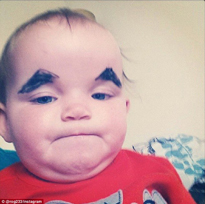
altJidher li fi ftit żmien saret moda ġdida l-vidjos tat-trabi jduqu lumija għall-ewwel darba jew b’xi dehra stramba għall-aħħar.
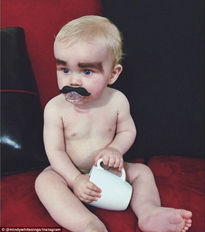
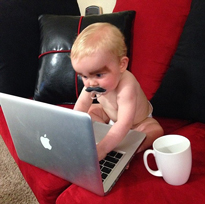
Il-ġenn ġdid jinvolvi tfal ipinġu, oħrajn b’eyebrows mhux solti u mpinġijin fuq it-trabi biex jitteħdulhom ir-ritratti u numru ieħor ta’ tfal f’qagħdiet apposta u mhux tas-soltu biex jidhru fuq Facebook.

altKien hemm bosta li rriferew għal dan kollu bħala ‘krudeltà’ mat-tfal, waqt li l-ġenituri qed jinsistu li b’hekk mhuma jonqsu xejn lil uliedhom.
Forsi l-aktar li dehret bi kbira kien, għax ftit żmien qabel, ir-raġel ta’ Kim Kardashian kien akkużat li biddel l-eybrows ta’ bintu North, li kellha sitt xhur biss. Madankollu hu mill-ewwel ħareġ bl-attakk li bħala missier altma kien se jagħmel xejn li ’l quddiem ikerrah id-dehra tal-istess bintu. Żied jgħid li min juri nuqqas ta’ qbil ma’ dak li wettaq hu, hu bniedem marid.
Xixu

XIXU Logħba tat-tfal li kienet tintlagħab fit-toroq bejn żewġt itfal jew aktar. Dawn jużaw biċċtejn injam – waħda twila bejn 30 u 40 ċm u l-oħra laqxa ta’ bejn 5 u 10 ċm. Din tal-aħħar titqiegħed mal-art, u bl-injama l-kbira t-tfal kienu jagħtu daqqa b’saħħitha mat-tarf tal-injama ż-żgħira, biex din jalzawha mill-art u hekk tittajjar fl-ajru kemm jista’ jkun ’il bogħod. Jirbaħ il-logħba min iwassal l-injama l-aktar ’il bogħod. Meta l-laqxa jtajruha ’l hinn, imbagħad, kienu jgħidu, ‘Kemm se tieħu sal-posta?’ jiġifieri ‘Kemm hemm bogħod minn fejn waqgħet il-laqxa sa fejn hemm il-post aħħari fejn trid titwassal?’ U l-ieħor jgħid, ‘Ħa nieħu ħamsin’ (it-tul tal-injama mmultiplikat ħamsin darba). Allura jekk ikollu dubju jrid ikejjel ħamsin tul tal-injama t-twila mill-post fejn taret il-laqxa. Jekk il-ħamsin joqogħdu, jiżdiedu mal-punti, u jekk le jitlef kollox. Ir-regoli u l-intriċċi kienu jinbidlu skont it-tfal ta’ dak il-post.

Sorsi: Mario Galea, Facebook, Kelmet il-Malti.

A War Story

Joseph Lanzon

It was a nice spring day and people had escaped from their confined houses to enjoy the day in the warm sun. The grandfather was taking his six year old grandson to the park where he would play football with his friends, while he would relax sitting on a bench reading a book. 

More than two hours later the little boy returned to his grandfather sweating and tired from kicking the ball about. After a few minutes puffing and devouring a bar of chocolate, he relaxed on the bench besides his grandfather and asked him “Grandpa, could you tell me a story before we go back home?”

The old man smiled. He liked recounting stories while his grandson enjoyed listening to a good adventure. “Yes, I will tell you a little story about the war which I know that you will like because it has the thrills of an adventure.”

There was a man by the name of Ġużeppi. He worked at His Majesty’s Dockyard in Bormla during the war. The dockyard, then, was a beehive of activity. It was where crippled battleships, cruisers, submarines and aircraft carriers entered for repairs to enable them to continue the Allied fight on the high seas.

Bormla, being so near to the Naval Dockyard and the harbour, had been a prime target for enemy bombers. As a result, most of its houses and buildings were destroyed or heavily damaged while several people were killed and others gravely injured.  

Many of the residents had left the town to reside with relatives or friends in towns or villages in the north of the island, areas which were not subject to the incessant bombings like the south. 

Ġużeppi’s family had, in fact, settled in Rabat and he had to travel the long distance from Rabat to Bormla every morning and returning back in the evening. Sometimes, because of the intensive bombing or because of blocked roads, the buses did not work and he had to make the journey on foot.

One particular day in July of 1942, Ġużeppi went to work as usual at the dockyard. But that day was not to be a usual day. Bormla had just received a horrific hammering from German bombers which caused devastation to this old town.

Those who came from various other towns and villages to work here every day described Bormla as a ‘ghost town’ where dogs, cats and large rats roamed the streets and alleys for food. How it had changed! Before the war, Bormla was one of the busiest places in the whole of Malta where people came from all over the island to do their shopping. It was now an eerie place to visit.   

When Ġużeppi finished work he went to check on the old family house where he lived before the evacuation to Rabat. He was astonished to see that it was destroyed and brought to rubble. He remembered that he had done so much work in this house, including all the furniture, plumbing and electricity. He cried when he witnessed this absolute destruction.

Among the stones, rubble and pieces of wood from the broken furniture, he retrieved a wooden crucifix which had hung on the bedroom wall. Then, despairingly, he went his way to return to his family in Rabat.

The old rambling bus was filled with workers who lived in the northern part of the island. They were returning home after a day’s work in very dangerous circumstances. Sometimes during air raids they had to keep repairing warships because of the urgency of the situation. Sometimes, during heavy bombing, they took refuge in dug-out shelters. 

It was a long and uphill journey practically crossing the whole island. The workers on board the bus were grim-faced, their eyes filled with pity and, at the same time, angry at what they had seen all around them. Nobody spoke. 

As the bus rambled on, passing Marsa, Ħamrun and Attard, it started up the hill for its final lap to Rabat. The passengers were watching the tree-lined country road and the green fields behind them. They were anxious to reach home.

Without them knowing, a lone German fighter plane was hovering around like a hungry vulture seeking his prey. The pilot saw the old bus filled with people rambling its way up the hill. He dived down, engines screaming creating a frightening noise. The bus passengers looked up, saw the plane coming straight at them, and were terrified to death. The German pilot started machine gunning the bus riddling it with bullets.

The driver of the bus, afraid for his life, stopped the bus and everybody got out in a hurry making out for the nearby fields, hiding behind low rubble walls and small farmhouses.

Ġużeppi, with the crucifix close to his chest, jumped a rubble wall, ran to the field and hurled himself face down on the grass with the crucifix under his body.

The German pilot, looking on from above, seeing these helpless people scattering in all directions, started machine gunning them as they ran for cover. It was an eerie scene. There was utter silence except for the noise of the aeroplane engine and the rat-tat-tat of the machine gun.

Ġużeppi lay still, holding his breath, while spread-eagled in the field. He was praying to God, to the Holy Mary and to all the saints to let him live and go back to his family. He heard repeatedly the deadly rat-tat-tat of the machine gun and the occasional scream of other passengers. 

The bus was now ablaze like a great ball of fire in the deserted country road. The plane was still flying low, circling the horrible scene, the pilot looking for survivors to shoot them from above. Then he flew up, turned tail and went away. 

When the still frightened workers did not hear the sound of the plane and of the machine gun, they came out of their hiding places, grouped together and walked up the hill to Rabat.  

As the weary men walked away from the scene, they heard the anti-aircraft guns open up from Ta’ Qali airfield. A barrage of guns was shooting at a target in the sky. Then they saw the plane in flames, going down and down until it crashed in the field a distance away. They stopped, cheered and clapped.

They walked on and on until they arrived in town. Ġużeppi headed straight to his family, still visibly shaken, shocked and angry.

As he entered the house he found his wife Dela and his two sons Johnnie and Joey waiting anxiously huddled together. They sprung up when they saw him, ran up to him and he gathered them lovingly in his outstretched arms. 

Then he sat down and told them that their house in Bormla had been bombed flat. He showed them the wooden crucifix which he had retrieved from the destroyed house. Then, slowly, he recounted the terrible ordeal of the airplane attack on the bus and the passengers as they climbed the hill towards Rabat. Despite this terrible experience, they were all extremely happy that he was still alive and back with them.” 

As the old man finished his story, the child looked up and saw tears falling down his cheeks. “Why are you crying Grandpa?’ he asked him tenderly. “I’m remembering child, things I had almost forgotten which happened some fifty years ago. I want to tell you that this is a true story. The little boy Joey was then, like you, only six years old. He is, you know, actually myself! Ġużeppi is your great grandfather! He was a small man but in my child’s eyes of fifty years ago, he was as big as a mountain!

The sun was now setting and it would soon get dark. The old man and the small boy got up from the bench; the child’s small hands held tightly in his grandfather’s wrinkled ones and, slowly and silently, started walking towards home.    

Operazzjoni fuq ors

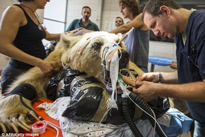
altLil ors ta’ 19-il sena, bl-isem ta’ Mango, ftit żmien ilu saritlu operazzjoni  ta’ slip disc f’Iżrael, peress li minħabba l-uġigħ li kellu, ma setax iċaqlaq saqajh ta’ wara. Ħaddiema taz-zoo ndunaw li l-ors kannella Sirjan, ta’ 550 libbra, kellu problema meta rawh miexi b’mod stramb.
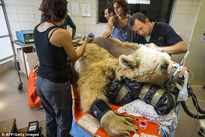
 
It-tabib Merav Shamir, li mexxa l-operazzjoni, qal: “Kien fi stat akut. Għall-bidu ma setax iċaqlaq siequ ta’ wara tal-lemin u f’temp ta’ jumejn spiċċa paralizzat minn saqajh it-tnejn.” X-ray li saret fuq l-ors uriet li kellu xi ħsara fl-ispina. Għalhekk, il-veterinarji qaxxrulu parti mis-suf ta’ dahru, waqt li tawh il-loppju biex ilestuh għall-operazzjoni. Qegħdulu rasu mistrieħa fuq imħadda miksija f’borża tal-plastik u qabbdulu pajp ma’ altħalqu. Anki rabtulu ċ-ċinga tal-apparat tal-pressjoni, ma’ idu l-leminija. Waqt li proċeduri simili mhumiex komuni fuq annimali oħra fiċ-Ċentru Zooloġiku ta’ Ramat Gan, din kienet l-ewwel waħda lil qatt saret fuq ors. 
 
Is-sena li għaddiet, il-veterinarji użaw l-agupuntura biex jikkuraw infezzjoni kronika f’widna ta’ tigra Sumatrana ta’ 14-il sena, bl-isem ta’ Pedang. Shamir qal li dari, orsijiet bi problema bħal ta’ Mango kienu jitraqqdu u għalhekk din kienet l-ewwel darba li saret operazzjoni bħal din fuq Mango. Operazzjonijiet simili s’issa twettqu b’suċċess fuq klieb żgħar. Fi ftit ġimgħat oħra, il-veterinarji jkunu jafu jekk din l-opreazzjoni kinitx ta’ suċċess.
 
Storikament, l-orsijiet kannella Sirjani, kienu jinstabu fil-postijiet muntanjużi tat-Turkija, l-Eġittu, l-Iżrael, is-Sirja, il-Palestina, l-Iraq u partijiet oħra mill-Ewrasja. Madankollu, llum naqsu drastikament minn bosta pajjiżi.
 

Żift

ŻIFT   1. Għelk li joħroġ mis-siġra taż-żnuber. Dan jista’ jissajjar u b’hekk isir ta’ kulur sewdieni. 2. Kelma oħra għal-likwidu li jixbah lill-qatran.

Din il-kelma ġieli tingħad bħala ewfemiżmu għal kelma oħra vulgari. Hemm qawl li jgħid hekk: Il-qorti għatba taż-żift, tmidd sieqek fuqha u teħel.

Studju fuq l-eqdem statwa kbira fid-dinja

altXjenzjati fil-Ġermanja jinsabu qrib li jsibu d-data ta’ statwa antika tal-injam li skont huma fiha marki għal kodiċi sigrieti miktuba madwar 9,500 sena ilu – aktarx l-eqdem oġġett tax-xorti tiegħu, li nsibu fuq il-pjaneta. L-idolu tal-biża’ Shigir hu darbtejn eqdem mill-piramidi tal-Eġittu u kien imħares bħal kieku kien f’kapsula taż-żmien, fit-truf tal-Punent tas-Siberja. 
 
Issa, esperti Russi jgħidu li dan l-oġġett qadim fih kodifikazzjoni fuq il-ħolqien tad-dinja – li qed jitiqies bħala messaġġ għall-bniedem modern minn dawk tal-era Mesolitika ta’ żmien il-Ħaġar. Ix-xjenzjati Ġermaniżi issa jinsabu qrib li jagħtu d-data preċiża ta’ din l-istatwa, li hi artefatt mill-aqwa, u r-riżultati se jkunu magħrufa bejn Frar u Marzu li ġej.
 
Minn dak li ħareġ s’issa jingħad li l-istatwa ġiet imnaqqxa minn mgħarfa tal-ġebel fuq siġra konifera. Illum fiha tul ta’ 2.8 metri (disa’ piedi u żewġ pulzieri), iżda oriġinarjament kienet ta’ 5.3 metri (17-il pied u tliet pulzieri) għoli ta’ dar b’żewġ sulari.
Għalkemm kienet skolpita madwar 7,500 qabel Kristu, instabet fl-1890 f’Kirovgrad, fir-reġjun ta’ Sverdlovsk, fil-Muntanji Urali.
 
It-tul nieqes tagħha; madwar żewġ metri (sitt piedi u ħames pulzieri) ntilfu waqt it-taqlib politiku fir-Russja fis-seklu 20, għalkemm l-arkeologu Siberjan Vladimir Tolmachev kien laħaq pinġa l-immaġni kollha, u l-esperti jsostnu li l-messaġġi mnaqqxa fl-ornament għadhom misterju għall-bniedem modern.
 
Min skolpa l-istatwa, għamel fiha sebat uċuħ, li wieħed minnhom biss hu tri-dimensjonali.
 
Qed jingħad li l-uċuħ jistgħu jkunu ta’ spirti li għexu fid-dinja, fl-antik. Il-Professur Mikhail Zhilin, fittiex ewlieni mill-Akkademja Russa tax-Xjenza u l-Istitut tal-Arkeoloġija kien rappurtat li qal “Qed nistudjaw dan l-idolu b’rispett imħallat mal-biża’, għax inħossu li hu xi ħaġa ħajja u fl-istess waqt kumplikat għall-aħħar. Permezz ta’ dan l-idolu, in-nies kienu qed jgħaddu l-għarfien tagħhom lin-nies ta’ warajhom.”
 

The Ring

It is the year 2011. The hospital is an ugly and sombre place to be in at any time. It is so for visitors who come here for a few minutes then return back to their own comfortable homes. It is worse for patients who stay here for days or weeks or months and, often times, do not return back home.

The bright light from the hot mid-day sun filters inside through the large windows of the room where four patients lay in their beds. Some are surrounded by relatives giving them comfort. Others are alone, loneliness showing on their faces.  

“Are you a relative of our patient Delia?” the nurse asked me. “Yes. I’m her son”, I reply. “I am afraid she is not well today”, she remarked. “Her health has deteriorated these last few hours. How old is she?”  “Ninety six”, I reply in a subdued tone. “I think that you should inform the rest of the family to come and be with her at this moment. She is, you know, fading away slowly”, the nurse continued. 

                            ______________________________

Our story now goes back eighty years. Joseph was a master craftsman, a man of many talents who could do anything with his hands. He hailed from the old town of Birgu which was the seat and the capital of the Knights of St. John after they arrived in Malta in 1530. 

Until the years before the beginning of the Second World War, the people of Birgu were seafaring, earning their livelihood from small boats plying the harbour. But Joseph was different; he was good at school, had passed the Dockyard apprentices examination and was therefore employed at the Dockyard, then considered as the best employer on the island. 

He had met Josephine some time after he had started working. She was from the nearby town of Bormla, the eldest of three sisters. Their father and their brother had emigrated to the United States some years back, leaving their mother to raise them up by herself, but with much love and fair discipline, as was common in most Maltese families in those days. 

Besides the three sisters and their mother, the household consisted also of two aunts. As the master of the house was in another continent, thousands of miles away, Joseph was a frequent visitor at their house in the narrow many-stepped Strada Buongiorno, calling daily after a day’s work at the Dockyard. In these circumstances, being the only man in the house, he was always looked for to give advice, to carry out various works and to do other duties normally carried out by the man of the house.  

As their courtship prospered, their love for each other grew so much that they were engaged to be married. Her mother and her sisters were delighted for Josephine. Joseph gave her a gold ring which she proudly and happily put on her finger signifying her devotion and love to him, as well as a promise to marry him and live happily together for evermore. 

In Joseph’s eyes Josephine was beautiful. He believed that a beautiful person is not one who has a beautiful face or a beautiful figure, but one who has a beautiful character and a beautiful smile. He believed that the face and the figure are just the outward signs of your personality, while the character and smile are the inner signs of your own self. The face and the figure may deceive but the character and the smile show who the person really is.

Only a few weeks before they were to be married, tragedy struck. Josephine became ill and she got worse as the days passed. She knew that her days were numbered and that she would not, as she had ardently hoped, be a lifelong companion to Joseph. 

He was always by her side, comforting her, giving her courage to beat her illness. He was a pillar of strength to her and to all the members of the family during this ordeal. 

One day she felt that her end was near. She called her younger sister Delia and spoke to her about Joseph. She told her that he is a good and honest man and, if she could love him as she did, they would make a remarkable couple. Her love for this wonderful man and her dream of a life together with him would be carried on by her younger sister. Delia cried seeing her sister ebbing away slowly and painfully under her very eyes. 

Josephine’s task was not yet finished. She called Joseph by her side and told him not to be afraid as she would be looking after him after her death. She told him about Delia, what a remarkable couple they would make. Before her last breath, as he held her in his arms and cried, she gave him back the gold ring he had given her some time before and told him, “It would look nice on Delia’s finger!” Those were her last words as she died, still in Joseph’s strong arms. 

Days and weeks passed since this tragedy when all the members of the family, as well as Joseph, grew closer together during their bereavement. Although Joseph and Delia had been pushed towards each other by Josephine before she died, they found that they could relate naturally toward each other. They found solace in each other and love quickly blossomed between these two young persons. 

They were eventually engaged and married in 1930. They set up home in Bormla and during their happy marriage had two sons and a daughter. The Second World War forced the family to evacuate to Rabat where they remained for three years. Their house in Bormla was destroyed by enemy bombs but the family held together for a new dawn when life could return back to normal. 

After the end of the war they returned to Bormla, built their house again and continued their life together. Joseph, a happy and likable person, was loved by everybody.  But the good Lord had other plans for him. He died in 1961 at the age of 56 after thirty years of a happy marriage to Delia. It was a tragic loss as he was the most important cog of the whole family. 

                              ________________________________

It is 2011 again. My mother is in her death bed. The nurse calls me again. “She asked me to give this to her family”, she said as she placed a small folded tissue paper in my outstretched hands. Later, with other members of the family, I watched the last few moments of her 96 year life ebbing slowly and silently away. 

Two days after her death, when she went to meet my father who had been waiting fifty years for her to rejoin him, I remembered the nurse’s words and slowly unfolded the tissue paper. There, in yellowish gold and shining bright, was the ring that my father had first given to Josephine and then to her sister, my mother, eighty years ago. 

As I sat, sad and lonely in my chair, my mind, as it has a habit of doing, went a-roaming. Like a flash back from the past, I saw the whole story of the ring, as recounted to me by my mother herself many years ago, unfolding before my eyes. I marvelled at the role this small metallic object had played in the destiny of three good and gentle people.