Karru ċkejken għal qażquż imweġġa’

Charles B. Spiteri

alt

Qażquż ċkejken li kiser il-pelvis meta ommu waqgħet fuqu, sarlu karru biex jgħinu jibqa’ jimxi waqt li jfiq.

Il-qażquż, bl-isem ta’ Leon Trotsky kellu ġimagħtejn biss meta ommu tfixklet fih, waqgħet fuqu u kisritlu l-pelvis, b’konsegwenza li ma setax jimxi aktar. Iżda ruħ tajba ħadet lill-annimal ferut fil-Missjoni Edgar; alt

Santwarju tal-annimali li ma jaħdimx għall-qligħ, f’Kilmore, l-Awstralja, fejn minkejja l-feriti tiegħu, Leon qed jagħmel progress kontinwu u jingħata l-kura.

Iżda peress li l-qażquż għadu ċkejken ħafna u l-għadam tiegħu hu rqiq, l-attenzjoni fuqu kellha tkun studjata sew. Barra minn hekk inħadem l-iżgħar karru li qatt inħadem, biex ma joħloqlux toqol fuq idejh.

Nostalġija bi prezz esaġerat!

altAra tabilħaqq li kollox idur dawra tond! Tiftakruha l-iscooter Maltija bir-roti tal-ball races, u kemm, ta’ tfal, konna niġru bihom fit-toroq? Mela dik l-invenzjoni reġgħet ħadet is-sura u tispera li tikseb popolarità. Iżda kontra l-iscooter tagħna, li ma kinitx tiswa flus, din l-invenzjoni ġdida mistennija li tiġi tiswa €1,257.50ċ.
 
Hu maħsub li minn tfal, sa eżekuttivi tan-negozju aktarx jibdew iħaddmu dan it-tip ta’ sewqan biex jaslu malajr fl-uffiċċji fl-ibliet. U dan għax disinn ġdid ta’ scooters jippermettilhom ikunu tant żgħar, li jingħalqu fil-qies ta’ karta A4.
 
Kien George Mabey, student fl-universita’ ta’ Londra li ħareġ b’din l-invenzjoni ta’ scooter li tingħalaq u li biha rebaħ premju. Hu ffurmaha mill-aluminju; fih għadda cable, li meta dak li jkun jiftaħha, tkun tiflaħ il-piż ta’ bniedem adult. Iżda meta tkun magħluqa, tkun tant żgħira, li tista’ titqiegħed f’basket.
 
Hi tiżen inqas minn 11-il libbra (ħames kilogrammi).
 

The Ring

It is the year 2011. The hospital is an ugly and sombre place to be in at any time. It is so for visitors who come here for a few minutes then return back to their own comfortable homes. It is worse for patients who stay here for days or weeks or months and, often times, do not return back home.

The bright light from the hot mid-day sun filters inside through the large windows of the room where four patients lay in their beds. Some are surrounded by relatives giving them comfort. Others are alone, loneliness showing on their faces.  

“Are you a relative of our patient Delia?” the nurse asked me. “Yes. I’m her son”, I reply. “I am afraid she is not well today”, she remarked. “Her health has deteriorated these last few hours. How old is she?”  “Ninety six”, I reply in a subdued tone. “I think that you should inform the rest of the family to come and be with her at this moment. She is, you know, fading away slowly”, the nurse continued. 

                            ______________________________

Our story now goes back eighty years. Joseph was a master craftsman, a man of many talents who could do anything with his hands. He hailed from the old town of Birgu which was the seat and the capital of the Knights of St. John after they arrived in Malta in 1530. 

Until the years before the beginning of the Second World War, the people of Birgu were seafaring, earning their livelihood from small boats plying the harbour. But Joseph was different; he was good at school, had passed the Dockyard apprentices examination and was therefore employed at the Dockyard, then considered as the best employer on the island. 

He had met Josephine some time after he had started working. She was from the nearby town of Bormla, the eldest of three sisters. Their father and their brother had emigrated to the United States some years back, leaving their mother to raise them up by herself, but with much love and fair discipline, as was common in most Maltese families in those days. 

Besides the three sisters and their mother, the household consisted also of two aunts. As the master of the house was in another continent, thousands of miles away, Joseph was a frequent visitor at their house in the narrow many-stepped Strada Buongiorno, calling daily after a day’s work at the Dockyard. In these circumstances, being the only man in the house, he was always looked for to give advice, to carry out various works and to do other duties normally carried out by the man of the house.  

As their courtship prospered, their love for each other grew so much that they were engaged to be married. Her mother and her sisters were delighted for Josephine. Joseph gave her a gold ring which she proudly and happily put on her finger signifying her devotion and love to him, as well as a promise to marry him and live happily together for evermore. 

In Joseph’s eyes Josephine was beautiful. He believed that a beautiful person is not one who has a beautiful face or a beautiful figure, but one who has a beautiful character and a beautiful smile. He believed that the face and the figure are just the outward signs of your personality, while the character and smile are the inner signs of your own self. The face and the figure may deceive but the character and the smile show who the person really is.

Only a few weeks before they were to be married, tragedy struck. Josephine became ill and she got worse as the days passed. She knew that her days were numbered and that she would not, as she had ardently hoped, be a lifelong companion to Joseph. 

He was always by her side, comforting her, giving her courage to beat her illness. He was a pillar of strength to her and to all the members of the family during this ordeal. 

One day she felt that her end was near. She called her younger sister Delia and spoke to her about Joseph. She told her that he is a good and honest man and, if she could love him as she did, they would make a remarkable couple. Her love for this wonderful man and her dream of a life together with him would be carried on by her younger sister. Delia cried seeing her sister ebbing away slowly and painfully under her very eyes. 

Josephine’s task was not yet finished. She called Joseph by her side and told him not to be afraid as she would be looking after him after her death. She told him about Delia, what a remarkable couple they would make. Before her last breath, as he held her in his arms and cried, she gave him back the gold ring he had given her some time before and told him, “It would look nice on Delia’s finger!” Those were her last words as she died, still in Joseph’s strong arms. 

Days and weeks passed since this tragedy when all the members of the family, as well as Joseph, grew closer together during their bereavement. Although Joseph and Delia had been pushed towards each other by Josephine before she died, they found that they could relate naturally toward each other. They found solace in each other and love quickly blossomed between these two young persons. 

They were eventually engaged and married in 1930. They set up home in Bormla and during their happy marriage had two sons and a daughter. The Second World War forced the family to evacuate to Rabat where they remained for three years. Their house in Bormla was destroyed by enemy bombs but the family held together for a new dawn when life could return back to normal. 

After the end of the war they returned to Bormla, built their house again and continued their life together. Joseph, a happy and likable person, was loved by everybody.  But the good Lord had other plans for him. He died in 1961 at the age of 56 after thirty years of a happy marriage to Delia. It was a tragic loss as he was the most important cog of the whole family. 

                              ________________________________

It is 2011 again. My mother is in her death bed. The nurse calls me again. “She asked me to give this to her family”, she said as she placed a small folded tissue paper in my outstretched hands. Later, with other members of the family, I watched the last few moments of her 96 year life ebbing slowly and silently away. 

Two days after her death, when she went to meet my father who had been waiting fifty years for her to rejoin him, I remembered the nurse’s words and slowly unfolded the tissue paper. There, in yellowish gold and shining bright, was the ring that my father had first given to Josephine and then to her sister, my mother, eighty years ago. 

As I sat, sad and lonely in my chair, my mind, as it has a habit of doing, went a-roaming. Like a flash back from the past, I saw the whole story of the ring, as recounted to me by my mother herself many years ago, unfolding before my eyes. I marvelled at the role this small metallic object had played in the destiny of three good and gentle people. 

Ġawhar

altAktarx min ikollu l-ġid jiġbru, iħarsu, iżommu banda waħda biex ikun jista’ jieħu ħsiebu.

Malta għandha bosta ġawhar imxerred mal-pajjiż kollu. Knejjes żgħar li fihom ġieħ u li juru l-għożża li kellhom missirijietna għat-twemmin u kemm investew biex sabulhom post, fassluhom u bnewhom.

Mhux kollha qegħdin fl-aħjar qagħda! Illum min sab min iħobbu bħal il-knisja ta’ BIRMIFTUĦ, il-Gudja, u hemm min ma sabx bħal il-knisja taħt l-art f’Bormla li għad trid ssib il-kobor tagħha.

altL-ewwel ma ntebaħ kien KILIN, Mikiel Spiteri (20 ta’ Awwissu 1917 ir-Rabat, Malta – 8 ta’ Lulju 2008) * kittieb Malti li ħabb l-ilsien u d-djalett. Beda jħażżeż id-disinn tagħha u kiteb regolari fil-Leħen is-Sewwa biex jiftħlilna għajnejna u ngħożżuhom.

Fejn toqgħod int? Ġo belt jew raħal jew rħajjel? Taf kemm hawn knejjes żgħar u għal min huma ddedikati? Fittex, aqra u adotta kappella u ikteb fuqha, biex ta’ warajna jsibu kollox aħjar milli sibna aħna.

La tidħol fiż-żmien u tibda tterraq, tapprezza u jġarrab il-kenn int u tkun għad-dell tagħha.

Tarmix dak li missirijietna waqqfu u kabbru!

* Xogħlijiet

Saġġi u novelli

  • Burdati (1970)
  • Burdati 71 (1971)
  • Tlikki Tlikki ma’ Wenzu (1972)
  • Hawn Aħna, Wenz (1991)
  • Fuq il-Għajn ta’ San Bastjan (1973)
  • Wara l-Għajn ta’ San Bastjan (1994)
  • Iż-Żmien Isajjar il-Bajtar (1996)
  • Għajnejn Kalanġ (1998) ġabra ta’ novelli

Drammi

  • Bl-Irġulija u bl-Onestà, deher fi ktieb bl-istess titlu flimkien ma’ ġabra ta’ novelli.

Rumanzi

  • L-Għafrid (1975)
  • Tmint Ijiem fi Dragunara (1984)
  • It-Tapit Imsaħħar (1995)
  • Tinsiex, Publius, Tinsiex! (2003).

Diversi

  • L-Alla li ma Nemminx Fih (1983) traduzzjoni mill-Ispanjol ta’ El Dios en quien no creo (1969) ta’ Juan Arias.[4]
  • Sensiela ta’ ħames kotba żgħar Kappelli u Knejjes Żgħar (1967),
  • Nistqarr (1968)
  • Djar is-Sultana (1969)
  • Osanna (1978).

Smaċtu / Żmaċtu

SMAĊTU / ŻMAĊTU   Bniedem stramb li jġib ruħu mhux tas-soltu. J.A. jgħid li din tista’ tkun ġejja minn ‘xiżmatiku’.

Kelma oħra simili hi SMAJĊ / ŻMAJĊ / SMAJTX – raġel tal-kampanja. Bniedem li jiġbor iż-żibel. 

Kelma li kienet tintuża mill-Militar Ingliż u li kienet tirreferi għal xi ħadd li xogħlu kien li jiġbor iż-żibel fil-kwartieri tas-suldati. Ing. smitch. Din il-kelma hi waħda minn żewġ loan words mill-ilsien Ingliż li jidhru fid-dizzjunarju ta’ G.B.F. (1945).

Ara: IBBLAKKA.

The Man with a new Face

‘Queens College Hospital’ in Nottingham’s east side was a military hospital specializing in the treatment of facial injuries, reconstruction of facial features and plastic surgery. It treated soldiers, sailors and airmen of the British and Allied forces during the last war. It was situated in a secluded part of the town, beyond the park, with security all around to discourage visitors, intruders and curious people. It was rumoured among the town’s people that strange things happened there. 

The hospital was actually a large and old stately house converted by the Military authorities for service personnel who needed special facial treatment following head injuries sustained during the war. It was run by Dr Chris Cox and his team of doctors, surgeons, nurses and other medical staff, all of whom were qualified and experienced in this special field. Although most of them were civilians they were under the orders of the military and not the civilian government.  

“When are they going to remove the bandages from my face?” asked the patient as he walked in the extensive garden grounds of the hospital. Nurse Smith, who was accompanying him, looked at him tenderly and replied.  “Next week. I saw it marked in the surgeon’s schedule. The time has come.”

“I want to see my face. It has been more than a year since I was admitted here”, he remarked expectantly. “You will be as good as new, mark my words, but you will have to adjust to your new face.” replied the nurse. “I will. It was not much of an angel’s face to begin with!” he replied mockingly. He was anxious but he was also afraid. He had not stepped out of the hospital for a whole year. When he entered the hospital he told the doctors that he could not recall his name and regiment, so he was referred to as ‘Lucky Leslie’ because he was considered to have been lucky to survive following his extensive injuries. He did not remember when he was brought in straight by ambulance from Folkstone, probably because he was then unconscious, . But he remembered the bombs, the mines, the deaths, the fear, the ships and the utter confusion on the beaches of Dunkirk. British and Allied troops were stranded on the beaches of this French coast on that fateful day in June of 1940. German planes bombarded them and Panzer tanks surrounded them. The remnants of the Allied army were helpless. The German troops in front of them, the enemy plans above them and the sea behind them.

Besides the Navy, more than 700 little ships, mostly fishing boats and pleasure crafts of all shapes and sizes, were put to sea from the shores of England. Some were men who hadn’t navigated a vessel for years but had volunteered to race across the channel and pick up the stranded soldiers who were under a hammering from the German guns and planes. Under horrific conditions they did their best.  Thousands of men, not only British, but also French and Belgian soldiers were plucked from those beaches. Trip after trip was made to bring these men back to England and fight another day. The evacuation of all these men was a miracle in military history: 68,000 soldiers were killed or captured while 330,000 were successfully evacuated back to England, snatched from the jaws of certain death. 

But behind them, along the sand dunes of this French seaside town, a mass of bodies covered the beaches and many more floated gently in the sea. It was a defeat but, as Winston Churchill said later, also a victory at the same time. He remembered lying half unconscious on the beach, his face covered in blood, unable to move and waiting for help. He recalls how two men bandaged his head, put him on a stretcher and raced with him to board a small boat already full up with other wounded men. 

Then he lost total consciousness as the skipper arrived in Folkstone and all the men were disembarked. He was taken to a make-shift hospital set up purposely to see immediately to the needs of the wounded. On seeing the smashed face, he was transferred to ‘Queens College Hospital’ without delay where, diagnosed as in urgent need of major treatment, he was immediately operated upon. Dr Cox informed the staff that the patient would have to stay in the hospital for a long time, during which he would do his best to reconstruct his face. 

For a whole year Dr Cox and his team worked on him with utmost care. The day had now arrived when they would see the result of their labours. What would be his reaction when the bandages were removed? Would he like his new face? Would he accept his new identity?

On the day when his bandages were to be removed, Nurse Smith sat beside him for a long time giving him encouragement and boosting his spirit. When, finally, Dr Cox removed the bandages, Lucky Leslie did not want to open his eyes. When he finally did, he asked the nurse for a mirror, looked at his face and cried. He was satisfied with his new face, but he did not recognize himself! He was a new man.

He was congratulated by Dr Cox, Nurse Smith and the staff, however he replied that it is they who deserved the congratulations for the miracle that they had performed. He would forever be indebted to them for giving him a new life.

On a fine day in September of 1941, Lucky Leslie walked out of ‘Queens College Hospital’ and stepped out into the outside world. Fifteen months closed in a hospital made him wary of the future. He took a train to Coventry where he intended to settle down as it was the place he was brought up in, which he knew well, where people he knew lived and worked. His parents, unfortunately, had both died tragically during one of the air raids on the city.

Coventry had changed. The city had suffered terribly from bombing during the early stages of the war. He settled in a lodging house and then strolled along the streets of the old town. Familiar landmarks, familiar faces. He saw Peter, his life-long friend, said “Good day” to him, he replied “The same to you mate” and went his way. He did not recognize him! He was a stranger in his own town and among his own people.

He took up light work at a department store because his leg prevented him from doing any strenuous work. He was hard working and diligent and an organizer. In a short time he gained the confidence of the directors and was promoted to manager of the store, with responsibility for purchase and display.

One day he sat down on a bench in the park reading the newspaper. When, looking sideways, he was surprised to see his former girlfriend at the nearby bench. She was the same as he had remembered her – good-looking, vibrant and talkative. They got talking about this, that and the other.

“Are you from Coventry?” she asked. “No, I came down from Newcastle some months ago, I now work at Curry’s” he replied. She told him, about herself, her work as a cashier, her parents.   They got on well together and promised to meet again.

When they met again, Gill Askew showed him a photo of her former boyfriend Clarence Woods whom, she said, she had loved dearly and was devastated when he was reported ‘missing presumed dead’ in Dunkirk a year and a half ago.  Lucky Leslie, as he was now known by everybody, admired her loyalty to him when he was still known as Clarence Woods. She still loved him! Well, she still loved his previous face!

Their courtship continued while Coventry was under a bomb siege from German aircraft, when the town suffered heavily and many people died.  They were married in March of 1942. He told her that he did not have any objection to the picture of Clarence being hung in the house. He also insisted on accompanying her occasionally to St. Thomas Cemetery where a plaque in memory of her former boyfriend was erected by his parents. He said that he felt him to be like his unfortunate brother. So Gill hung his picture along with their wedding photo. Lucky Leslie and Gill Askew lived a happy life together filled with love for each other and were blessed with two children, a boy and a girl. 

On 14 December 1980, Lucky Leslie died in his sleep at 60 years of age. He was buried in the town’s St. Thomas Cemetery. His plaque reads – “LUCKY LESLIE, AGED 60 YEARS, DIED ON 14. 12. 1980.  A LOVING AND DEDICATED HUSBAND AND FATHER.  R. I. P.”  Right next to him  stood the memorial plaque of Clarence Woods with the following inscription – CLARENCE WOODS, AGED 20 YEARS, DIED IN JUNE 1940 AT DUNKIRK FIGHTING GALLANTLY FOR KING AND COUNTRY. R. I. P.”

And so Lucky Leslie or Clarence Woods took his secret with him to the grave. Two memorials, two graves, but one man. When Gill visits the cemetery and prays for both the men she loved in her lifetime, little does she know that they were one and the same person.

Stola u Salib

STOLA U SALIB   Espressjoni li tfisser li bniedem li wieħed ikun qiegħed jirreferi għalih hu bla sold fil-but. Ara Joseph Aquilina.

Ħajr lil Dun Ġwann Galea.

Imut l-itqal bniedem

Charles B. Spiteri

alt

Miet il-Messikan li darba kien imniżżel bħala l-itqal bniedem tad-dinja. Kellu 48 sena.

Manuel Uribe, li fl-2006 kien ċertifikat mill-Guinness World Records bħala li jiżen 1,230 libbra kien naqas għal 867 libbra.

Il-mewt ta’ Uribe kienet konfermata minn uffiċjal fid-dipartiment tas-saħħa tal-istat ta’ Nuevo Leon, fejn tinsab il-belt ta’ Monterrey. Hu kien iddaħħal hemm snin qabel, peress li ma setax jimxi waħdu. Barra minn hekk kellu problemi bil-qalb. Biex twassal l-isptar kellu jintuża krejn mill-ħaddiema tal-emerġenza u tal-protezzjoni ċivili.

alt

Fl-2008, Uribe żżewweġ lil Claudia u din l-okkażjoni kienet waħda mill-ftit li ġegħlitu joħroġ mid-dar fl-aħħar snin. Sa ma ġie biex jiżżewweġ u wara snin ta’ dieta, eżerċizzju u kura medika, Uribe tilef aktar minn 550 libbra. Kellu f’moħħu li fil-knisja jimxi sal-artal, iżda ma rnexxilux. Skont l-Associated Press, kellu jikri trakk biex jimtedd fuq sodda li nħadmet apposta, u meta wasal ħdejn l-għarusa tiegħu li dak iż-żmien kellha 38 sena, nfexx jibki, u lanqas daq il-kejk tat-tieġ tiegħu stess.

Aktar qabel, meta kien jiżen 280 libbra, Uribe kien miżżewweġ lil Solis, iżda meta beda jeħxien b’mod drammatiku, ir-relazzjoni tagħhom saret diffiċli, u talbet għad-divorzju.

Il-ħxuna enormi tiegħu bdiet tidher sew fl-1992. Imbagħad, fl-2007 stqarr mal-ABC News li għamel kull dieta li wieħed jista’ jimmaġina, iżda ma kiseb ebda riżultat.

Sa mis-sajf tal-2002 Uribe spiċċa fis-sodda, jiddependi minn ommu u l-ħbieb biex jitimgħuh u jnaddfuh.

Il-Qorti wara l-għajbien ta’ qattus

Charles B. Spiteri

alt

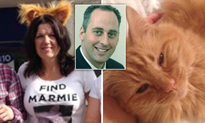
Raġel separat, dan l-aħħar ittella’ l-Qorti akkużat li seraq lil ‘Marmalade’, il-qattus adorabbli tal-eks mara tiegħu. Dan għamlu ġimgħat wara s-separazzjoni tagħhom.

Jonathan Brewster ta’ 45 sena telaq minn daru f’Maidstone Kent u spiċċa akkużat li seraq il-pet ta’ 13-il sena. Martu Tracy, ta’ 52 sena iddedikat dawn ix-xhur tfittex lill-qattus u sa spiċċat tilfet ix-xogħol li kellha, biex tagħmel hekk ma’ bosta ħbieb tagħha.

Issa, Jonathan, li hu inġinier mekkaniku qed jallega li kellu bosta theddid għal ħajtu fuq l-akkuża li seraq il-qattus u rmieh. Wara li deher bħala akkużat fil-Qorti tal-Maġistrati f’Maidstone, ingħata l-ħelsien fuq pleġġ sa ma jibda jinstema’ l-ġuri f’Jannar li ġej.

Intqal li hekk kif ‘Marmalade’ ma rritornax id-dar, Tracy u l-ħbieb tagħha ġabru s-somma ta’ £1,300 għal min isibu u waqqfu bosta gruppi ta’ voluntiera, li qagħdu jfittxuh fit-toroq. Iżda t-tiftix ma ta l-ebda riżultat.

Terry qed tallega li l-qattus hu meqjus bħala binha u qed tgħix ħajja ddisprata mingħajru.

Talja

TALJA   Sat-Tieni Gwerra Dinjija t-talja kienet, tista’ tgħid, il-ktieb tal-kontijiet li l-bdiewa kienu jżommu biex jitħallsu mill-pitkal li jkun biegħ il-biegħa tiegħu. Fi żmien meta l-bdiewa ma kinux jafu A minn B u wisq inqas jiktbu, it-talja kienet isservi ta’ reġistru. It-talja kienet tkun magħmula minn virga tas-siġar tal-qastan, bħal dawk li jintużaw ukoll biex isiru l-qfief l-antiki. Minnhom l-iskrivani tal-pitkalija kienu jfasslu injama twila daqs 40 ċentimetru u wiesgħa daqs 2.5 ċm. Fit-tarf kien ikun hemm ma’ fejn tintrabat, biex din tinġarr taħt il-karettun mill-bidwi.

Fuqha l-iskrivani kienu jniżżlu sinjali qishom ittri, bħalma kien isir fil-Mesopotamja, biex b’hekk ifakkru lill-bidwi xi ħlas kellu jieħu. Dan għaliex il-bidwi ma kienx jitħallas dak il-ħin li jġib il-prodotti tiegħu fil-pitkalija. Fl-istess ħin l-iskrivan kien iniżżel kollox fuq ir-reġistru tiegħu. Fuq it-talja kienu jitnaqqxu diversi sinjali skont kemm kien jiswa’ x-xiri li jkun irċieva mingħand il-bidwi. Pereżempju meta titnaqqax l-ittra X din kienet tfisser in-numru għaxra, bħal fin-numri Rumani, u kienet tirreferi għal għaxar skudi. Dan minkejja li l-flus dak iż-żmien kienu flus Ingliżi, u għaldaqstant il-ħlas ta’ għaxar skudi kien jitħallas b’xelin u tmien soldi għal kull skud. Rig imxaqleb kien ifisser ħames skudi, rig dritt kien ifisser skud u nofs u rig dritt mhux imħaffer bosta kien ifisser karlin. It-tnaqqix ta’ flus kbar kien isir fuq il-faċċata tat-talja. Il-prezzijiet iż-żgħar kienu jitnaqqxu fil-ġnub tat-talja. Meta fl-aħħar, wara bosta xhur, il-ħlas tal-flus isir, l-iskrivan jieħu t-talja mingħand il-bidwi u jaħraqha, biex ma terġax tintuża. Informazzjoni misjuba fil-ktieb Tifkiriet tal-Imgħoddi ta’ Charles B. Spiteri u addattata.