Madre Tereża ta’ Kalkutta (1910–1997)

Charles B. Spiteri

BDL Books - Nisa Magħrufa

In-nies li jafu sew lil Madre Tereża huma l-foqra, l-għomja, il-morda u l-poplu abbandunat ta’ Kalkutta. Hi u l-Ordni tas-Sorijiet li waqqfet, bdew jipprovdulhom skejjel, djar, mediċini u fuq kollox attenzjoni.

Madre Tereża twieldet fl-Albanija u tgħammdet bħala Agnes Gonxha Bojaxhiu. Meta kienet għadha tattendi l-iskola kienet taf li riedet taħdem fost il-poplu fqir tal-Indja. Ta’ 19-il sena daħlet bħala għalliema f’kunvent f’Kalkutta, fejn saret Sister Theresa.

Għallmet għal għoxrin sena, iżda d-dispjaċir tagħha dejjem baqa’ jikber meta bdiet tara n-numru enormi ta’ nies foqra madwarha. Fl-aħħar qatgħetha li tmur tgħix u taħdem fosthom. Fetħet skola għat-tfal tas-slums u bdiet twassal ikel u mediċini lil dawk fil-bżonn.

Fetħet refuġju għall-moribondi u trabi abbandunati. Imbagħad waqqfet Ordni ġdida ta’ sorijiet, dedikati biex jgħinu lill-foqra u lill-morda.

Aħbarijiet tal-ħidma tagħha ġrew mhux biss f’Kalkutta iżda mad-dinja kollha. Madre Tereża rebħet ukoll il-Premju Nobel għall-Paċi, għall-ħidma tagħha fost il-morda u l-poplu oppress.

Għall-bidu, in-nies tal-lokal kienu suspettużi minn Madre Tereża. Ħasbu li riedet tikkonvertihom fi Nsara u talbu lill-pulizija jagħlqulha d-dar tagħha. Il-Kummissarju tal-Pulizija qabel li jagħmel dan, kemm-il darba jinstab xi ħaddieħor li jwettaq il-ħidma siewja li bdiet hi. Id-Dar baqgħet miftuħa.

Il-ħidma ta’ Madre Tereża mal-foqra kienet fl-Indja iżda l-Ordni tas-Sorijiet tagħha, il-Missjunarji tal-Karità, jaħdmu mal-foqra, mal-morda u ma’ dawk fil-bżonn, fil-pajjiżi kollha tad-dinja.

Love and Destiny

They met again after three years. Beside them, in a half empty coffee house, were two cocktails, still scrupulously untouched, lying there opposite them in a solitude and lonely appearance. Both stared at each other, speaking no words and uttering not a faint sound between them. 

Three years ……Three long years had passed during which they had not seen each other and only occasionally heard news of each other. Now, there they sat in a war-torn London coffee house, not knowing where to begin. They had met again by chance under the statue of Eros in Piccadilly. A Londoner with an aristocratic family background, was on a three day rest leave from his Royal Air Force base in Scotland. An American girl from Missouri stranded in London during the war, intended to meet a colleague with whom she was to finalize schedules for the evacuation of children from London.

Jane Hammond was now nearing her late twenties while John Arnold was in his early thirties. He noticed that she had retained the same glaring characteristics and the same supernatural way of looking deep into other peoples’ eyes. He had never forgotten the long black hair gathered neatly together behind her neck. She had always worn her hair that way, reminding him of the lightness of cool summer air. It was still there, this long black hair falling back and tied with a broad, red coloured ribbon. There it was, as it had always been, as he had always dreamt it would be. Also he could not forget the blue glaring eyes. They always had a particular attraction to him, a particular beauty unmatched in his imagination. He could never dream the like of them anywhere else. 

They had both gained a bit of weight. Both added some wrinkled lines around their eyes and mouth…………lines of experience, of that inner wisdom, so much unknown in youth. 

They were now beside the low table in the far corner of the coffee house. On their left, pairs of lovers were drinking amicably, talking and laughing their young hearts out. Some cuddled and hugged in a loving embrace of affection, while above them, through the open-roofed ceiling, the moon was bestowing the right setting for the execution of love. A white glaring moon was clearly visible in a light blue heaven. 

John was a spitfire pilot carrying out nightly air raids over Germany. He knew that it was a highly dangerous job but he and his colleagues were determined to safeguard their country and their countrymen.  The missions over Bremen, Cologne and Hannover were what were called, a ‘death run’. Many of his colleagues did not return from their sorties. Some were brought down on foreign soil by heavy enemy gunfire. Some went down in the channel lacking fuel to reach the cliffs of Dover. Others hobbled back, damaged and injured, to fight another day.

Jane was still looking forward to return to America. Meanwhile she stayed with friends in London, helping in the war effort. Presently she was assisting in the organization of evacuating children from bomb-targeted London to safer towns and villages in the north.  “John” she stammered. Her fingers fumbled with the light yellow handbag in her hands, her eyes were lowered and excitement was telling on her. She could bear it no longer.  “It’s nice to see you again Jane”, he said. They evaded each other’s eyes, shamed from neglect and lack of foresight in their personal affairs. She, in particular, felt a strong emotion within her, an inner feeling of happiness and joy that follows ultimate excitement.

Three years ago, before the war, John Arnold was very much in love with her, and she was none the less with him. They courted assiduously but although they were not yet engaged they had made plans for tying the knot. Jane was a lonely American girl, while he was engaged as a free-lance sports writer. Their love was great within itself. How often had they pledged to love each other until their last dying breath? How often had they vowed that there would never be any other person in their lives? Very often he used to hold her strongly in his arms and whisper in her ears that he loved her as much as there are waves in the ocean sea, as much as there are sandstones on the beaches. They often kissed passionately under the very moon they were looking at today, the very same moon of three years ago.

On Sunday mornings, rain or shine, they used to walk aimlessly arm in arm along the uncultivated paths of the neighbouring villages. He would compare her beauty with the lovely colourful flowers along the way. He would recite her poems. She would laugh at his exaggerated mutterings. They had pledged to love each other eternally. But then all young lovers do so. Then he joined the RAF; was posted in Scotland; started piloting the new Spitfire aircraft. And they lost touch. War, unfortunately, does not leave much time for love and romance. 

During the Battle of Britain he formed part of the aerial defense, meeting the German bombers and fighters as they came in large formations across the channel. Now, as the RAF began to retaliate, he was with Bomber Command accompanying the Allied bombers in bombing missions over Germany. 

As they sat drinking cups of bad-tasting coffee, they recounted on their lives these last three years and on their aspirations for the future when the war is over. They found their old love back and promised solemnly to keep in touch with each other. They walked the streets of London, hand in hand; sought refuge in damp shelters during air raids; kissed under dim street lamps and embraced in dark corners. Then he went back to Scotland and she continued her work in the city.

Their love blossomed over time – by letters, post cards, phone calls and occasional meetings. During one of their meetings they looked for a place of their own. They found one of their dreams – a cottage in the Kentish village of Leith Hill which they rented and prepared for their marriage. 

But Jane had first to return to America, see her parents, obtain important papers and documents, get some personal things and return back to London to prepare for her important date and sharing life with John. They knew that they would be separated at first because of their war commitments and with both being far away from each other. But as soon as the war ends they would move to the cottage and be together forever.

As Jane stood on the dock in Liverpool harbour waiting to board the ‘SS Berkshire’, she assured John that he would always be in her thoughts. He kissed her passionately and watched her mount the gangplank. When she reached the deck, Jane turned, waved her hand and blew kisses towards John. The porter picked her bags and accompanied her to her cabin.  The ship left harbour early in the morning and John took a train back to his base in Scotland.

Immediately he got back to base, John was entrusted to lead a special mission over Germany. His mind was still on Jane and his marriage on her return. After returning from their successful sortie, the crew relaxed over cups of tea and biscuits in their quarters listening to the radio and reading books and newspapers. 

With his hands behind his head, his long legs sprawled on the table, his mind wandering, he looked at his co-pilot reading yesterday’s ‘News Chronicle’. Then he saw the headline – “The SS Berkshire torpedoed in the Atlantic. No survivors!”

Shocked and speechless, he gathered his flying gear and went to his private place. He sat down, head in his hands and cried. He laid there for some time, his mind bringing memories of his Jane, one episode after another. Then he went to sleep. 

The following morning John was assigned to carry out a raid to the Ruhr valley, twenty bombers and ten fighter escorts. The target was the steel works. They dropped their heavy load but they met with heavy ground fire from all sides. The Germans were defending their ground desperately. 

As the badly-damaged raiders returned to their base, there were several casualties. The crews looked out for their colleagues – those who returned and those who did not. John, who again led the raid courageously and without fear, was listed as ‘Missing, presumed dead’. The men went silently to their quarters. They felt tired, sad and angry. They had lost so many of their colleagues today among which was their own brave leader. 

Strange Experience

It all happened suddenly about 4.00 a.m. of Wednesday, 14 March 1859. I tried to stretch my limbs, lift my arm, move my legs; nothing happened. I tried to call my mother but my mouth produced no sound. My eyes were fixed in a permanent position. Strange enough however, I could hear everything – the clock ticking, the dogs barking, my brother snoring in the adjacent room ………. everything. I had nothing to do except wait patiently. Those were desperate hours. 

Then the real story began. It was 7.00 a.m. when my mother came to wake me up for work. She shouted in my ears. I heard her and saw her beside me but I could not answer back. I could not move, smile or show any sign of communication.

My mother, driven mad, rushed downstairs repeating to my father and brother that I was dead. I saw them near me with tears on their cheeks and a desperate look in their eyes. They were shocked and crying. Even my father, my brother and my sister seemed to confirm my mother’s fallacious belief. I had to admit myself that I was dead or, better still, would soon be dead. 

The doctor was called for and, on entering the house, told them that they had spoilt his sleep. He then pompously entered my room. I could see his bald head bending on my chest. He was tickling me with his long, untrimmed moustache. And he smelled!  I had to endure all this for some time. Then the long experienced doctor straightened up and concluded that I was dead. Dead!!  How could I convince them that I was alive?

The situation was now becoming desperate. My mother kissed my cold forehead and cried her heart out. Of course my forehead was cold, it was March and the windows were open so that the room would not smell the damned smell of the dead. That morning, in fact, was an exceptionally cold one and I was freezing. 

A warm tear fell on my face. My parents, uttering hysterical lamentations, started clearing the room, otherwise visitors would not have enough room to crowd around me. All fancy ornaments were removed. My photo, lying on my bedside table, found itself in my mother’s embrace. 

Four large candles were fetched, lit up and positioned around me in the centre of the room. People – relatives, friends and neighbours – were ceremoniously admitted in my presence to pay their last respects. A boy was sent hurriedly to get the coffin maker. 

Old women came en masse, like they traditionally do on these occasions. There were also many children as I could hear their elders ordering them to be quiet. It is said that the left foot of the statue of St. Peter at the Vatican is being worn off by the kissing process of visitors. On the contrary, my forehead was accumulating a thickness of dirt from the stinking lips of shabbily dressed old women and smeared-faced little urchins. 

Those kisses were neither remonstrations of love nor signs of pity. Those visitors were faithfully conforming to the tradition and custom of the time. No doubt the little sillies, seeing the grown-ups doing this ceremony, copied it jovially. I had to forego all this with astonishing resignation and unnoticed annoyance. I had no option. 

I heard lots of stories from my friends that day wherein I was made the hero, featuring in some bravado, stories created at that same moment to alienate the sadness and depression of my relatives. Among the constant crying, an occasional laugh broke the gloomy atmosphere of the room. 

Old timers opened their big mouths, showing decaying teeth, meaning to show consent and approval. Some of the dirty little scoundrels helped themselves and were carrying little souvenirs with them before leaving – books, pencils and other things which come useful when they return to school. 

The party was going on nicely and smoothly. Unfortunately I was not enjoying it at all. I stood there helpless, an image for respect and comment. It was here that I learnt that my nose was slightly twisted and my mouth was a little too big for my face. They also said that I retained, even in death, a natural smile. Some said that I was smiling at the angels. The truth was that I was tearing myself apart seeing these parasites around my corpse. For me these were no angels, but demons from the depths of hell, come to disturb my peace. 

My father was persuaded to rest in another room. The shock was too much for him, poor old man, not much in good health. How I wished that I could move and talk! Then the situation would be corrected immediately and all this farce would come to an end. I would have thrown out all those nosey pokers who came just to satisfy their curiosity, rather than to genuinely console those I was leaving behind. 

Piercing cries of grief, despair and lamentation greeted the coffin-maker. He was so unlike the others around me. He looked all over me in a business-like manner. He carried on his work of measuring my length in an unconcerned way and his behavior was most unmannerly. He laughed between his teeth as if he was glad that I was dead and he was earning his commission. All it meant for him was pure business and nothing else. 

As noon tolled its usual Angelus, I saw with great relief, most of the intruders rise and leave the room, of course after going through the act of telling my mother “We are awfully sorry, may God grant you patience and long life!!” 

Guests and visitors being gone, silence reigned supreme in my room save for the rhythmic sobbing of close relatives. No food was served on that day, except for cups of tea and biscuits. Everyone at home kept themselves occupied in weeping and other remonstrations of affliction. 

While all this was being enacted around me, I kept guessing how it would finish. I tried to convince myself that my paralysis would be over before they would bury me. I hoped it would, with all my heart I hoped it would! 

But my wish was not granted. At about 4.00 p.m., twelve hours exactly after my death hour established by the doctor, the coffin-maker returned accompanied by four coffin–bearers. How I wish that I could describe those faces! Four rough brawny men, two of whom had scars on their faces. Their looks were terrifying and their language, when not in front of my relatives, was most foul. These were the four cut-throats who were hired to accompany me to my everlasting peaceful place. 

Then there were mother, father brother and sister who, at the sight of these rough bearers, burst out shouting and weeping and begging that I be left another twelve hours in their company. I heard cries – that melancholic rhythm of the weeping which came from every corner of the house. I heard steps –coming and going, in and out of the room. And I saw the ghastly light of the four candles playing a funeral air with the in-coming breeze. 

The thing that I had dreaded most had now arrived. I was lowered gently in the coffin under the agonizing look of my relatives. “No!” I wanted to shout, “Wait, I should be left another twelve hours here. This is required by law. Mother and father why did you give in to the blubbering of these four ruffians who are always eager to have the ceremony through as early as possible? Why the hurry? Why? Please leave me be ………..” These were my thoughts. I could not speak. My thoughts, as are those of everyone else’s, were inaudible.

The facts are now known. Although my parents had raised many an excuse to leave me with them for some more time, the coffin–bearers had persuaded them to bury me as early as possible in order to conform to the health laws.  They argued that the stipulated twenty four hours expired on Sunday at the Ave Maria. Therefore I was either to be left here until Monday morning, which was not permissible by law or, as was proposed, I be transferred to the Mortuary room at the cemetery that same day. 

This was considered to be the most plausible argument and was therefore agreed to by all. So my best friends came with wreaths and flowers, stinking ones some of them were, and seated themselves beside me. They all had loved me once. They all had liked my company when I was with them. Now, they were on tenderhooks to see the ceremony over. They wanted to have me buried at the earliest and go back to their wives and girlfriends. They had other appointments after this one. “Life goes on”, it had always been said.

“Make way, let this family alone!” shouted a hoarse voice. It was the undertaker who came to screw the lid of the coffin. Prayers were administered and last kissing ceremonies being over, I was remorselessly shut down and secluded from the outside world. 

How can I describe what I felt while I was there? I knew that all hopes of getting out were now futile. A few more hours and the farce would have a tragic ending. Amid the cries and hysterical weeping, I felt that I was being lifted and moved. I was on my way to eternal sleep. This time it looked more real. 

They were going down the first flight of steps carrying me with them. This was the end. I wanted to shout at them and tell them – “Easy, you damned fools. This is no common load that you are carrying. Be careful and make it smooth!” But, of course, they could not hear my thoughts.

“Put him down gently”, commanded the familiar hoarse voice. “Let me see him for the last time”, my mother frenzied. I heard the bolt being unscrewed and once more I could behold those stricken faces. Mother, father, brother and sister showered a rain of kisses over my face. I did not mind. I was enjoying some fresh air. I needed it badly. “That is enough”, cut short the undertaker who was more than eager to go through with this ceremony without more loss of time. 

The lid closed. I felt myself being lowered down. I dimly heard the sound of cries, sobs, dust falling on the top of the coffin, stone slabs being put on the grave. Then silence, darkness, solitude, despair …………. I knew that there was nothing that I could do except wait patiently for the end to come.

The noise had long died away; the birds were long resting in the trees; the cemetery gates were certainly closed shut. Most people must be sleeping peacefully in their homes and I was dying like a rat. My friends might be enjoying themselves at a restaurant or the theatre, their long time friend forgotten. My parents, brother and sister however must be hurt at losing me and must be surely in despair.

I prayed and wept but no tears showed on my face. I implored all the saints in heaven to help me, to get me out of there and restore me to my family. This was no way to end one’s life. I tried to shout but did not succeed. Where was my voice? I tried to move but I could not. I waited and prayed, wept and despaired, hoped and prayed again. Seconds passed by, minutes followed slowly and then an hour. The cemetery bell chimed the eleventh hour. 

Then it happened all of a sudden. I heard my own breath, though very feeble. I shouted and this time the coffin resounded with the sound of my voice. My voice! My voice! I was recovering. It was a mixture of joy, hope, but also desperation. Then my limbs moved. I tried my arms, my legs. They responded. It appeared that I was recovering from my paralysis.

I turned my back against the lid of the coffin and pushed with all my strength. It gave way and I breathed the contaminated air of the occupied grave. I forced my way out of the coffin and sat for a minute contemplating my next move.  Beneath the coffin were two other coffins and the smell was intolerable. I touched the ceiling. It was not high. I put my head against one of the slabs and lifted. It was freshly sealed and gave way easily. Up it went. I pushed with all my strength. Then got out and heaved a sigh of relief. 

As I pulled myself out of that dreadful place, I rushed into the open air and sat breathless on the tombstone inhaling the fresh breeze. Darkness filled the area around me. Near me were all sorts of marble monuments while in the distance I saw the silhouette of the chapel and tall birch trees. Further away was the town from where some lights flickered in the darkness of the night. 

My residence was some three miles away. I looked at myself and discovered that I was wearing an old black suit, socks but no shoes. The cemetery clock tolled 1.00 in the morning. As quick as I could I jumped over the wall which, fortunately, was not very high. In haste I made my way home. I knew that it was not going to be easy to present myself to my family when they were so sure that I was dead and buried. But they had to face it. 

It was past 2.00 in the early morning when I reached my town. Slowly and noiselessly, I made my way home. My parent’s room showed some light. I was certain that they would not be sleeping that night. I knocked and my mother came down to answer. “Who is there? she sobbed. Without thinking twice, I told her “It is me, your son Joe!” She recognized my voice; opened the door and, on seeing me, fainted in my arms. My father, brother and sister were awakened. They were bewildered when they saw me. How could I explain that I was no ghost? They stood there before me, amazed, and would not touch me.

Some minutes later, after explaining the situation, I was holding my family members to my chest.  When things calmed down my father said “Let us sit down”. Then he gave me a tot of whisky in a glass. I gulped it down and related to them the whole story. They were so happy to have me back with them after that ordeal. It was 4 in the morning when we went to bed. I knew that now it was all over.

Next morning I did not wake up for work. When I appeared in the streets I had a difficult task explaining how it happened. Everybody was asking about the doctor who had certified my death!  “Well, he must have been in a hurry!” I responded with sarcasm. “But let us forget this terrible experience now and go celebrate my return to real life”. 

“But how can it be that you were buried before the expiration of the stipulated twenty four hours?” they asked. “It was all the doing of the undertakers, they would not come on Sunday, so they wanted to finish the job on Saturday”, I replied. “How does it feel to be down there?” was another eager question. “Well, I felt like all dead ones do, except that while I wished and struggled to return here, on the contrary, real dead ones do not”, I laughed in their face.

This was indeed a strange experience, but at least I learned my position in connection with those I had to live with – my family, my friends, my neighbours. I will certainly be better disposed next time I have to cross to the other side.

Today, thanks to the progress of medicine and to more stringent health laws, such things will not repeat themselves. In those days, however, such happenings were not a rare occurrence.     

Anne Frank (1929–1945)

Charles B. Spiteri

BDL Books - Nisa Magħrufa

Anne Frank mietet meta kienet għadha teenager u saret magħrufa sew għad-djarji affaxxinanti li kitbet u li ssuperaw lil ħajjitha.

Anne kienet Lhudija mwielda fil-Ġermanja. In-Nazisti kienu jobogħdu lil-Lhud għall-mewt. Kienu jsawtuhom kull darba li jiltaqgħu magħhom fit-toroq u ħatfulhom għalihom infushom kull negozju li kellhom.

Il-ġenituri ta’ Anne Frank ħarbu b’Anne u b’oħtha lejn l-Olanda. Iżda fl-1940 in-Nazisti nvadew lill-Olanda wkoll. B’hekk, il-Franks kienu jinsabu f’għawġ liema bħalu.

Setgħu jintbagħtu jaħdmu xogħol iebes f’kampijiet tax-xogħol jew f’kampijiet ta’ konċentrament. Issa kien tard biex jerġgħu jaħarbu. Għalhekk qatgħuha li jistaħbew. Ħeġġew passaġġ sigriet fil-parti ta’ fuq nett tal-maħżen qadim ta’ missierha u bdew jgħixu fih flimkien ma’ erba’ Lhud oħra ħbieb tagħhom.

Għal sentejn sħaħ qatt ma ħarġu barra fit-triq. Kienu ħbieb tagħhom Olandiżi li kienu jwasslulhom l-ikel, iżda l-ħajja saritilhom ta’ dwejjaq. F’Marzu tal-1944, Anne bdiet tikteb djarju. Xtaqet li meta tikber tkun kittieba, iżda f’Ottubru ta’l-istess sena, xi ħadd irrapporta l-moħba tagħhom lill-Pulizija.

Il-Franks kienu arrestati u mibgħuta f’kampijiet ta’ konċentrament fil-Ġermanja. Wara l-gwerra, missier Anne biss kien baqa’ ħaj. Ħabib tiegħu Olandiż kien sab id-djarji ta’ Anne u refagħhom f’post żgur.

Il-Franks u ħbiebhom kellhom joqogħdu kwieti mmens fil-moħba tagħhom. Qatt ma libsu żraben u l-ħmieġ li kien ikollhom kienu jaħarquh. Ġieli kien jitlgħalhom u jirrabjaw għal xulxin u ġieli kienu joħolmu għal ħajja fin-normalità.

Qattus spjun li nqatel mal-ewwel prova

altId-darba li ġejja, meta tkun se tmelles qattus għar-raqda ta’ wara nofsinhar, oqgħod attent li ma jkunx se jisraqlek xi sigrieti li jkollok. Almenu dan kien dak li fis-snin sittin, is-CIA kienet qed tittama li tagħmel, meta ħasbet li lill-qtates iddawwarhom fi spjuni.
 
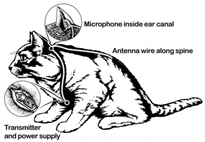
Bħala parti minn esperiment klandestin, magħruf bħala Operation Acoustic Kitty, veterinarju tqabbad jimpjanta microchip fil-kanal ta’ widna ta’ qattus u transmitter ċkejken fil-kranju tal-annimal, biex il-fil tal-antenna jinħeba fis-suf twil u abjad tiegħu.
 
Il-pjan kien biex il-qattus jagħmilha ta’ aġent sigriet u jkun kapaċi jikxef il-pjani tal-uffiċjali Russi u jispjunalhom il-konverżazzjonijiet privati tagħhom, sempliċiment billi jkun maġenbhom.
 
Iżda l-mexxejja tal-proġett malajr saru jafu li l-qtates, kontra l-klieb, la tant jieħdu ordnijiet u lanqas jitħarrġu malajr.
 
Dan l-esperiment jinsab imniżżel fil-ktieb ġdid bl-isem Frankenstein’s Cat: Cuddling up to Biotech’s Brave New Beasts.
 
Emily Anthes, l-awtriċi, kitbet li biex jippruvaw l-esperiment, l-uffiċjali tas-CIA ħadu lill-qattus, li semmewh James Bond, fi ġnien u ppruvaw jirrekordjaw konverżazzjoni bejn żewġt irġiel bilqiegħda fuq bank.
 
Iżda b’xorti ħażina, dan il-qattus ma wettaqx il-prova, għax ġera għat-triq, fejn mill-ewwel ittajjar minn karozza.
 
Wara dan il-każ diżastruż,  Operation Acoustic Kitty twarrbet għal kollox wara li kien allegat li l-gvern kien nefaq 20 miljun dollaru biex mill-qattus traġiku jiġbor l-informazzjoni meħtieġa.
 

An Act of Jealousy

Those who are conversant with the profondities of love will appreciate better the sorrow of the parting. ‘Love’, it is often said, ‘lies on the border of hate and is adjacent only to madness’.  I wonder sometimes why the noblest of virtues should be so frail and so mysterious. How often has it also been said that ‘he who loves as an adolescent, learns to hate as a grown up’. 

There are instances in life when man will ponder on bygone memories and learn to criticize his own folly from the logical point of view. And so, in this manner, he pondered.

……….Yesterday she was mine; my wife; vowed she loved me; promised to make me happy; we laughed, loved and made merry………

………..How many evenings did we spend with each other? She loved me then; but now she is gone, gone forever; an intruder had won her love; she forgot all about me now; why should she keep remembering me? What did I do, for her to disinherit me from her heart?…………

She appeared fresh in his mind; an enchanting queen; smiling as she used to pass from under his balcony. He looked; they smiled; they talked; he won her.  They met afterwards nearly every night, breaking the monotony of the village routine by varying their outings – now to the seaside, then to the theatre, sometimes to the disco and more often than not, to the cinema. 

Love had played its part between two feeble hearts and governed all their thoughts and deeds. It was responsible for their omissions to duty and to friends because, as they say, ‘love is blind’.

He would burst in anger, if at times, as she often did, she would not wait for him on his return from work. He loved her madly and that, he reasoned, was credit enough to own her, to patronize her, to feed his eyes on her beauty.  But he was now losing his love and, without his knowledge, he was beginning to transform his love to hate. Yes, hate her! The same woman he had so much adored a short while before!

For what is jealousy? Is it not mistrust? Is it not the doubt in the integrity of the second person? It is, in fact, more than that. It is egoism on the part of the doer and annoyance on the part of the receiver.  Jealousy is the destroyer of love and the stepping stone to madness. 

Involuntarily, our young lover was destroying the love he himself had pained to create. She felt annoyed; without freedom of action; he was enslaving her and that is, by far, more than a woman’s pride can bear.  He had lost her forever. He wept, was confused and, in this state, did not know what he was planning and doing. She was like a bird flying further away from him. He never recovered normality again. Once the passions of hate are aroused there is no remedy to sooth them. He had to do what had to be done. There was no alternative. 

For a full three years he had loved her. But could he say the same for her? Did she reciprocate his love? She had kept his company for three whole years. Or she kept him chained by the lure of love. Now, finding better company, she discarded him like a woman discards old clothes!

Weeks passed and his hate grew without bounds. He now hated her walk (when once he thought it was elegant); her looks (which once he so devotedly revered); her beauty (once so fresh, so noble, so charming, and so heavenly); hated himself for ever once loving her (once he thought himself fortunate in holding her hands).

He hated that tall, bony, painted, cheap, good-for-nothing skeleton who was once his lover. He hated her words, her face, her eyes, her perfume. Unnoticed, he often followed the steps of the merry couple as they made their romantic walk in the moonlight. He followed them to the theatre, to the cinema, everywhere. Yesterday he was in her arms; now he became a lurking dog. One moonlit night, he went to the abandoned cottage near the unused mill. He knew the place very well. He used to make love to her there every night, tenderly, lovingly, passionately. Now he was there spurned by hate and vengeance. 

He looked from the half-opened window of the cottage and saw the silhouette of the two lovers lost in each other’s arms, kissing and vowing their love for each other. He recognized the woman’s silhouette as that of the tall, bony, painted, cheap, good-for-nothing skeleton that once was his own lover. 

Cautiously he crawled near them and held his breath. She was speaking in a hushed voice but he heard her. “Let’s leave this town together ……I can bear him no longer ……… my love is only for you”. 

These words made him madder. He had to do something. He could bear this no longer. He wielded the rusty iron bar and hit them both on their heads. They fell to the ground instantly, lay motionless and no further sound was heard except for the hurried steps of the jilted madman. 

You have visitors” thundered the guardian as he unlocked cell 39 of the State Prison. At the visiting room, the solicitor defending his case made all sorts of enquiries, but the prisoner remained silent. 

Then came the day of the great trial. The court room was full with all kinds of people and journalists. The accused faced the men of the jury who held the balance of his life in their hands. He waited; only to hear one thing; either “guilty” or “not guilty”.  The jurymen retired. The accused conversed impatiently with his solicitor. Then the court was in its second session. 

….. “Have you reached your verdict?” asked the Judge.

….. “Yes, your Honour” stammered the chief juryman.

….. “Then let the court hear it” replied the Judge.

….. “GUILTY your Honour” pronounced the chief juryman. 

….. “Silence” hammered the Judge and, after going through a long speech which would have benefited more a funeral occasion, he concluded:-

“ …….and the Court sentences you to die by the electric chair!

What on earth can describe that brief moment between the death sentence and its execution? Who can describe the feelings of the accused? Hours, minutes, seconds ticking away one by one! Hopes fading like the mist; memories of his life that haunt the accused to his death; desperate hours of his last precious minutes taking him to his end. His doom! A beacon of light ready to be put off! A life that was once so precious and now so cruelly to be ended!

And then it came. He stood erect on the chair – cold, shocks, tremors, death. He had paid dearly for his crime. “Is there any one to claim the body?” shouted the officer in charge of the execution. No one spoke. The body lay there silent, covered with a white shroud with the number 39 stamp on it. Love had shadowed his life; hate had led him to the electric chair; death had carried him into oblivion.

Suddenly the alarm clock started ringing. It was eight o’ clock in the evening. He threw away the bed sheets and got out of bed. He was sweating profusely; and shivering. But he was alive! What a bad dream that was! He washed, dressed hurriedly and went out to meet his girl.  

Sejba u aktar għarfien fuq il-Wari

altArkeologi fl-Amerika t’Isfel, dan l-aħħar sabu qabar mhux mimsus li jagħti dawl fuq iċ-ċivilizzazzjoni qadima u misterjuża tal-Wari. Dan wara li kixfu l-iġsma mummifikati  ta’ tliet irġejjen, qrib teżori tad-deheb u sagrifiċċji makabri umani.
 
It-tempju tal-mejtin, li għandu 1,200 sena, nstab fis-sit El Castillo de Huarmey, erba’ sigħat bogħod bil-karozza fin-naħa ta’ fuq tal-kapitali Peruvjana, Lima.
 
altDan il-qabar jagħti minjiera ta’ informazzjoni fuq l-imperu enigmatiku tal-Wari, li ħakmu ’l-Andes ħafna qabel is-suċċessuri magħrufin tagħhom, magħrufin bħala l-Incas.
 
Milosz Giersz, arkeologu ewlieni fit-tim Pollakk-Peruvjan qal li: “għall-ewwel darba fl-istorja tal-arkeoloġija fil-Peru’, sibna qabar imperjali, li jmur lura għall-imperu u l-kultura tal-Wari.”
 
altaltIr-riċerkaturi qalu li din is-sejba se tgħinhom jgħaqqdu flimkien it-tip ta’ ħajja fl-Andes, sekli qabel ma nħoloq l-imperu tal-Incas, li nkiteb ferm fuqhom mill-Ispanjoli li rebħulhom u ħadulhom l-artijiet.
 
Fil-mawsolew, f’piramida kostali, nstabu bċejjeċ tad-deheb, ċeramika u 63 skeletru ta’ madwar 1,300 sena ilu. Ir-riċerkaturi qalu li ħafna mill-iġsma misjuba fil-qabar, kienu ta’ nisa mummifikati bilqiegħda – ħaġa li tindika s-sinjurija u tixhed li n-nisa Wari kellhom aktar saħħa milli kien maħsub qabel. 
 
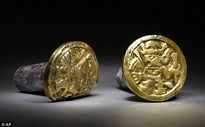
altL-arkeologa Patrycja Przadk qalet li n-nisa kienu midfunin b’imsielet ta’ metalli prezzjużi mnaqqxin, li hu mifhum li dari kienu jintlibsu biss mill-irġiel. Fost l-artefatti misjuba maġenb l-irġejjen mummifikati nstabu għodod tal-insiġ, magħmulin mid-deheb, skieken u mnanar ritwali, kikkri, kontenituri għall-weraq tal-coca,  u numru sabih ta’ kontenituri taċ-ċeramika mżejnin b’mod sabiħ.
 
L-istoriċi jemmnu li l-Wari, li ħakmu bejn is-sena 600 u l-1100 wara Kristu, kienu l-ewwel nies li rnexxielhom jgħaqqdu t-tribujiet diversi f’network wieħed sofistikat mad-dawra kollha ta’ dawk li llum huma l-Andes Peruvjani.
 
altIl-bioarkeologu Wieslaw Wieckowski qal li sitt skeltri ma kinux imlibbsin, u dan jixhed li ntużaw bħala sagrifiċċji umani għall-elit mummifikati.
 

The Future of Maltese Folksong

Għana has been used  to draw attention to issues varying from petty squabbles to religious-political situation which had evolved  at various times in Malta.

It has really never been the subject of serious discussion and analysis at an academic level. It is therefore refreshing to see this publication by Manuel Casha which invites us to have a new and unprejudiced  look  at what Għana really stands for. He himself states that he started to write this book ‘with the intention of understanding the techniques, ethics, traditions and customs  of this music and the community that engages in it, as an outsider looking in’, and he invites us to do likewise. It is not often that a book dedicated to Maltese folk singing (Għana) comes to hand, and for this we have to thank Manuel Casha who has strived hard for decades to ensure that this unique form of self-expression is not lost forever. As he says in his introduction, ‘the soul and psyche of a nation are often embodied in its folkloric past’.

This type of folk singing was limited to a certain aficionados, and was frowned upon by the educated elite. It is not surprising therefore that it was foreigners who published what is arguably the best collection of Maltese folksong (by Bertha Ilg and Hans Stumme in Germany) over a century ago.

It has been stated that singing preceeded speech in the development of human interaction. It is certainly likely that Għana was the first attempts at Maltese literature and versification. In this book Casha explains the background of this art form, and how it has filled a niche within the life-style of those who, while not usually over-educated, can yet express themselves so eloquently in song.

One good definition of Għana could well be: Working class men enjoying themselves in song. This emphasises the origin of the singing, highlighting the fact that it was originally invented by unschooled and illiterate but highly intelligent men who needed a poetic outlet to express their feelings and to entertain their friends. There is nothing  unique  about this development. All people around the world have the same needs to develop their own style of expressing them. The  author compares Maltese Għana as a musical form similar to Blues music in America, Flamenco in Spain, Rebitika in Greece or Fado in Portugal, all of which form part of a global musical heritage. He goes so far as to predict that ‘once Għana music is discovered universally, outside of the Maltese archipelago, it will contribute a great deal in telling the story of the contemporary development of Mediterranean music, as we know it today’.

With the massive wave of migration that took place in the immediate post-war period, many folksingers left Malta to settle in places like Australia and elsewhere. They  brought with them their guitars as well as their love of Għana, which they enjoyed to display, to entertain their friends, in their homes, or even garages, to remind themselves of the Malta they had left behind and still hankered for.   By the mid 20th century, thousands of Maltese emigrated to other countries in search of a better life, carrying with them their musical heritage in the countries of their settlement.

It is interesting to note how Għana in Australia might have diverged from that in Malta.  Over the past half-century, Malta has had a very close contact with the outside world, and this has had a dramatic effect on the language spoken in towns and villages alike. On the other hand in Australia, Maltese language has been put in deep freeze, and has retained the characteristics and dialects that were standard in Malta more than half a century ago. It is refreshing to hear young children using their limited Maltese vocabulary expressed in unmistakable dialect derived from the village or town where their parents came from, and where such dialects have all but disappeared.

In a chapter on migration Casha remarks: ‘They now sung about their homeland, family, and friends they left behind. They sang about their battle with homesickness. They sang about the prejudices they encountered in the new countries where they were merely outsiders seeking acceptance. Some sang about the inequality and harsh working conditions. Some about the freezing climate to which they were not accustomed, having come from the Mediterranean, or conversely the oppressing heat they toiled in. Many sang about the loneliness of living in rural areas, in isolation on their farms or working as farm hands. Others, who were employed in sugarcane plantations, engaged in backbreaking work and suffocating heat and sang  about their difficult plight.  One must remember that many Maltese had to face the culture shock of leaving a generally urbanised environment in Malta, to surviving in a vast land where in some cases your next-door neighbour lived miles away.’

Other songs deal with the tragedies of war which some singers experienced personally. Perhaps the most poignant is one about a tragedy which occurred in an air-raid shelter in Malta. The author cannot erase from his mind the faces of the dead children which he helped to pull out from under the rubble  and  he transformed his grief into a heart-rending song.

Casha states that, as a musician, he entered the Għana field ‘to understand, discover and try and preserve and cultivate a very special part of Maltese culture in Melbourne.’

The question of course arises: will the second and subsequent generation be interested in this type of music? Casha is optimistic about this. He remarks:  ‘It might not be commonly known that 95% of ‘għannejja’, past and present, living in Melbourne started their careers after they emigrated….It is just as remarkable to discover that most lead guitarists (primi) in Melbourne were actually born and bred in Melbourne suburbs and some have never seen Malta.’

So the future of playing Maltese folksongs seems to be assured. The same, however, cannot be said about the art of actually creating the songs themselves, which depends, among other things. on a deep grasp of the Maltese language together with the necessity of being able to provide impromptu rhyming. Casha states: ‘it is a fact that while Australia produced some wonderful players, no indigenous għannej has been produced… so far’ . Even so, the interest shown by these young players has helped to maintain a level of command of the language. Casha says: ‘while young players ‘cannot sing  and rhyme, [they] can speak the language a lot more fluently since taking up the Maltese guitar’.

In this book we find a comprehensive section on writers of and Għana singers in Australia.  They came in large numbers in the post-war period, particularly in the 1950s and 60s. While their experience of life in Malta still informs a lot of the topics treated in their songs, with time, the local element starts to find its way into the song. He writes:  ‘Many writers in Australia ‘kept writing on traditional lines and on topics, which related more to the Maltese environment even though they had lived in Australia for a number of years…. [ and particularly] to a Malta they remembered from childhood.

It is curious to note that the vast majority of folk-singers are men. This is not surprising in view of the origin of Għana, which occurred mostly in bars to which few women were welcome.  The aggressive nature of the interaction between different folk-singers was also more suitable to the male rather than the female character.  However, several women did take part in folk singing, inventing their own particular brand, known as Għana tal-banju, (or ‘washer-women folksongs’).  Their songs were usually much less aggressive, they did not indulge in contests to prove who is the better singer. Interesting also, Casha comments, that women sing in a different key to men, female singers sing in  higher register. Men prefer the more aggressive key of G  which ‘creates the anticipation of the contest or battle’  whereas women prefer the key of C which ‘creates a happier anticipation.’

Casha  has analysed the structure of these Għana in great detail. He goes over the various types of Għana, explaining the structure of this art form, for those of us who have never really bothered to enquire into the intricacies and genius behind the ability of extemporising rhyming verse in an impromptu fashion. He analyses the varieties of this genre which has been adapted  to suit a variety of situations from the humorous to the tragic,  from the political repartee to engagement in downright insult. The author lists a whole glossary of terms used by għannejja  which are unique to this genre, and which are most likely to be lost but for this collection.

He also delves into the intricacies of tuning the guitar in different keys to achieve a more poignant harmony, a technique which is unheard of in any other kind of musical ensemble.  He also  gives us an introduction to the mysteries, secrets and techniques used by the various participants to achieve their unique effects.

He also provides profuse examples of Għana to illustrate various points of technique, style and content. He has also ensured that the text of several of these Għana is given in translation so that non-Maltese readers can at least get an idea of the meaning of the verse, even though a lot of their significance is unavoidably lost in translation.

Even in absence of anything else, this book would have been of value as a photo-album of Għana singers over the years. The book contains a unique collection of photographs,  an album of the protagonists who have practiced this art form over the years, both in Malta and in Australia. The book is a useful publication just for the photographic collection alone, containing a mass of information about the more prominent singers in Malta and Australia.

 One can also appreciate the importance of the nickname in individualising the performers: all the għannejja  referred to in this text are given a nickname through which they are immediately recognised.  Time was when a family nickname served the useful purpose of identifying a whole clan within a village or town, something that no surname can do. Nicknames are unique identifiers invented specifically for each  għannej  , and which disappear with his passing away.

Maltese folk singing has a particular value apart from entertainment:

  • Casha insists that ‘In Australia [this genre] remains an effective instrument in documenting the heritage of a group of people who migrated between the late 1940s to the mid-1970s when thousands of Maltese left their homeland to make a new life in Australia. …. One day this Għana  source will help tell the story of this sector of Maltese migrants whose stories are still not well documented.’
  • On aspect which the author emphasizes is the role of Għana  in preserving the purity of the Maltese language. He writes: ‘the Maltese language has been served well by the għannejja  in keeping its purity of form and expression.  One of the sacrosanct rules in Ghana singing is that no foreign words and expressions are acceptable.’ Moreover, he says,  it has helped to keep alive proverbs and sayings that would otherwise have long since disappeared. Casha writes:  ‘Old Maltese proverbs, idioms and old sayings, are very much the tool of a clever għannej’ ,
  • It encourages young people to maintain an interest in music and Maltese culture,
  • It helps them to improve their language skills,
  • It helps to create cohesion among groups of young persons playing together,
  • It maintains and encourages an abiding interest in performing music.

Mr Casha has been very active in ensuring that Għana continues to flourish in Australia.  He describes his own role in ensuring the preservation of this type of music. His involvement in broadcasting in Australia during which he has promoted Għana to the best of his ability, is indeed a part of the history of Maltese settlement in this continent.

There was a real risk that with the passage of time, and as these pioneers grew older and passed away, the future generation might not have the capacity or the will to continue this tradition.  It is particularly here that Mr Casha has made his most important contribution to this art-form. He has travelled up and down the country, carrying his recording equipment, saving on tape all the most important practitioners of the guitar. He has succeeded in ensuring that several members of the younger generation have taken up the instrument and now can take the place of their elders.  Some have become quite accomplished playing the guitar. Unfortunately, while their music is advanced, their grasp of the Maltese language will never allow them to express themselves in song, particularly not that brand of unique extemporising typical of the clever għannej.

Manuel Casha has done a sterling job in collecting a vast library of Ghana which is now preserved on CDs and other electronic media, and is made available for all to appreciate, even when the protagonists have long gone. He is encouraged by the interest shown by young members of the community who not only learned the technique of guitar playing, but also were keen enough to engage in the theoretical and academic aspect of this art form. Casha remarks: ‘ I am encouraged, of late, by the number of students who choose Għana and Prejjem for their thesis for their degrees of PhDs. This has shown that  a new generation Maltese see this music genre as their heritage and not something to sweep under the carpet.’

Casha himself is largely responsible for this resurgence. Through his interest, involvement in recording and documenting these songs he has been a prime mover in the resurgence of Għana in Australia. He has made sure, through his published CDs, and by ensuring that all this heritage is now archived in The National Library of Australia that future generations would be in a position to share and possibly enlarge on this heritage.

Annie Oakley (1860–1926)

Charles B. Spiteri

BDL Books - Nisa Magħrufa

B’MIRA PERFETTA

Annie, li twieldet fl-1860 u għexet 66 sena kienet tiratura mill-aqwa u ħadet sehem fil-Wirja ta’ Buffalo Bill’s Wild West, meta kellha biss 17-il sena.

Kienet popolari fl-Istati Uniti u fl-Ewropa għall-mira li kellha u kienet esperta fl-isparar tal-pistoli, rifles u xkubetti. Darba, b’rifle .22, laqtet 4,772 boċċa tal-ħġieġ minn 5,000 li tefgħalha fl-arju, f’jum wieħed.

F’għoli ta’ 90 pied (27 metru), kellha l-ħila tolqot karta tal-logħob bix-xifer irqiq jipponta lejha, waqt li sakemm taqa’ fl-art, ittaqqabha ħames jew sitt darbiet b’tiri separati oħra. Darba, fuq stedina tiegħu stess, sparat fuq sigarett li kien f’ħalq il-Prinċep werriet tas-saltna tal-Ġermanja, aktar tard Wilhelm II.

Annie Oakley twieldet fit-13 ta’ Awwissu, f’kabina tal-injam f’Patterson Township, Ohio. Bdiet tispara meta kellha disa’ snin. Meta miet missierha, u biex tgħin lill-familja, bdiet toħroġ tikkaċċja.

Waqt żjara f’Cincinnati, kellha sfida minn Frank E. Butler, stilla tal-Vaudville. Rebħitlu hi, għalkemm ix-xorti riedet li aktar tard iżżewġitu. Tant qablu bejniethom, li hi wkoll saret stilla magħrufa.

Twila biss ħames piedi (152 ċentimetru) kienet imlaqqma Little Sure Shot. Ingħaqdet mal-Buffalo Bill’s Wild West Show fl-1885 u l-musical li baqa’ magħruf, bl-isem Annie Get Your Gun hu r-rakkont ta’ ħajjitha.

The Rebel of Baka

The state of Baka, bordered by the equally small states of Malik and Radan, situated in the African continent, has four million inhabitants.  It has been run by a dictatorship led by the notorious General Georges Patu for the last five years. He has ruled his little country with an iron fist policy, imprisoning, torturing and killing those who oppose him. 

The people are very poor and often die due to the lack of food, treatment and medicine, but Patu, his family and his henchmen enjoy a luxury life. They have amassed a fortune in money and gold now deposited safely in various banks overseas. 

The brutality of his army has instilled fear in the hard working people of his little country. Patu does not know the meaning of justice, fairness, moderation, and good governance. Those who oppose him come to one end – death. 

He was very different when he was a child – shy and loving. He did not know his father, but his mother who was poor and lived in a shack, loved him dearly. She sheltered him from danger as he grew up in the often turbulent country.

When he was a child he had noticed the strange birthmark of a serpent on his chest and cried. Other boys did not have this mark. He felt different. His mother cuddled him to her chest and told him. “Do not cry Patu. It is a sign from God. You are the chosen one. Those who harm you and your birthmark will die a violent death!” From that day onwards, following his mother’s words, he felt strong and safe. 

Despite the Army’s terror campaign, some citizens of Baka overcame their fear and opposed the regime. They gathered together a rebel force in the mountains to fight Patu’s dictatorial regime.  And what was the world’s reaction? Nothing at all! Baku was a small, poor state with no oilfields, gold mines or other important commodities to export. Therefore the developments were of no interest to the rich and powerful countries of the world. They left her and her people alone to their fate.

On this very early morning in June, not even a solitary figure strolled along the capital of Baka’s main street. Not even a stray dog dared to show his head outside. The street was bare except for the lighted lamp-posts stationed at even distance all along, shedding their dim lights on the empty and dirty road. 

The houses on both sides were completely cut off from outside, secluding their tenants from the silence and eerie atmosphere of the streets. Shutters were pulled down, doors securely closed, voices hushed. Fear engulfed the poor people.

One could hear the soldiers every hour, marching together, performing their repeated nightly checks, their strong boots beating on the hard stones of the street, making a strange sound that echoed from afar. Except for those occasional and fearful patrols, this was a dead street of the night. 

At this very early hour of the morning the curfew was still in force. It had a long time yet until it was lifted. All the streets of this Bakanian city were heavily under curfew from dawn to dusk. Government forces had clamped down on any movement in their struggle with the rebels. 

This street had witnessed vengeful murders and patriotic resistance. It had seen death stalk in to claim many victims of political oppression. Groups of fanatical patriots had given their sacred life to the cause of freedom and deliverance. Their blood still flows fresh along the streets like some fair example of man’s endurance to injustice. The fight was on, it may take years and years to be won, but only victory can bring the struggle to an end. 

Soldiers were carefully posted at strategic points surveying the scene of silence, eagle eyes looking here and there, rifles at the ready lest one solitary figure shows his head. Everybody was to stay indoors …..That was an order!

While all this was happening outside, in one solitary house a life was hanging on the strings of life and death. A light flickered in the room, a dim yellowish candle-light reflecting the sombre state of the walls. The stately silence was being interrupted by the occasional sobbing coming from the far corner of the little room. There, resting in a wooden bed was an old woman hovering between life and death. 

Her wrinkled face sweating with anguish and great pain, eyes looking upwards staring deadly beyond the ceiling. Soon after this curfew was imposed she was taken suddenly ill and her condition grew graver and graver. She needed drugs, medicine, medical care and attention.

Beside her, holding her sweating hand was her husband. He was aged too, rugged and rough, but thoughtful of the state of affairs. He was grieved seeing his beloved wife suffering slow death and pained hearing her sobs and cries. As her loving husband, he was desperate, to a state of hysterical madness that knew no bounds to reason or laws.

His name was Milaku, a rebel leader who had led his men in several raids against Patu. His dark face, flickering in the dim lights of the dying candle, was filled with pity towards his wife.  He could not bear to witness her suffering so terribly. His mind cuddled with thoughts of her; memories of her undying qualities of a peaceful, loving woman; her strong yet tender character that feared the wrath of the Almighty but not the anger of mere mortals. 

But there she was now, a helpless creature stretched in a humble bed of wood, a dying woman with no medicine or medical attention to cure her illness. He hated this moment, he hated those armed bullies that patrol the streets at night, and he hated life itself with all its miseries and tribulations. He hated these, but he loved his wife like she was his own soul. 

Suddenly there were hard knocks on the door and commands for him to come out. Patu’s soldiers had found him and they had come for him. He could shoot them out, probably die in the process but they would then kill his wife too. If he gave himself up, she might live with the help of his good neighbours. 

Milaku got out, his hands on his head, surrendering to the heavily armed soldiers. They took him immediately to General Patu’s headquarters. Patu looked the poor rugged man straight in the eye. So this was the man who, with his band of rebels, had killed so many of his men. This was the man who wants to end his reign. This was the man he had long been looking for. 

Patu was a merciless thug, a murderer, a ruthless bully. He did not hesitate. He took out his gun and shot Milaku at point blanc range, killing him instantly. He will be no threat to him anymore.

His soldiers took Milaku’s bloody shirt off and laid his corpse in front of Patu asking his instructions what to do with his body. His first thought was to parade him around the main streets of the capital to serve as a reminder to his opponents that those who oppose him will die. 

Patu’s eyes rested on the rebel’s body. He stared at his bare chest. His face turned white, fear got hold of him, he froze. On Milaku’s chest, still red with blood, he saw the birthmark of the serpent!  Just like his own. His mother’s words rang in his ears – “Those who harm the serpent birthmark will die a violent death!