Elizabeth Fry (1780–1845)

Charles B. Spiteri

BDL Books - Nisa Magħrufa

Elizabeth Fry kienet mara mhux tas-soltu. Ħafna nies kienu jaraw kif jevitaw il-ħabs iżda hi daħlet fih biex tara b’għajnejha l-ħajja li kienu qed iqattgħu hemm in-nisa u t-tfal. Tant indiehxet b’li rat li qatgħetha tagħmel xi ħaġa biex tbiddel il-qagħda.

Elizabeth twieldet f’Norfolk u l-membri tal-familja tagħha kienu Quakers. Kien fl-1813 li semgħet dwar il-kundizzjonijiet fil-ħabs ta’ Newgate, u ma’ grupp ieħor ta’ Quakers marret iżżur l-agħar ħabs fl-Ingilterra.

Nisa u tfal inġemgħu madwar Elizabeth. Hi osservat kif kienu jilagħbu, jixorbu u jisirqu lil xulxin il-priġunieri, għax ma kellhomx ħaġa oħra x’jagħmlu. Elizabeth marret kemm-il darba b’mod regulari żżur il-ħabs ta’ Newgate.

F’ċella vojta, introduċiet skola għat-tfal u lin-nisa ħaditilhom xogħol ta’ ħjata, li għalih kienet tħallashom. Aktar tard, Elizabeth introduċiet għaqda ta’ għajnuna lill-ħabsin u ppruvat tipperswadi lill-Parlament jibdel il-ħabsijiet. L-awtoritajiet semgħu minnha. Emmnu li l-metodi tagħha ħadmu. U l-ħabsijiet fl-Ewropa, kif ukoll fl-Ingilterra, bdew jinbidlu għall-aħjar.

Il-Quakers huma grupp Kristjan li jemnu immens fil-paċi u fl-għajnuna lil nies oħra. Anki meta kienet ċkejkna, Elizabeth kienet iżżur nies morda u tgħallem kemm tista’ lit-tfal foqra.

Fl-1780, is-sena li fiha twieldet Elizabeth, fil-Ħabs ta’ Newgate kien hemm rewwixta. L-għamara u l-bini ngħataw in-nar u 300 priġunier inħelsu.

The Librarian

Helen and Margaret were sisters but they were as different as chalk and cheese. Helen was outgoing, extrovert, friendly, confident, talkative, noisy, exuberant and always laughing. She was also beautiful with a fine delicate complexion, high cheekbones and long auburn hair that seemed to be always shining. Margaret, on the other hand, was introvert, timid, lonely, more of a listener than a talker and unsure of her place in the world. She was also rather common-looking with a pallid face, slightly protruding nose and mousy black hair which seemed always needing to be combed. 

And yet they were as inseparable as twins – always together, looking after each other, going out together. They had no secrets between them so much so that oftentimes they recounted their dreams and expectations of life. Very often they were in each other’s room, swooning over records of their favourite singers. Helen liked modern singers and bands like One Direction and Rihanna while Margaret favoured the old singers like Elvis Presley, Dean Martin and Johnny Ray. 

Margaret ran single-handedly the town’s library with dedication and fervour that put a smile on her face every day. She was passionate about books, reading everything that came her way, whether they were ‘classics’ or ‘comics’. She knew all there was to know about books and their authors. Clients told her that she was ‘a walking reference book’. She had purposely sought work at the library because she genuinely loved books. She felt calm and at ease in the quite atmosphere of the library surrounded by shelves and shelves of all kinds of books. 

In the evening, when her sister was out with her boyfriend, Margaret liked lounging in the small sitting room engrossed in a new publication while her father smoked his pipe or read the newspaper. The picture-frame on the mantelpiece showed a photo of her mother who had died five years ago. It was, in fact, her Dad who saw to their up-bringing, watching them emerge from teens to young women. And Margaret was Dad’s favourite. “You know Marge”, he told her as he put his newspaper down for a moment, “You may think that beautiful people have an advantage over the likes of you and me. But if Helen’s got beauty, you have brains. You’ll always have a good brain to rely on while beauty fades with age. Just remember that when you feel sometimes envious”. “I’m not envious Dad, but sometimes wish that life is more generous with me, that’s all” replied his daughter. “That’s why you must use the talents you’ve been given Marge, to get what you want from life” retorted her Dad. He patted her affectionately on the knee but he could see that she had more than her fair share of lemons and therefore could understand her attitude to life.

When Helen took up with Ben, she encouraged her sister to go out on dates with friends of her boyfriend. She did go out with a couple of boys but there was no follow-up interest and, therefore, she returned back to her old routine of library work and home by her father. One evening, while smoking his pipe, her Dad noticed that his young daughter was staring at the ceiling. “A penny for your thoughts Marge”, he said. “They aren’t worth a penny Dad”, she replied. “A half-penny then”, he again responded. “They aren’t even worth that much either”, said Margaret in a subdued tone, fed up and feeling miserable. “Some aspects of life are sad dear, but there is nothing we can do to change them”, said her father in an effort to cheer her up. 

One day at the library, she noticed a man looking for a book in the ‘classics’ section. It looked as if he had not found what he was looking for. She left her desk, went over to him and asked if he needed any help. “I’m looking for ‘The Black Arrow’ by Robert Louis Stevenson, but I can’t find it under the ‘S’ shelf”, he replied. She went to check the movement of books loaned out to clients in her computer and found that the book had been loaned out two weeks ago. “It’s out Mr, but it should probably be returned by next week, shall I hold it for you?” she asked. 

When he returned the following week, she gave him the book but they also started chatting about the ‘classics’, what books they liked, their favourite authors and other subjects. His name was Steve and he worked as an accountant. They found that they had a lot in common, especially books. He came frequently to the library and their conversations about books and about life in general continued. Margaret found that she liked him and looked forward to see him. He was decent, intelligent, book lover and, of course, good-looking men don’t come along very often. This could be her spark of happiness. She also hoped that he liked her, despite that she was not beautiful like her sister and that eventually he would invite her for coffee or something. With such small things does love begin, she thought. 

Their unscheduled meetings and literature gossip continued for some weeks. She still harboured hope of a romantic ending with Steve. One day, after discussing the merits of an author and his novels, he asked her – “Are you free next Saturday Margret?” She was stunned. Her heart beat faster than usual; the words she had hoped to hear had finally been said. This was the beginning of something special. “Yes, yes, I am”, she replied. “In that case, I want to invite you to my house for tea, would you accept Marge?” her new-found friend asked. ‘He is serious in his intentions’, she thought and immediately accepted his surprise invitation. She waited, in anticipation for his next words. Then he continued “I want you to meet my wife! She’d be pleased to meet you”.  

Il-Poeżija Rebbieħa

Charmaine Tanti

Matul is-sajf, il-mamà kienet taħdem bin-nofstanhari. Kien ikollha aktar ħin liberu mix-xitwa, li fih setgħet tnaddaf id-dar, taħsel il-ħwejjeġ u tistrieħ xi ftit. Kif tasal id-dar mix-xogħol, kienet tiekol xi ħaġa żgħira tal-ikel u l-frott, u wara tintefa’ fuq is-sodda għax is-sħana kienet tħalliha bla saħħa. Is-skiet ta’ madwarha kien idejjaqha u għalhekk kienet tiftaħ ir-radju ta’ fuq il-komodina biex ikollha kumpanija.

Ta’ kuljum, fost il-ġimgħa kien ikun hemm programm fuq wieħed mill-istazzjonijiet tar-radju, li dejjem kien jibda għall-ħabta tal-erbgħa ta’ wara nofsinhar. Il-programm kien jismu “Lenti Fuq Il-Malti” u kien iddedikat kollu kemm hu lil-lingwa u lill-poeżija Maltija.

 Il-mamà kien l-għors tagħha tisimgħu għax kien iġibilha bosta memorji sbieħ tal-lezzjonijiet tal-Malti ta’ tfulitha, li kienet tattendi għalihom b’tant ħerqa l-iskola. Anki għall-eżamijiet tal-Malti dejjem stinkat u studjat għalihom bil-ħeġġa u ta’ kull sena kienet tiġi l-ewwel fihom minn fost xi disgħin studenta. Elise kienet fula maqsuma magħha minħabba li fil-Malti kienet tibbrilla wkoll u tkaxkar il-premjijiet l-iskola. Dnub li fil-ħin tal-programm ma kinitx tkun hemm, iżda fil-vaganzi hi u ħutha ma tantx kienu jfittxu l-kenn tad-dar.

Darba minnhom, il-preżentatur għamel kompetizzjoni ferm interessanti għas-semmiegħa tiegħu. Kienet tikkonsisti f’kitba ta’ poeżija qasira u min kien imħajjar, kellu biss ġimgħa ċans biex jieħu sehem fiha. Il-mamà ħatfet l-opportunità u daħlet għall-kompetizzjoni b’ruħha u b’ġisimha. Riedet tittanta xortiha u tikteb poeżija ta’ ftit versi għall-ewwel darba f’ħajjitha dwar uliedha li għaliha kienu kollox. Damet taħseb x’versi se tikteb, u n-nannu Ġużi għamlilha kuraġġ ta’ sur biex tipparteċipa. Meta l-versi kienu ċari f’moħħha, qagħdet bilqiegħda u ħarbxithom fuq karta:

                                                       Uliedi   

                                                     Uliedi tassew ħelwin.

                                                     Jinkwetawni mhux ħażin

                                                     Għax ftit jew wisq imqarbin.

                                                     Iżda huma tfal tajbin

                                                     Kif iridhom il-Bambin,

                                                     Għax iħobbu lil xulxin.

Wara li lestiet din il-biċċa kitba li semmietha “Uliedi”, il-mamà marret tiġri turiha lin-nannu Ġużi, li tgħidx kemm ferħilha tal-isforz li għamlet għax tassew kellha xogħol tajjeb. Kienet poeżija sempliċi għall-aħħar, li kienet tikxef kemm il-mamà kienet kburija b’uliedha. In-nanna Marija u l-papà wkoll ħadu gost jaqraw din il-poeżija hekk ħelwa. Imbagħad il-mamà ttajpjatha pulita u bagħtitha bid-dettalji tagħha mehmużin magħha lill-programm tar-radju.

L-eċċitament tagħha beda jiżdied dejjem iżjed ma’ kull jum li jgħaddi, u meta waslet il-ġurnata tant mistennija, il-mamà kellha seba’ mitt sena sakemm jibda l-programm. Qalbha bdiet tħabbat sitta sitta xħin il-preżentatur kien se jħabbar ir-rebbieħ tal-kompetizzjoni, u waħħlet widintha mar-radju biex tisma’ sew. Kif intqal l-isem tar-rebbieħ, il-mamà ma riditx temmen lil widnejha u kienet għoddha mietet bil-ferħ. Minnufih, ċemplulha l-papà u n-nanniet biex jgħidulha prosit għax kienu għadhom kemm semgħu isimha jissemma’ bħala r-rebbieħa tal-kompetizzjoni tal-aqwa poeżija. Dakinhar il-papà kompla jikkonferma kemm il-mamà kienet tinqala’ għal kollox, u bis-saħħa tal-kapaċita` tagħha, Elise, Luca u Peter gawdew il-premju li rebħet. Il-vawċer ta’ tmenin ewro f’xiri ta’ kotba, li rċeviet xi ħmistax wara bil-posta mingħand l-isponsor tal-kompetizzjoni, nefqitu kollu għalihom biex ikollhom ħafna kotba x’jaqraw u b’hekk tgħinhom jitjiebu iżjed fil-Malti.

                                                               TMIEM

Is-Sorijiet tal-Madalena

Charles B. Spiteri

alt

Xi żmien ilu, id-Dar Pubblikatriċi BDL, ħarġet fis-suq il-ktieb ta’ Christine Muscat jismu Magdalene Nuns and Penitent Prostitutes Valletta li kellhom il-kunvent tagħhom fil-Belt Valletta. L-iskop ta’ dawn is-sorijiet kien li jrabbu bniet żgħar biex ’il quddiem jikkorteġġjaw lill-kavallieri. Hu ktieb li joffri studju profond ta’ dak li ġara f’pajjiżna fis-snin tal-Ordni.

Madankollu, dan l-aħħar, l-istess sorijiet issemmew fl-Irlanda, wara li l-Gvern tal-pajjiż talab apoloġija lill-10,000 ‘skjavi’ tas-Sorijiet tal-Maddalena, li qafluhom u ibbrutalizzawhom bejn l-1922 u l-1996. Fuq perijodu ta’ 70 sena, hu stmat li madwar 10,000 tifla ntbagħtu fil-laundries tal-Maddalena biex jagħmlu xogħol manwali iebes taħt is-superviżjoni tas-sorijiet Kattoliċi.

alt

Uħud intbagħtu hemm għax kienu t-tfal ta’ nisa mhux miżżewġa, waqt li oħrajn intbagħtu fuq akkużi ċkejknin, fosthom għax ma kinux ħallsu l-biljett tal-ferrovija. Inkredibbilment, l-aħħar mill-għaxar laundries li kienu jaħslu l-ħwejjeġ u l-lożor tal-lukandi ewlenin, tal-forzi armati Irlandiżi u tad-ditta tal-birra Guininess, baqgħet taħdem sal-1996. Bħala laundries, bdew jiffunzjonaw fl-1922. L-apoloġija statali waslet tmintax-il xahar wara li saret inkjesta mmexxija mis-Senatur Martin McAleese, li sab li waħda minn kull erba’ nisa, ntbagħtu fil-laundries mill-Istat.

alt

Hu żied li r-rapport ma sab l-ebda abbuż sesswali fil-laundries; li għaxra fil-mija tal-maqfulin intbagħtu mill-familji tagħhom u 19 fil-mija minħabba xi nuqqas jew akkuża li wettqu. Iżda dawk li baqgħu ħajjin, irrifjutaw l-apoloġija li talab hu, u stennew apoloġija aktar wiesgħa mill-Gvern u l-ordnijiet reliġjużi involuti.

alt

Maureen Sullivan, ta’ 60 sena, l-iżgħar vittma tas-sorijiet, ittieħdet għandhom meta kellha 12-il sena. Dak iż-żmien kien miet missierha u ommha reġgħet iżżewġet. Kien intqalilha li se tkompli l-istudju tagħha, iżda qatt ma reġgħet rat il-kotba li kellha tal-iskola.

Għal 48 sena baqgħet imwerwra mill-memorji tal-passat; ta’ tfulija mitlufa u ta’ xogħol iebes li jwettqu l-iskjavi. Issa qed tistenna apoloġija mill-gvern u l-ordnijiet reliġjużi talli serqulha l-edukazzjoni, isimha, l-identita’ u ħajjitha.

Irrakkuntat li sena wara l-oħra, filgħodu kienet taħdem fil-laundry. Jagħtuha tiekol biss ħobż u tilqit. Aktar tard kienet taħdem is-suf u qabel l-irqad, tagħmel il-kuruni tar-rużarju. Kien xogħol ta’ rutina, tqil u ta’ dwejjaq. Tirrakkonta: “Darba, meta ġew l-ispetturi tal-iskola jagħmlu żjara, ħbewni f’mina, għax naħseb li kont għadni żgħira għax-xogħol fil-laundry.”

Fi tmiem il-ġimgħat kienet imġiegħla taħsel l-art tal-knisja lokali, minflok titħalla tilgħab għal ftit tal-ħin. Issostni li s-sorijiet qerdulha ħajjitha u ma ħallewha qatt tiżviluppa bħala tifla żgħira.

Jum mill-ħajja fil-‘Laundry

F’intervista li tat fl-2011, Sarah Williams, li qattgħet sentejn taħdem f’laundries differenti tal-Maddalena tat din ix-xhieda tal-biża’, fuq il-ħajja fl-istituzzjonijiet:

  • Inqumu fis-6.00am. aħna t-tfajliet, b’veli suwed fuq rasna, nimmarċjaw għal quddiesa fil-kunvent kiesaħ silġ.
  • Il-kolazzjon ikun porridge b’ilma kiesaħ silġ u f’xi s-7.00a.m. ningħataw it-te u biċċa ħobż, qabel ma nerġgħu mmorru l-kappella għat-tieni quddiesa.
  • Imbagħad immorru fil-laundry biex naħslu, ngħallu, nonxru, ngħaddu u nitwu l-ħwejjeġ. Kien ikollna waqfa waħda għal ftit soppa qabel is-6.00 p.m.
  • Għall-ħabta tas-7.30p.m. wara li ninqaflu fiċ-ċelel żgħar tagħna, mgħammra biss f’barmil u sodda tal-ħadid, ningħataw mug ieħor ta’ soppa, li ġeneralment tkun tant kiesħa li konna nsaħħnuha xi ftit fuq il-kanen tas-sħana fil-kmamar tagħna.
  • Ir-rikreazzjoni kienet tkun ta’ nofs siegħa wara li nlestu x-xogħol, u stajna nisimgħu r-radju. Ix-xogħol kien isir fi kwiet strett, inkella nkantaw l-innijiet u nirreċtaw ir-rużarju, ħames posti f’ħames posti.
  • Offiżi żgħar bħal tinsa tilbes il-kappell istituzzjonali jew tinqabad tidħaq, ikunu kkorreġuti bi swat fuq ir-ras, b’mazz ta’ ċwievet  tqal, minn soru rrabjata.
  • L-eżerċizzju uniku tagħna kien ikun mixja ta’ nofs siegħa, tnejn tnejn, fil-bitħa. L-awtorita’ tas-sorijiet kienet assoluta, u l-bniet kien ikollna nitolbu permess anki biex immorru sal-kamra tal-banju. Jekk xi tifla toħroġ ‘il barra mil-linja tagħha, kienet tinqafel f’kamritha u għal bosta jiem, titħalla fuq ħobż u ilma biss.
  • Nhar ta’ Ħadd ma konniex naħdmu u konna permessi niktbu l-ittri li mbagħad jinqraw mis-sorijiet. Spiss kont nikteb lil ziti, nitkarrbilha tiġi għalija u toħroġni, iżda naħseb li qatt ma rċeviet xi ittra minn tiegħi. Meta mbagħad, xi ħadd kien jirċievi xi ittra, kienet tinqara mis-sorijiet fil-pubbliku.
  • Darba fix-xahar kien ikollna viżta, iżda l-viżitaturi tiegħi kienu jkunu n-nisa tal-Leġjun ta’ Marija, li dejjem kienu jgħiduli li qed ningħata kura u attenzjoni tajbin.

Ħabs ta’ dawk li ‘jisparixxu’

altIl-Laundries tal-Maddalena nfetħu fis-seklu 19 bħala refuġju għall-prostituti, u saru ħabsijiet għal dawk li ‘sparixxew’.

altFajliet orfni, li ma kellhomx fejn imorru, bniet li ma kellhom lil ħadd min jieħu ħsiebhom, jew tkeċċew mid-dar għax inqabdu tqal u tfal li l-ġenituri tagħhom ma setgħux jgħajjxuhom aktar; kif ukoll dawk meqjusa mis-saċerdoti jew reliġjużi, li jinsabu f’’periklu morali, għax kienu sbieħ ħafna, jew iħobbu jiġġerrew, kienu jiġġiegħlu jidħlu fil-laundries tal-Maddalena. L-akkuża tagħhom setgħet tkun tant fażulla, bħal meta tinqabad li tfajla jew xbejba, ma tkunx ħallset in-nol tal-ferrovija. U l-maġġoranza ta’ dawk mitfugħha f’dan il-‘ħabs’ kienu jkunu minuri b’akkużi żgħar ta’ serq u mhux għal xi qtil jew infantiċidju.

Annie Oakley (1860–1926)

Charles B. Spiteri

BDL Books - Nisa Magħrufa

B’MIRA PERFETTA

Annie, li twieldet fl-1860 u għexet 66 sena kienet tiratura mill-aqwa u ħadet sehem fil-Wirja ta’ Buffalo Bill’s Wild West, meta kellha biss 17-il sena.

Kienet popolari fl-Istati Uniti u fl-Ewropa għall-mira li kellha u kienet esperta fl-isparar tal-pistoli, rifles u xkubetti. Darba, b’rifle .22, laqtet 4,772 boċċa tal-ħġieġ minn 5,000 li tefgħalha fl-arju, f’jum wieħed.

F’għoli ta’ 90 pied (27 metru), kellha l-ħila tolqot karta tal-logħob bix-xifer irqiq jipponta lejha, waqt li sakemm taqa’ fl-art, ittaqqabha ħames jew sitt darbiet b’tiri separati oħra. Darba, fuq stedina tiegħu stess, sparat fuq sigarett li kien f’ħalq il-Prinċep werriet tas-saltna tal-Ġermanja, aktar tard Wilhelm II.

Annie Oakley twieldet fit-13 ta’ Awwissu, f’kabina tal-injam f’Patterson Township, Ohio. Bdiet tispara meta kellha disa’ snin. Meta miet missierha, u biex tgħin lill-familja, bdiet toħroġ tikkaċċja.

Waqt żjara f’Cincinnati, kellha sfida minn Frank E. Butler, stilla tal-Vaudville. Rebħitlu hi, għalkemm ix-xorti riedet li aktar tard iżżewġitu. Tant qablu bejniethom, li hi wkoll saret stilla magħrufa.

Twila biss ħames piedi (152 ċentimetru) kienet imlaqqma Little Sure Shot. Ingħaqdet mal-Buffalo Bill’s Wild West Show fl-1885 u l-musical li baqa’ magħruf, bl-isem Annie Get Your Gun hu r-rakkont ta’ ħajjitha.

The Rebel of Baka

The state of Baka, bordered by the equally small states of Malik and Radan, situated in the African continent, has four million inhabitants.  It has been run by a dictatorship led by the notorious General Georges Patu for the last five years. He has ruled his little country with an iron fist policy, imprisoning, torturing and killing those who oppose him. 

The people are very poor and often die due to the lack of food, treatment and medicine, but Patu, his family and his henchmen enjoy a luxury life. They have amassed a fortune in money and gold now deposited safely in various banks overseas. 

The brutality of his army has instilled fear in the hard working people of his little country. Patu does not know the meaning of justice, fairness, moderation, and good governance. Those who oppose him come to one end – death. 

He was very different when he was a child – shy and loving. He did not know his father, but his mother who was poor and lived in a shack, loved him dearly. She sheltered him from danger as he grew up in the often turbulent country.

When he was a child he had noticed the strange birthmark of a serpent on his chest and cried. Other boys did not have this mark. He felt different. His mother cuddled him to her chest and told him. “Do not cry Patu. It is a sign from God. You are the chosen one. Those who harm you and your birthmark will die a violent death!” From that day onwards, following his mother’s words, he felt strong and safe. 

Despite the Army’s terror campaign, some citizens of Baka overcame their fear and opposed the regime. They gathered together a rebel force in the mountains to fight Patu’s dictatorial regime.  And what was the world’s reaction? Nothing at all! Baku was a small, poor state with no oilfields, gold mines or other important commodities to export. Therefore the developments were of no interest to the rich and powerful countries of the world. They left her and her people alone to their fate.

On this very early morning in June, not even a solitary figure strolled along the capital of Baka’s main street. Not even a stray dog dared to show his head outside. The street was bare except for the lighted lamp-posts stationed at even distance all along, shedding their dim lights on the empty and dirty road. 

The houses on both sides were completely cut off from outside, secluding their tenants from the silence and eerie atmosphere of the streets. Shutters were pulled down, doors securely closed, voices hushed. Fear engulfed the poor people.

One could hear the soldiers every hour, marching together, performing their repeated nightly checks, their strong boots beating on the hard stones of the street, making a strange sound that echoed from afar. Except for those occasional and fearful patrols, this was a dead street of the night. 

At this very early hour of the morning the curfew was still in force. It had a long time yet until it was lifted. All the streets of this Bakanian city were heavily under curfew from dawn to dusk. Government forces had clamped down on any movement in their struggle with the rebels. 

This street had witnessed vengeful murders and patriotic resistance. It had seen death stalk in to claim many victims of political oppression. Groups of fanatical patriots had given their sacred life to the cause of freedom and deliverance. Their blood still flows fresh along the streets like some fair example of man’s endurance to injustice. The fight was on, it may take years and years to be won, but only victory can bring the struggle to an end. 

Soldiers were carefully posted at strategic points surveying the scene of silence, eagle eyes looking here and there, rifles at the ready lest one solitary figure shows his head. Everybody was to stay indoors …..That was an order!

While all this was happening outside, in one solitary house a life was hanging on the strings of life and death. A light flickered in the room, a dim yellowish candle-light reflecting the sombre state of the walls. The stately silence was being interrupted by the occasional sobbing coming from the far corner of the little room. There, resting in a wooden bed was an old woman hovering between life and death. 

Her wrinkled face sweating with anguish and great pain, eyes looking upwards staring deadly beyond the ceiling. Soon after this curfew was imposed she was taken suddenly ill and her condition grew graver and graver. She needed drugs, medicine, medical care and attention.

Beside her, holding her sweating hand was her husband. He was aged too, rugged and rough, but thoughtful of the state of affairs. He was grieved seeing his beloved wife suffering slow death and pained hearing her sobs and cries. As her loving husband, he was desperate, to a state of hysterical madness that knew no bounds to reason or laws.

His name was Milaku, a rebel leader who had led his men in several raids against Patu. His dark face, flickering in the dim lights of the dying candle, was filled with pity towards his wife.  He could not bear to witness her suffering so terribly. His mind cuddled with thoughts of her; memories of her undying qualities of a peaceful, loving woman; her strong yet tender character that feared the wrath of the Almighty but not the anger of mere mortals. 

But there she was now, a helpless creature stretched in a humble bed of wood, a dying woman with no medicine or medical attention to cure her illness. He hated this moment, he hated those armed bullies that patrol the streets at night, and he hated life itself with all its miseries and tribulations. He hated these, but he loved his wife like she was his own soul. 

Suddenly there were hard knocks on the door and commands for him to come out. Patu’s soldiers had found him and they had come for him. He could shoot them out, probably die in the process but they would then kill his wife too. If he gave himself up, she might live with the help of his good neighbours. 

Milaku got out, his hands on his head, surrendering to the heavily armed soldiers. They took him immediately to General Patu’s headquarters. Patu looked the poor rugged man straight in the eye. So this was the man who, with his band of rebels, had killed so many of his men. This was the man who wants to end his reign. This was the man he had long been looking for. 

Patu was a merciless thug, a murderer, a ruthless bully. He did not hesitate. He took out his gun and shot Milaku at point blanc range, killing him instantly. He will be no threat to him anymore.

His soldiers took Milaku’s bloody shirt off and laid his corpse in front of Patu asking his instructions what to do with his body. His first thought was to parade him around the main streets of the capital to serve as a reminder to his opponents that those who oppose him will die. 

Patu’s eyes rested on the rebel’s body. He stared at his bare chest. His face turned white, fear got hold of him, he froze. On Milaku’s chest, still red with blood, he saw the birthmark of the serpent!  Just like his own. His mother’s words rang in his ears – “Those who harm the serpent birthmark will die a violent death!

Rekord fl-età ta’ 104

altNannu li qatta’ ħajtu ‘jagħmel li jrid u jixtieq’, kiser rekord Ewropew wara li temm ġirja ta’ 100 metru f’ħin ta’ 32.79 sekonda. Dan għamlu fl-età venerabbli ta’ 104. Stanislaw Kowalski, li twieled fl-1910, sar l-ixjeħ persuna fl-Ewropa li ġera tellieqa ta’ 100 metru. Permezz t’hekk kiser ir-rekord li kien stabbilixxa qablu, raġel ieħor ta’ 96 sena.
 
Stanislaw, minn Swidnica, il-Polonja, temm it-tellieqa ta’ dawk li għalqu mitt sena. Hu kien liebes flokk isfar, bin-numru 104 fuqu. Minkejja li qatt ma kiseb taħriġ professjonali, kiser ir-rekord ta’ qablu b’34 sekonda. Hu jsostni li baqa’ b’saħħtu għax minn dejjem għamel li ried u qatt ma mar għand it-tobba.
 
Hu qatta’ ħajtu jimxi jew jaqdef ir-rota fil-vjaġġ ta’ 10 kilometri kuljum għax-xogħol u minn meta ħareġ bil-pensjoni sa ma għalaq 92 sena, beda l-ġiri bħala mogħdija taż-żmien. F’din it-tellieqa, fejn kien l-uniku bniedem ta’ ’l fuq minn 100 sena, li kkompeta, kien l-uniku wieħed li komplieha. Il-folla ċapċpitlu għall-appoġġ, għax indunat li kiser ir-rekord imwettaq minn Ġappuniż, li snin ilu temm l-istess tellieqa fi 28 sekonda, fl-età ta’ 96 sena.
 
Għar-rebħa tiegħu, issejjaħ fuq il-podju, u kien ippreżentat bi trofew u bukkett fjuri, bin-nies preżenti jkomplu jgħajtu u jċapċpu, biex jinkoraġġuh.
 
Mistoqsi x’għamel biex għex ħajja hekk twila, Stanislaw qalilhom “ Tiffangawx fl-ikel u tiklux tard filgħaxija. Tistgħu tixorbu sa 50 gramma, iżda mhux kuljum.” 


Cicely Saunders (1918–2005)

BDL Books - Nisa Magħrufa

Charles B. Spiteri

Cicely Saunders qattgħet ħajjitha tgħin lin-nies jaffaċċjaw il-mewt. Hi fetħet l-ewwel dar ta’ kura għal dawk morda b’mod terminali, u fejn setgħu jmutu fil-paċi u d-dinjità. Illum hawn djar bħal dawn (hospices) mad-dinja kollha.

Meta kienet ċkejkna, Cicely kienet mistħija ħafna, tant li kienet tippreferi ma tiħux il-kolazzjon u t-tè ma’ ħbiebha milli toqgħod magħhom iparlaw u jgħajtu fil-vojt. Hekk kif kibret, waqt it-Tieni Gwerra Dinjija, daħlet infermiera u wara, meta weġġgħet daharha, kellha tieqaf minn ħidmietha u daħlet bħala ħaddiema soċjali fl-isptar.

Fl-1947, wieħed mill-pazjenti li ltaqgħet miegħu kien David Tasma, Lhudi Pollakk, li kien qed imut. Cicely kienet nisranija għall-aħħar, u hi u David qattgħu ħafna sigħat jiddiskutu l-mewt u kif in-nies li jkunu fl-aħħar ta’ ħajjithom ikunu indukrati. Saru ħbieb kbar u Cicely fehmet li t-taħdit li kellha ma’ David seta’ jkun ta’ għajnuna għal nies oħra.

Hi ħaditha b’ħidma li titkellem ma’ nies li qed imutu, toqgħod ħdejn soddithom, tistenna u titlob. Iżda kienet taf li għal ħafna min-nies f’dik il-qagħda, il-ħsejjes u l-ambjent tal-isptar ma kienx l-aħjar wieħed għalihom. Għamlet kampanja għall-ġbir tal-flus u fl-1967 fetħet is-St. Christopher Hospice f’Londra. Dan kien post għall-kwiet fejn il-pazjenti setgħu jsibu kura u lil min jifhimhom fl-aħħar jiem ta’ ħajjithom.

Fl-antik il-mewt kienet parti mill-ħajja ta’ kuljum. Għalkemm illum, tisma’ bosta nies jitkellmu dwar is-sess, il-problemi tal-familja u l-flus, ħafna minnhom ma jħobbux jitkellmu apertament dwar il-mewt. Din tagħmilha aktar diffiċli għan-nies li jafu li qed imutu, biex jaċċettaw x’inhu jiġrilhom.

L-istennija tal-mewt minn dejjem kienet diffiċli biex tkun trattata.  Ix-xogħol ta’ Cicely Saunders għen lil bosta jħossu ruħhom komdi fl-aħħar jiem ta’ ħajjithom.

The Return

August 1945. The Armistice was signed; the war was over. From all over the battlefields in Europe and those beyond the Pacific, the fighting men were now returning home to embrace their eager mothers, wives and children. From all over these battle-scarred places they streamed, back to their country, back to their homes, back to their loved-ones. 

For five long years they fought hard, courageously, gallantly and with a patriotic sense that makes men heroes.  In the last year they suffered hell, defeat, humiliation and tasted the bitter effects of occupation. 

Yet not all that went away to fight their country’s cause were now returning home. Some still lay there, buried beneath the soil of battle in a foreign land; these will never return home, will never cry at the sight of their mothers. Their duty done, they now sleep peacefully in the ruins of Stalingrad, El Alamein, Arnhem, Kursk, Berlin and other battlefields. 

The big troopship had berthed safely and silently alongside the other ships at the port of Cologne. The troopship brought human cargo, soldiers of the once great Wehrmacht Army from the Western Front, from the Pacific Isles, from the far-flung Eastern Front. 

They lined the deck of the ship, some five thousand of them, and gazed eagerly at German soil after five long and bitter years in strange foreign lands. The hard steel helmets, the shining smart rifles, the up-to-date battle equipment were gone.

They all wore very light army caps and dirty battledresses.  These men were being escorted by equally tired Army officers. These soldiers were the vanquished, they were German soldiers. 

One by one they walked down the gangway guarded by grim- faced Allied soldiers. They walked silently, their proud heads erect as ever, catching the fresh air of their German homeland. 

On the shore, held at a distance by the victorious Allied soldiers, were a multitude of people. They were not ordinary people these; they were wives, mothers and children  waiting eagerly and anxiously for the first glimpse of a husband, a son, a brother, a father. 

Some will be lucky enough to see him, some will shudder at the sight of a battered war-torn face while some, less fortunate than the others, will walk away dejected, resigned to the melancholy depression of a dear loss.

Franz Huber longed to see his own loved country again; he longed to see how his beloved Cologne had resisted the onslaught of Allied bombing. He was still on the ship, waiting his turn to set his feet on native German soil. 

He looked over to the shore; there the eager people were waving excitedly and expectantly but, at the same time, in a solemn way. Nobody knew whom they were waving to. Laying aside the fact that they were close relatives of the returning soldiers, Huber thought, there was nothing to wave about. 

It was his turn now to walk down the gangway; his turn to leave the ship and touch the sacred ground of Germany. As he walked down he noticed how the dejected German people greeted the defeated soldiers of the Rhineland – with warm fervour and excitement. 

As his friends walked down before him they were embraced and hugged by their mothers and wives. They had to wait hard and long for that embrace, that warm hearted kiss. But now the mother and son, the husband and wife, were together again, now nothing mattered, not even the grim-faced presence of the victors. 

Somewhere deep down there, in the crowd of fervent patriots, there must be his own Jean. She must be there waiting eagerly for his long-awaited return, anxiously anticipating the tired yet affectionate embrace of a lonely soldier. 

His mother had written to him some few months back and told him that his beloved Jean was still alive in Cologne and, she added, lonelier than ever. 

Franz Huber and Jean Schmidt were engaged to each other just before Franz was posted to the Eastern Front. He loved her as much as his heart would let him; he was young and so was she, but there was nothing immature about their love affair.  

It was very different from the common love affairs pushed forward by the robustness and eagerness of youth. He knew Jean well and always thought that she would be his perfect wife and lifelong companion.

He would have married her before his departure had his mother not told him to leave it until he comes back. Well, he was back now and the first thing he wanted done was to marry Jean  Schmidt. 

After three long eventful years of cruel separation he failed to forget her delightful and inspiring memory. Jean was not a typical daughter of the Reich; she was neither fair nor of a stature to fall under that category. Jean’s hair was dark, falling in long lovely tresses on her shoulders. Her complexion matched her hair rendering her a beautiful girl. Yes indeed, Jean Schmidt was lovely! And he kept that inspiring thought all through the cruel and brutal stages of the war. Her photograph was always close to his chest.  

Franz did not like fair haired girls, detested their arrogant and often vulgar bearing. He always thought, contrary to what the Reich encouraged and expected of its Aryan citizens, that such girls would never make good, loving wives.    

Their inclination to flirt would never enable them to settle down devotedly to happy married life. But he liked the type of girl who would stand by him in all his troubles and tribulations. Faithfulness and sincerity were the characteristics that he always sought in a woman.

His avowed love for Jean was indestructible. It was kept alive while all around him he witnessed scenes so brutal and ugly that would have made his love towards Jean, even towards mankind, shake its very foundation. 

He witnessed poor brave soldiers of the Fatherland fall gallantly in the face of battle all around him, uttering their last dying sound of death; he saw buildings fall and crumble on their innocent tenants, burying them alive with their meagre possessions; he saw the desolation and plunder in the wake of the enemy’s retreat into the heart of Russia; he saw the brave proud armies of the great German Republic sweep victoriously onwards, marching deep into the enemy’s lands. 

War……..hate ………guns…….flames……..death! These did not shake his love for Jean. He was a good soldier still, was young Franz Huber.   

He was on German soil now. The sound of the enthusiastic people around them was instilling pride and honour in the hearts of the returning soldiers. 

The German armies were defeated. The soldiers were returning home. He was free now, free to wander wherever he wished, free to go back to the delightful places he knew so well before the war, his old-time friends, his Jean, his mother. 

This was repatriation day and he was extremely happy. Now he was just Franz Huber, no longer Corporal Huber of the Second Battalion of the Reich.

He waited there among the people, jostled with them, and wandered the place to find his Jean. All along he saw soldier friends who had formed part of his defeated company being kissed and hugged by their wives and girlfriends. In a few minutes he too will forget the troubles and sufferings he had endured during the last five years. He will be in Jean‘s arms. But Jean was nowhere to be seen, nowhere. 

He walked away dejected and headed to the place he knew so well – his home. He remembered how he used to play in this street, how he often used to meet his friends here. It was now deserted, lonely, and miserable.

A large part of the houses were destroyed by Allied bombing. Some, the remains of which were still visible, brought pity to his heart. Others were totally ravaged and not a sign of their existence was left. And yet some others were still towering over this absolute destruction. Of the long line of houses in his street that once was the pride of the city of Cologne, only a few still remained as if to bear witness to such desolution.  

Cologne was the fourth largest city in Germany. Her famous cathedral, Germany’s most visited landmark, the seat of the Archbishop of Cologne, was one of the finest in the whole world. It is the largest gothic church in Northern Europe and it has the tallest spires and largest façade of all the churches in the world. The cathedral, although heavily damaged, was not destroyed by the bombings. The University of Cologne is one of Europe’s oldest and earliest places of learning.

But the city suffered terribly. On the night of 30/31 May 1942 more than 1,000 Allied bombers hit its heart. More than 150,000 of its 700,000 inhabitants fled the city after this terrible air raid.  

Franz hurried his steps. He must find No 68, he must; it was his mother’s home; he was brought up in it; it had so many memories etched in his mind. Then he saw it, practically alone and still erect; No 68, his dear old home, still defying the Allied bombers. He was happy.

He looked on both sides of him bringing familiar memories with each wayward glance; the beer house where he drunk late with his student friends; the cinema was supposed to be there; the little park where he and Jean met every other day. Jean…..he must know about her.  

He went up the few steps leading to his mother’s house and knocked hard, impatiently. His poor long-suffering heart was beating rapidly. The door opened and in between its frame, a stout elderly woman in a black shawl appeared …..his mother!

The woman stared at him. “Franz” she exclaimed emotionally. In an instant both mother and son were in each other’s arms. A mother holding her soldier son back from the war; a son embracing his suffering mother. She knew he was safe now and he will never leave her. She couldn’t believe that her son was not dead when so many young men of the German Army did not return to their own country. 

“Mama, where is Jeanny?” shot Franz as if she was all that mattered in the whole world. His eyes flashed. his face grew pale, he willed his mother to answer. 

His mother’s face grimaced; will she tell him the truth and see her son face yet another ordeal? Will she keep silent, as if she did not know? But he will know eventually and will have to swallow the pill of disappointment nevertheless. She will tell him, she will. “Franz, Jean‘s not here anymore, she’s run away, she will not return to us!”

For one little moment he could not think. Then he fell heavily on his knees and cried bitterly like a child. He loved Jean so much, so sincerely. He never dreamed that she could do that to him; she told him that she loved him; that she would never leave him; that she would wait patiently for his return from the war. But now she left him!

He run out and went for a walk around the blitzed city. The iron bench behind the cathedral, where he and Jean used to sit in the evening, was still there, overlooking the river that once used to be so busy with all kinds of boats. 

He sat there and reflected on the unfortunates of his love ……unfaithfulness of women …..Please God, please help me …….. He opened his buttoned shirt and tore away a silver locket, holding it in his hands and thinking deeply on his fate. His brown deep eyes spoke pity; He swung his hand and threw the vile object away. The still water stirred as the locket touched the surface, a number of concentric circles enveloped it into oblivion. 

With one last look at it, he stood up and went his way. His heart, like that of Cologne, was totally devastated. Like his beloved country, he will have to start from scratch.     

The Maltese Village Festa – Book Launch

Maltese Village Festa Book Launch BDL Books

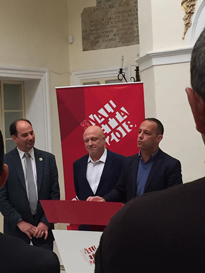
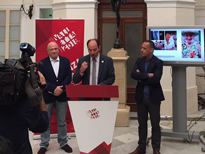
On 21 December 2016, Valletta 2018 Chairman Jason Micallef, the Hon. Dr Godfrey Farrugia MP and photographer Patrick J. Fenech addressed the press during the launch of BDL Publications’ new book THE MALTESE VILLAGE FESTA – A Traditional Yearly Ritual. The event was held at the Malta Chamber of Commerce in Valletta.

With over 750 colour photographs and erudite texts, this publication takes the reader from the origins of the festa during medieval times, through to the present day. It also includes a fascinating collection of most of the statuary representations of patron saints of the titular and secondary feasts which are the focal point of these solemn religious celebrations.

Editor: Godfrey Farrugia

Authors: Paul Sant Cassia, Carmel Cassar, Vicki Ann Cremona, Jeremy Boissevain, Raymond Saliba, Jesmond Manicaro.

The book is now available from all leading stationers, bookshops and from BDL in San Ġwann (behind Junior’s Toy Shop).