Il-Pupa Wisq Għażiża

Charmaine Tanti M.A.

Elise kellha ġugarell wisq għal qalbha, u dan kien il-pupa kbira liebsa ta’ prinċipessa, li kienet qalgħet mingħand Father Christmas. Mill-ewwel inkarmet għaliha u l-mamà ħasbet li, wara ftit taż-żmien, il-pupa kienet se ssib ruħha mwarrba f’xi rokna qalb il-ġugarelli l-oħrajn. Pero` kienet marret żmerċ għax iżjed m’għadda żmien, Elise wrietha li ma kinitx tgħaddi mingħajrha. Kieku mhux għax kienet tibża’ li xi ħadd minn sħabha seta’ jeħodhielha, kienet saħansitra ġġorrha magħha l-iskola wkoll. Iżda malli tasal id-dar, Elise kienet taqbadha f’idejha u ma titlaqhiex biex donnha tpatti għall-ħin li fih ma kinitx tgawdiha. Tant kienet tistħajjilha ħlejqa tad-demm u l-laħam, li kull filgħaxija kienet traqqadha magħha u tħaddanha biex ma tibżax rieqda fid-dlam. Meta kibret ftit, bdiet ukoll tqegħedha bilqiegħda fuq il-mejda tal-kċina u tqatta’ s-sigħat tkellimha, tipprova tgħallimha xi ħaġa milli tkun qaltilhom l-għalliema fil-klassi, jew taparsi titmagħha xi biċċa ħobż jew xi ftit ċikkulata. F’kelma waħda, il-pupa kienet saret qisha oħtha ż-żgħira.

Luca ma kienx jieħu daqshekk gost xħin jara lil oħtu mwaħħda daqstant mal-pupa u kien iħoss li din ix-xi ħaġa tal-plastic kienet ħaditlu postu f’ħajjitha. Kien jixtieq li Elise wkoll tilgħab miegħu, meta tkun id-dar, għax ma kienx irid jilgħab dejjem ma’ ħuh, Peter biss. Huwa tgħidx kemm kien iħarsilha bl-ikrah lill-pupa, u kieku seta’ kien jisparixxiha ħalli oħtu tibda tagħti kasu bħal qabel.

Darba fost l-oħrajn, Luca daħal baxx baxx fil-kamra tas-sodda, ħataf il-pupa minn fuq il-komodina, qalgħalha rasha,  idejha u saqajha, sabbatha mal-art bl-herra u telaq `l hemm. Dak il-ħin, Elise kienet għand in-nanniet u l-mamà u l-papà kienu fil-garaxx qegħdin jaħslu l-karozzi tagħhom. Peter kien rieqed fil-fond fuq is-sufan. Wiċċ Elise sfar lelluxa hekk kif waslet id-dar u rat x’kien ġralha l-pupa, li kienet tant tħobb. Ma riditx tieqaf tibki u l-mama` u l-papà tassew tħassruha għax qalbha riedet tinqasam bid-diqa kbira li ħasset fiha.

Il-mamà u l-papà rrabjaw ma’ Luca bil-kbir meta, sa fl-aħħar, tgħarrfilhom li hu kien kisser il-pupa, iżda lil Elise ma wrewhiex biex ma tiġġilidx miegħu u l-biċċa titwal. Minflok, il-mamà għamlet tabirruħha li waqqgħatilha hi l-pupa xħin kienet qiegħda tfarfar il-komodina tal-kamra tas-sodda. It-tifla dendlet geddum sal-art, u l-mamà riedet issib mezz kif tqajjimha ftit fuq tagħha u tagħmlilha l-kuraġġ. Għalhekk, qaltilha biex kull filgħaxija qabel ma torqod, titlob lill-Bambin ħalli jagħtiha pupa ġdida. Elise, li ħassitha tassew stramba mingħajr il-pupa, bdiet ta’ kuljum toqgħod għarkupptejha għal ftit ħin fuq is-sodda tagħha, torbot idejha flimkien u tlissen talba ċkejkna biex forsi l-Bambin ikollu ħniena minnha. Il-mamà kienet tiggustaha wisq meta taraha titlob b’dik il-ħrara u b’dik l-innoċenza kollha.

Meta kienet għoddha tilfet it-tama li l-Bambin jisma’ talbha, Elise sabet pupa oħra, eżatt bħal dik li kellha, tistennieha fuq is-sodda, meta darba waħda ġiet id-dar mill-iskola. Hija nfexxet taqbeż u togħla bil-ferħ u dlonk ħadet ir-ruħ. Il-mama`  u l-papa` setgħu jobsru kemm it-tifla kienet se tkun fis-seba’ sema. Luca ma ried qatt jirrepeti dak li għamel lil oħtu għax kien iddispjaċieh ħafna meta ra kemm il-pupa kienet għażiża għaliha. Ma setax jibqa’ egoist u jippretendi li oħtu tilgħab miegħu biss u ma tilgħabx bil-ġugarelli minħabba fih. Iżda l-akbar kurżita` kienet dwar min kien poġġielha pupa ġdida fuq is-sodda lil Elise. Il-Bambin kien jaf li Elise kienet tifla brava u qalbha tajba, u għaldaqstant kien ipprovda xi ħaġa żejda tal-flus lill-mama` u lill-papa` fl-aħħar tax-xahar biex setgħu jixtrulha pupa oħra u jagħmluha kuntenta.

Clara Barton (1821–1912)

Charles B. Spiteri

BDL Books - Nisa Magħrufa

Clara Barton kienet tifla kwieta, iżda bħala adolexxenti, dejjem stqarret li riedet tgħin lis-suldati feruti u lill-vittmi ta’ diżastri. Ipperswadiet ukoll lill-Istati Uniti tingħaqad mas-Salib l-Aħmar Internazzjonali.

Clara twieldet f’Massachusetts u kienet dejjem ħsiebha f’nies inqas tat-tajjeb minnha. Hi fetħet waħda mill-ewwel skejjel bla ħlas għall-pubbliku fi New Jersey, iżda rriżenjat meta ntbagħat raġel biex imexxi fuqha.

Fl-1861, faqqgħet il-Gwerra Ċivili Amerikana. Clara marret fil-kampijiet tal-battalja biex tara kif setgħet tgħin. Ġabret numru ta’ bgħula, li għabbiethom bl-ikel, ilma u provista mediċinali li setgħet tqassam lis-suldati. Ħafna drabi rat il-mewt hi stess.

Fl-1869 marret fl-Ewropa biex tistrieħ, iżda minflok ivvoluntarjat fl-għajnuna li kien hemm bżonn fil-gwerra bejn Franza u l-Prussja.

Organizzat l-għajnuna li kellha tagħti l-Assoċjazzjoni tas-Salib l-Aħmar, li kienet għadha kemm stabbilixxiet ruħha u nsistiet li l-Istati Uniti tingħaqad magħha. Meta fl-1874 irritornat f’pajjiżha għamlet kampanja iebsa u twila biex introduċiet is-Salib l-Aħmar Amerikan. Hi kienet tal-fehma li l-għajnuna ma kellhiex tingħata biss lil suldati feruti, iżda lill-vittmi tal-għargħar, tal-ġuħ u diżastri oħra.

Ix-xewqat tagħha rnexxew u fl-1881 saret l-ewwel President tas-Salib l-Aħmar Amerikan.

Is-Salib l-Aħmar Internazzjonali tnieda minn Henri Dunant fl-1864. Fl-1859 fil-battalja bejn il-Franċiżi u l-Awstrijaċi Dunant baqa’ skantat bl-għajnuna fqira li ngħatat biex ikunu megħjuna s-suldati feruti. Is-Salib l-Aħmar jieħu ħsieb il-ħtiġiet tas-suldati kollha indipendentement min-nazzjonalità jew twemmin tagħhom.

The Italian

It was just three years ago since her husband, God rest his soul, had left to the other world. He had come into her life to steal her heart and disturb her soul. He was the only man in the world that she had wanted as her companion for life. They had spent thirty wonderful years together. Many times now, sitting in her favourite armchair sipping a hot cup of coffee, she remembered the places they had visited together, the joys and the heartache of everyday life, the charming words he said to amuse her, so many things. How she missed him. 

Ella, her only daughter who had married and was living abroad for the last eighteen years, encouraged her when she phoned to go on outings which the Local Council organised frequently for elderly persons. “We both loved Dad, but we cannot bring him back. You should think of yourself and move on now Mum,” she often told her. She did go for a couple of outings, not because she felt like doing so, but because she did not like to displease her daughter. 

Her new life began when Gianfranco walked into her life. He was born in the Tuscan region of Italy. Life was so much simpler and less hectic over there. “Don’t be sad”, he would tell her, “I want to see you happy and enjoy life”. His English, with a marked Italian accent, uplifted her spirits and brought a smile to her face. 

The first night he stayed at her house in London, she cooked him a hearty English meal of roast beef and Yorkshire pudding. He enjoyed it immensely. He then made her sit down, brought her a glass of wine, sat down beside her and both talked for a long time of this, that and the other. 

One lovely summer evening they went to the park together, sat down on a wooden bench and looked at the stars shining in the sky. He told her the names of the stars, how far away they were from our world and other things he had learned at the University in Pisa. She was mesmerised as she had scarce knowledge of the immense universe that surrounds us. On the way back home, he held her arm in his and they walked slowly together to her house, engrossed in each other’s company. 

He felt such a mystery to her, so different, yet every time she looked into his eyes, he filled her with hope. They chatted and got to know each other a little better every day. He told her about his native Tuscany – the lovely little churches, the paintings and sculptures, the sprawling countryside, the food and wine and so many other things. 

After a few days of getting to know him, she observed his easy going way of looking at life. She thought that the hustle and bustle of London life would tire him and he would surely return back to the hills and valleys of his Tuscany. He was never in a hurry; he did a bit now, a bit later and has some fun and rest in between. 

“Why don’t you sit down and enjoy your garden?” he would ask. “Why don’t you stop and look at the flowers?” He charmed her with his dark skin and ebony eyes. “Yes, I should. I did not have so much time before” she replied nostalgically. “I had a job, a husband and a daughter to look after. I’ve spent my life rushing around. Now I’m retired I should relax. You are right dear”. 

She had grown to love him immensely. She had never experienced this kind of love before. There was something special that thrust them together. While previously her time passed slowly by, now it flew so quickly it left her breathless. She enjoyed her time with him so much; she wished he’d never leave her.  

Her daughter often phoned her from abroad to see how she was getting along. Her mum seemed enthusiastic, she was enjoying herself. Her daughter was very pleased that she and Gianfranco had hit it off together, that they like each other and that he was settled with her.

On her part, once he was now to live with her, she showed him the London where she was born and grew up – the changing of the guard at Buckingham Palace; the evening band concerts at St. James Park; the flow of the Thames from the railings of Tower Bridge; lounging on deckchairs in Hyde Park watching the squirrels hurry to and fro; the beautiful facades of the theatres along The Strand; the multi-coloured river boats on the canals of Little Venice.

She had met him three weeks ago at the airport. He came over to attend a year’s course at the London School of Economics. He had lived in Italy with his parents since he was just two years old. Her daughter had asked her to look after him during his stay in London. When they saw each other and embraced at Heathrow, his first words were like balm to her “It’s so nice to see you Gran, you look wonderful!” 

Skerzi fid-dinja annimaleska

altSkerz, nofs kelb u nofs qażquż, li twieldet b’numru ta’ fatturi ħżiena għal saħħitha, sabet kenn f’dar f’Alabama.
 
Sidtha, Kim Dillenbeck adottat lil din l-annimal li ngħatat l-isem ta’ Pig waqt vjaġġ li għamlet f’Atlanta biex iżżur lil oħtha.
 
Tirrakkonta li fi żmien il-Milied, marret ma’ oħtha għand xi ħbieb biex jieħdu kolazzjon u xi ħadd semma l-istorja ta’ Pig. Ilkoll marru fid-dar ta’ din l-persuna biex jarawha. 
 
altAppena ratha, u ntqalilha bil-problemi ta’ saħħa li kellha, Kim iddeċidiet li trabbiha sakemm tmut. Kulħadd ħaseb li ma kellhiex ħajja twila minħabba li l-organi tagħha kienu b’mod li setgħet tifga.
 
Pig, li twieldet fis-selvaġġ, ittieħdet ma’ ħutha, minn mara li semgħethom jinbħu. Meta ħadet lil Pig għand veterinarju, qalilha li għandha kustilji neqsin, ġogi mdawrin ħażin u x-xewka ta’ daharha mhix kif għandu jkun.
 
Minkejja l-qies tagħha, li hu ta’ nofs kelb, Pig, li għandha tmien xhur, tista’ tikber aktar. Sidtha l-ġdida tinsab f’dilemma: bejn tixtieqha tikber ftit ieħor, iżda fl-istess ħin tibża’ li jekk tikber, tasal biex tmut.
 

Anne Frank (1929–1945)

Charles B. Spiteri

BDL Books - Nisa Magħrufa

Anne Frank mietet meta kienet għadha teenager u saret magħrufa sew għad-djarji affaxxinanti li kitbet u li ssuperaw lil ħajjitha.

Anne kienet Lhudija mwielda fil-Ġermanja. In-Nazisti kienu jobogħdu lil-Lhud għall-mewt. Kienu jsawtuhom kull darba li jiltaqgħu magħhom fit-toroq u ħatfulhom għalihom infushom kull negozju li kellhom.

Il-ġenituri ta’ Anne Frank ħarbu b’Anne u b’oħtha lejn l-Olanda. Iżda fl-1940 in-Nazisti nvadew lill-Olanda wkoll. B’hekk, il-Franks kienu jinsabu f’għawġ liema bħalu.

Setgħu jintbagħtu jaħdmu xogħol iebes f’kampijiet tax-xogħol jew f’kampijiet ta’ konċentrament. Issa kien tard biex jerġgħu jaħarbu. Għalhekk qatgħuha li jistaħbew. Ħeġġew passaġġ sigriet fil-parti ta’ fuq nett tal-maħżen qadim ta’ missierha u bdew jgħixu fih flimkien ma’ erba’ Lhud oħra ħbieb tagħhom.

Għal sentejn sħaħ qatt ma ħarġu barra fit-triq. Kienu ħbieb tagħhom Olandiżi li kienu jwasslulhom l-ikel, iżda l-ħajja saritilhom ta’ dwejjaq. F’Marzu tal-1944, Anne bdiet tikteb djarju. Xtaqet li meta tikber tkun kittieba, iżda f’Ottubru ta’l-istess sena, xi ħadd irrapporta l-moħba tagħhom lill-Pulizija.

Il-Franks kienu arrestati u mibgħuta f’kampijiet ta’ konċentrament fil-Ġermanja. Wara l-gwerra, missier Anne biss kien baqa’ ħaj. Ħabib tiegħu Olandiż kien sab id-djarji ta’ Anne u refagħhom f’post żgur.

Il-Franks u ħbiebhom kellhom joqogħdu kwieti mmens fil-moħba tagħhom. Qatt ma libsu żraben u l-ħmieġ li kien ikollhom kienu jaħarquh. Ġieli kien jitlgħalhom u jirrabjaw għal xulxin u ġieli kienu joħolmu għal ħajja fin-normalità.

Qattus spjun li nqatel mal-ewwel prova

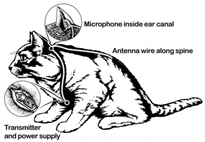
altId-darba li ġejja, meta tkun se tmelles qattus għar-raqda ta’ wara nofsinhar, oqgħod attent li ma jkunx se jisraqlek xi sigrieti li jkollok. Almenu dan kien dak li fis-snin sittin, is-CIA kienet qed tittama li tagħmel, meta ħasbet li lill-qtates iddawwarhom fi spjuni.
 
Bħala parti minn esperiment klandestin, magħruf bħala Operation Acoustic Kitty, veterinarju tqabbad jimpjanta microchip fil-kanal ta’ widna ta’ qattus u transmitter ċkejken fil-kranju tal-annimal, biex il-fil tal-antenna jinħeba fis-suf twil u abjad tiegħu.
 
Il-pjan kien biex il-qattus jagħmilha ta’ aġent sigriet u jkun kapaċi jikxef il-pjani tal-uffiċjali Russi u jispjunalhom il-konverżazzjonijiet privati tagħhom, sempliċiment billi jkun maġenbhom.
 
Iżda l-mexxejja tal-proġett malajr saru jafu li l-qtates, kontra l-klieb, la tant jieħdu ordnijiet u lanqas jitħarrġu malajr.
 
Dan l-esperiment jinsab imniżżel fil-ktieb ġdid bl-isem Frankenstein’s Cat: Cuddling up to Biotech’s Brave New Beasts.
 
Emily Anthes, l-awtriċi, kitbet li biex jippruvaw l-esperiment, l-uffiċjali tas-CIA ħadu lill-qattus, li semmewh James Bond, fi ġnien u ppruvaw jirrekordjaw konverżazzjoni bejn żewġt irġiel bilqiegħda fuq bank.
 
Iżda b’xorti ħażina, dan il-qattus ma wettaqx il-prova, għax ġera għat-triq, fejn mill-ewwel ittajjar minn karozza.
 
Wara dan il-każ diżastruż,  Operation Acoustic Kitty twarrbet għal kollox wara li kien allegat li l-gvern kien nefaq 20 miljun dollaru biex mill-qattus traġiku jiġbor l-informazzjoni meħtieġa.
 

An Act of Jealousy

Those who are conversant with the profondities of love will appreciate better the sorrow of the parting. ‘Love’, it is often said, ‘lies on the border of hate and is adjacent only to madness’.  I wonder sometimes why the noblest of virtues should be so frail and so mysterious. How often has it also been said that ‘he who loves as an adolescent, learns to hate as a grown up’. 

There are instances in life when man will ponder on bygone memories and learn to criticize his own folly from the logical point of view. And so, in this manner, he pondered.

……….Yesterday she was mine; my wife; vowed she loved me; promised to make me happy; we laughed, loved and made merry………

………..How many evenings did we spend with each other? She loved me then; but now she is gone, gone forever; an intruder had won her love; she forgot all about me now; why should she keep remembering me? What did I do, for her to disinherit me from her heart?…………

She appeared fresh in his mind; an enchanting queen; smiling as she used to pass from under his balcony. He looked; they smiled; they talked; he won her.  They met afterwards nearly every night, breaking the monotony of the village routine by varying their outings – now to the seaside, then to the theatre, sometimes to the disco and more often than not, to the cinema. 

Love had played its part between two feeble hearts and governed all their thoughts and deeds. It was responsible for their omissions to duty and to friends because, as they say, ‘love is blind’.

He would burst in anger, if at times, as she often did, she would not wait for him on his return from work. He loved her madly and that, he reasoned, was credit enough to own her, to patronize her, to feed his eyes on her beauty.  But he was now losing his love and, without his knowledge, he was beginning to transform his love to hate. Yes, hate her! The same woman he had so much adored a short while before!

For what is jealousy? Is it not mistrust? Is it not the doubt in the integrity of the second person? It is, in fact, more than that. It is egoism on the part of the doer and annoyance on the part of the receiver.  Jealousy is the destroyer of love and the stepping stone to madness. 

Involuntarily, our young lover was destroying the love he himself had pained to create. She felt annoyed; without freedom of action; he was enslaving her and that is, by far, more than a woman’s pride can bear.  He had lost her forever. He wept, was confused and, in this state, did not know what he was planning and doing. She was like a bird flying further away from him. He never recovered normality again. Once the passions of hate are aroused there is no remedy to sooth them. He had to do what had to be done. There was no alternative. 

For a full three years he had loved her. But could he say the same for her? Did she reciprocate his love? She had kept his company for three whole years. Or she kept him chained by the lure of love. Now, finding better company, she discarded him like a woman discards old clothes!

Weeks passed and his hate grew without bounds. He now hated her walk (when once he thought it was elegant); her looks (which once he so devotedly revered); her beauty (once so fresh, so noble, so charming, and so heavenly); hated himself for ever once loving her (once he thought himself fortunate in holding her hands).

He hated that tall, bony, painted, cheap, good-for-nothing skeleton who was once his lover. He hated her words, her face, her eyes, her perfume. Unnoticed, he often followed the steps of the merry couple as they made their romantic walk in the moonlight. He followed them to the theatre, to the cinema, everywhere. Yesterday he was in her arms; now he became a lurking dog. One moonlit night, he went to the abandoned cottage near the unused mill. He knew the place very well. He used to make love to her there every night, tenderly, lovingly, passionately. Now he was there spurned by hate and vengeance. 

He looked from the half-opened window of the cottage and saw the silhouette of the two lovers lost in each other’s arms, kissing and vowing their love for each other. He recognized the woman’s silhouette as that of the tall, bony, painted, cheap, good-for-nothing skeleton that once was his own lover. 

Cautiously he crawled near them and held his breath. She was speaking in a hushed voice but he heard her. “Let’s leave this town together ……I can bear him no longer ……… my love is only for you”. 

These words made him madder. He had to do something. He could bear this no longer. He wielded the rusty iron bar and hit them both on their heads. They fell to the ground instantly, lay motionless and no further sound was heard except for the hurried steps of the jilted madman. 

You have visitors” thundered the guardian as he unlocked cell 39 of the State Prison. At the visiting room, the solicitor defending his case made all sorts of enquiries, but the prisoner remained silent. 

Then came the day of the great trial. The court room was full with all kinds of people and journalists. The accused faced the men of the jury who held the balance of his life in their hands. He waited; only to hear one thing; either “guilty” or “not guilty”.  The jurymen retired. The accused conversed impatiently with his solicitor. Then the court was in its second session. 

….. “Have you reached your verdict?” asked the Judge.

….. “Yes, your Honour” stammered the chief juryman.

….. “Then let the court hear it” replied the Judge.

….. “GUILTY your Honour” pronounced the chief juryman. 

….. “Silence” hammered the Judge and, after going through a long speech which would have benefited more a funeral occasion, he concluded:-

“ …….and the Court sentences you to die by the electric chair!

What on earth can describe that brief moment between the death sentence and its execution? Who can describe the feelings of the accused? Hours, minutes, seconds ticking away one by one! Hopes fading like the mist; memories of his life that haunt the accused to his death; desperate hours of his last precious minutes taking him to his end. His doom! A beacon of light ready to be put off! A life that was once so precious and now so cruelly to be ended!

And then it came. He stood erect on the chair – cold, shocks, tremors, death. He had paid dearly for his crime. “Is there any one to claim the body?” shouted the officer in charge of the execution. No one spoke. The body lay there silent, covered with a white shroud with the number 39 stamp on it. Love had shadowed his life; hate had led him to the electric chair; death had carried him into oblivion.

Suddenly the alarm clock started ringing. It was eight o’ clock in the evening. He threw away the bed sheets and got out of bed. He was sweating profusely; and shivering. But he was alive! What a bad dream that was! He washed, dressed hurriedly and went out to meet his girl.  

Sejba u aktar għarfien fuq il-Wari

altArkeologi fl-Amerika t’Isfel, dan l-aħħar sabu qabar mhux mimsus li jagħti dawl fuq iċ-ċivilizzazzjoni qadima u misterjuża tal-Wari. Dan wara li kixfu l-iġsma mummifikati  ta’ tliet irġejjen, qrib teżori tad-deheb u sagrifiċċji makabri umani.
 
It-tempju tal-mejtin, li għandu 1,200 sena, nstab fis-sit El Castillo de Huarmey, erba’ sigħat bogħod bil-karozza fin-naħa ta’ fuq tal-kapitali Peruvjana, Lima.
 
altDan il-qabar jagħti minjiera ta’ informazzjoni fuq l-imperu enigmatiku tal-Wari, li ħakmu ’l-Andes ħafna qabel is-suċċessuri magħrufin tagħhom, magħrufin bħala l-Incas.
 
Milosz Giersz, arkeologu ewlieni fit-tim Pollakk-Peruvjan qal li: “għall-ewwel darba fl-istorja tal-arkeoloġija fil-Peru’, sibna qabar imperjali, li jmur lura għall-imperu u l-kultura tal-Wari.”
 
altaltIr-riċerkaturi qalu li din is-sejba se tgħinhom jgħaqqdu flimkien it-tip ta’ ħajja fl-Andes, sekli qabel ma nħoloq l-imperu tal-Incas, li nkiteb ferm fuqhom mill-Ispanjoli li rebħulhom u ħadulhom l-artijiet.
 
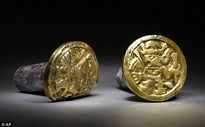
Fil-mawsolew, f’piramida kostali, nstabu bċejjeċ tad-deheb, ċeramika u 63 skeletru ta’ madwar 1,300 sena ilu. Ir-riċerkaturi qalu li ħafna mill-iġsma misjuba fil-qabar, kienu ta’ nisa mummifikati bilqiegħda – ħaġa li tindika s-sinjurija u tixhed li n-nisa Wari kellhom aktar saħħa milli kien maħsub qabel. 
 
altL-arkeologa Patrycja Przadk qalet li n-nisa kienu midfunin b’imsielet ta’ metalli prezzjużi mnaqqxin, li hu mifhum li dari kienu jintlibsu biss mill-irġiel. Fost l-artefatti misjuba maġenb l-irġejjen mummifikati nstabu għodod tal-insiġ, magħmulin mid-deheb, skieken u mnanar ritwali, kikkri, kontenituri għall-weraq tal-coca,  u numru sabih ta’ kontenituri taċ-ċeramika mżejnin b’mod sabiħ.
 
L-istoriċi jemmnu li l-Wari, li ħakmu bejn is-sena 600 u l-1100 wara Kristu, kienu l-ewwel nies li rnexxielhom jgħaqqdu t-tribujiet diversi f’network wieħed sofistikat mad-dawra kollha ta’ dawk li llum huma l-Andes Peruvjani.
 
altIl-bioarkeologu Wieslaw Wieckowski qal li sitt skeltri ma kinux imlibbsin, u dan jixhed li ntużaw bħala sagrifiċċji umani għall-elit mummifikati.
 

The Future of Maltese Folksong

Għana has been used  to draw attention to issues varying from petty squabbles to religious-political situation which had evolved  at various times in Malta.

It has really never been the subject of serious discussion and analysis at an academic level. It is therefore refreshing to see this publication by Manuel Casha which invites us to have a new and unprejudiced  look  at what Għana really stands for. He himself states that he started to write this book ‘with the intention of understanding the techniques, ethics, traditions and customs  of this music and the community that engages in it, as an outsider looking in’, and he invites us to do likewise. It is not often that a book dedicated to Maltese folk singing (Għana) comes to hand, and for this we have to thank Manuel Casha who has strived hard for decades to ensure that this unique form of self-expression is not lost forever. As he says in his introduction, ‘the soul and psyche of a nation are often embodied in its folkloric past’.

This type of folk singing was limited to a certain aficionados, and was frowned upon by the educated elite. It is not surprising therefore that it was foreigners who published what is arguably the best collection of Maltese folksong (by Bertha Ilg and Hans Stumme in Germany) over a century ago.

It has been stated that singing preceeded speech in the development of human interaction. It is certainly likely that Għana was the first attempts at Maltese literature and versification. In this book Casha explains the background of this art form, and how it has filled a niche within the life-style of those who, while not usually over-educated, can yet express themselves so eloquently in song.

One good definition of Għana could well be: Working class men enjoying themselves in song. This emphasises the origin of the singing, highlighting the fact that it was originally invented by unschooled and illiterate but highly intelligent men who needed a poetic outlet to express their feelings and to entertain their friends. There is nothing  unique  about this development. All people around the world have the same needs to develop their own style of expressing them. The  author compares Maltese Għana as a musical form similar to Blues music in America, Flamenco in Spain, Rebitika in Greece or Fado in Portugal, all of which form part of a global musical heritage. He goes so far as to predict that ‘once Għana music is discovered universally, outside of the Maltese archipelago, it will contribute a great deal in telling the story of the contemporary development of Mediterranean music, as we know it today’.

With the massive wave of migration that took place in the immediate post-war period, many folksingers left Malta to settle in places like Australia and elsewhere. They  brought with them their guitars as well as their love of Għana, which they enjoyed to display, to entertain their friends, in their homes, or even garages, to remind themselves of the Malta they had left behind and still hankered for.   By the mid 20th century, thousands of Maltese emigrated to other countries in search of a better life, carrying with them their musical heritage in the countries of their settlement.

It is interesting to note how Għana in Australia might have diverged from that in Malta.  Over the past half-century, Malta has had a very close contact with the outside world, and this has had a dramatic effect on the language spoken in towns and villages alike. On the other hand in Australia, Maltese language has been put in deep freeze, and has retained the characteristics and dialects that were standard in Malta more than half a century ago. It is refreshing to hear young children using their limited Maltese vocabulary expressed in unmistakable dialect derived from the village or town where their parents came from, and where such dialects have all but disappeared.

In a chapter on migration Casha remarks: ‘They now sung about their homeland, family, and friends they left behind. They sang about their battle with homesickness. They sang about the prejudices they encountered in the new countries where they were merely outsiders seeking acceptance. Some sang about the inequality and harsh working conditions. Some about the freezing climate to which they were not accustomed, having come from the Mediterranean, or conversely the oppressing heat they toiled in. Many sang about the loneliness of living in rural areas, in isolation on their farms or working as farm hands. Others, who were employed in sugarcane plantations, engaged in backbreaking work and suffocating heat and sang  about their difficult plight.  One must remember that many Maltese had to face the culture shock of leaving a generally urbanised environment in Malta, to surviving in a vast land where in some cases your next-door neighbour lived miles away.’

Other songs deal with the tragedies of war which some singers experienced personally. Perhaps the most poignant is one about a tragedy which occurred in an air-raid shelter in Malta. The author cannot erase from his mind the faces of the dead children which he helped to pull out from under the rubble  and  he transformed his grief into a heart-rending song.

Casha states that, as a musician, he entered the Għana field ‘to understand, discover and try and preserve and cultivate a very special part of Maltese culture in Melbourne.’

The question of course arises: will the second and subsequent generation be interested in this type of music? Casha is optimistic about this. He remarks:  ‘It might not be commonly known that 95% of ‘għannejja’, past and present, living in Melbourne started their careers after they emigrated….It is just as remarkable to discover that most lead guitarists (primi) in Melbourne were actually born and bred in Melbourne suburbs and some have never seen Malta.’

So the future of playing Maltese folksongs seems to be assured. The same, however, cannot be said about the art of actually creating the songs themselves, which depends, among other things. on a deep grasp of the Maltese language together with the necessity of being able to provide impromptu rhyming. Casha states: ‘it is a fact that while Australia produced some wonderful players, no indigenous għannej has been produced… so far’ . Even so, the interest shown by these young players has helped to maintain a level of command of the language. Casha says: ‘while young players ‘cannot sing  and rhyme, [they] can speak the language a lot more fluently since taking up the Maltese guitar’.

In this book we find a comprehensive section on writers of and Għana singers in Australia.  They came in large numbers in the post-war period, particularly in the 1950s and 60s. While their experience of life in Malta still informs a lot of the topics treated in their songs, with time, the local element starts to find its way into the song. He writes:  ‘Many writers in Australia ‘kept writing on traditional lines and on topics, which related more to the Maltese environment even though they had lived in Australia for a number of years…. [ and particularly] to a Malta they remembered from childhood.

It is curious to note that the vast majority of folk-singers are men. This is not surprising in view of the origin of Għana, which occurred mostly in bars to which few women were welcome.  The aggressive nature of the interaction between different folk-singers was also more suitable to the male rather than the female character.  However, several women did take part in folk singing, inventing their own particular brand, known as Għana tal-banju, (or ‘washer-women folksongs’).  Their songs were usually much less aggressive, they did not indulge in contests to prove who is the better singer. Interesting also, Casha comments, that women sing in a different key to men, female singers sing in  higher register. Men prefer the more aggressive key of G  which ‘creates the anticipation of the contest or battle’  whereas women prefer the key of C which ‘creates a happier anticipation.’

Casha  has analysed the structure of these Għana in great detail. He goes over the various types of Għana, explaining the structure of this art form, for those of us who have never really bothered to enquire into the intricacies and genius behind the ability of extemporising rhyming verse in an impromptu fashion. He analyses the varieties of this genre which has been adapted  to suit a variety of situations from the humorous to the tragic,  from the political repartee to engagement in downright insult. The author lists a whole glossary of terms used by għannejja  which are unique to this genre, and which are most likely to be lost but for this collection.

He also delves into the intricacies of tuning the guitar in different keys to achieve a more poignant harmony, a technique which is unheard of in any other kind of musical ensemble.  He also  gives us an introduction to the mysteries, secrets and techniques used by the various participants to achieve their unique effects.

He also provides profuse examples of Għana to illustrate various points of technique, style and content. He has also ensured that the text of several of these Għana is given in translation so that non-Maltese readers can at least get an idea of the meaning of the verse, even though a lot of their significance is unavoidably lost in translation.

Even in absence of anything else, this book would have been of value as a photo-album of Għana singers over the years. The book contains a unique collection of photographs,  an album of the protagonists who have practiced this art form over the years, both in Malta and in Australia. The book is a useful publication just for the photographic collection alone, containing a mass of information about the more prominent singers in Malta and Australia.

 One can also appreciate the importance of the nickname in individualising the performers: all the għannejja  referred to in this text are given a nickname through which they are immediately recognised.  Time was when a family nickname served the useful purpose of identifying a whole clan within a village or town, something that no surname can do. Nicknames are unique identifiers invented specifically for each  għannej  , and which disappear with his passing away.

Maltese folk singing has a particular value apart from entertainment:

  • Casha insists that ‘In Australia [this genre] remains an effective instrument in documenting the heritage of a group of people who migrated between the late 1940s to the mid-1970s when thousands of Maltese left their homeland to make a new life in Australia. …. One day this Għana  source will help tell the story of this sector of Maltese migrants whose stories are still not well documented.’
  • On aspect which the author emphasizes is the role of Għana  in preserving the purity of the Maltese language. He writes: ‘the Maltese language has been served well by the għannejja  in keeping its purity of form and expression.  One of the sacrosanct rules in Ghana singing is that no foreign words and expressions are acceptable.’ Moreover, he says,  it has helped to keep alive proverbs and sayings that would otherwise have long since disappeared. Casha writes:  ‘Old Maltese proverbs, idioms and old sayings, are very much the tool of a clever għannej’ ,
  • It encourages young people to maintain an interest in music and Maltese culture,
  • It helps them to improve their language skills,
  • It helps to create cohesion among groups of young persons playing together,
  • It maintains and encourages an abiding interest in performing music.

Mr Casha has been very active in ensuring that Għana continues to flourish in Australia.  He describes his own role in ensuring the preservation of this type of music. His involvement in broadcasting in Australia during which he has promoted Għana to the best of his ability, is indeed a part of the history of Maltese settlement in this continent.

There was a real risk that with the passage of time, and as these pioneers grew older and passed away, the future generation might not have the capacity or the will to continue this tradition.  It is particularly here that Mr Casha has made his most important contribution to this art-form. He has travelled up and down the country, carrying his recording equipment, saving on tape all the most important practitioners of the guitar. He has succeeded in ensuring that several members of the younger generation have taken up the instrument and now can take the place of their elders.  Some have become quite accomplished playing the guitar. Unfortunately, while their music is advanced, their grasp of the Maltese language will never allow them to express themselves in song, particularly not that brand of unique extemporising typical of the clever għannej.

Manuel Casha has done a sterling job in collecting a vast library of Ghana which is now preserved on CDs and other electronic media, and is made available for all to appreciate, even when the protagonists have long gone. He is encouraged by the interest shown by young members of the community who not only learned the technique of guitar playing, but also were keen enough to engage in the theoretical and academic aspect of this art form. Casha remarks: ‘ I am encouraged, of late, by the number of students who choose Għana and Prejjem for their thesis for their degrees of PhDs. This has shown that  a new generation Maltese see this music genre as their heritage and not something to sweep under the carpet.’

Casha himself is largely responsible for this resurgence. Through his interest, involvement in recording and documenting these songs he has been a prime mover in the resurgence of Għana in Australia. He has made sure, through his published CDs, and by ensuring that all this heritage is now archived in The National Library of Australia that future generations would be in a position to share and possibly enlarge on this heritage.

Annie Oakley (1860–1926)

Charles B. Spiteri

BDL Books - Nisa Magħrufa

B’MIRA PERFETTA

Annie, li twieldet fl-1860 u għexet 66 sena kienet tiratura mill-aqwa u ħadet sehem fil-Wirja ta’ Buffalo Bill’s Wild West, meta kellha biss 17-il sena.

Kienet popolari fl-Istati Uniti u fl-Ewropa għall-mira li kellha u kienet esperta fl-isparar tal-pistoli, rifles u xkubetti. Darba, b’rifle .22, laqtet 4,772 boċċa tal-ħġieġ minn 5,000 li tefgħalha fl-arju, f’jum wieħed.

F’għoli ta’ 90 pied (27 metru), kellha l-ħila tolqot karta tal-logħob bix-xifer irqiq jipponta lejha, waqt li sakemm taqa’ fl-art, ittaqqabha ħames jew sitt darbiet b’tiri separati oħra. Darba, fuq stedina tiegħu stess, sparat fuq sigarett li kien f’ħalq il-Prinċep werriet tas-saltna tal-Ġermanja, aktar tard Wilhelm II.

Annie Oakley twieldet fit-13 ta’ Awwissu, f’kabina tal-injam f’Patterson Township, Ohio. Bdiet tispara meta kellha disa’ snin. Meta miet missierha, u biex tgħin lill-familja, bdiet toħroġ tikkaċċja.

Waqt żjara f’Cincinnati, kellha sfida minn Frank E. Butler, stilla tal-Vaudville. Rebħitlu hi, għalkemm ix-xorti riedet li aktar tard iżżewġitu. Tant qablu bejniethom, li hi wkoll saret stilla magħrufa.

Twila biss ħames piedi (152 ċentimetru) kienet imlaqqma Little Sure Shot. Ingħaqdet mal-Buffalo Bill’s Wild West Show fl-1885 u l-musical li baqa’ magħruf, bl-isem Annie Get Your Gun hu r-rakkont ta’ ħajjitha.