
Bette Lou Talvacchia
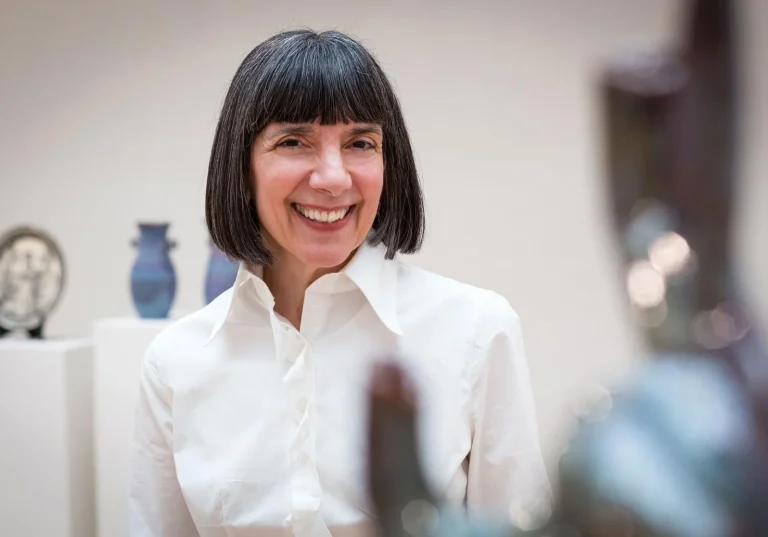
Bette Lou Talvacchia (born 1951) is an American art historian and scholar. Talvacchia is the Board of Trustees Distinguished Professor of Art History Emeritus at the University of Connecticut. Talvacchia earned a Master of Arts in art history from the University of Texas at Austin in 1975. There, she wrote a thesis on the Italian Futurist artists Giacomo Balla and Filippo Tommaso Marinetti. She then continued on to Stanford University to earn her Ph.D. in Art History in 1981. Her doctoral dissertation was on the work of Giulio Romano from the Ducal Palace in Mantua, under the supervision of Professor Kurt Forster. A scholar of Renaissance art, Talvacchia has been a Fellow at institutions like the Metropolitan Museum of Art and Villa I Tatti, operated by Harvard University. In 2003, she was awarded a Faculty Excellence in Research Award. From 2016 to 2019, Talvacchia served a stint as the Director of the School of Visual Arts at the University of Oklahoma.
Talvacchia has also studied and published works on matters of sexuality and gender in the 15th and 16th centuries. Specialising in Baroque art as well as Italian Renaissance and the intersection of art and sexuality. She has authored several books and articles on these subjects focusing on themes of sexuality, gender and notably the interplay between major artists such as Raphael and Michelangelo. Her notable publications include ”Taking Positions: On the Erotic in Renaissance Culture” and ”Raphael: The Complete Paintings”, a mongraph that explores the life and work of one of the most important artists in the history of the West, Raphael (Raffaello Sanzio, 1483-1520). Its scope covers Raphael’s origins, his early influences, his important Urbino period and subsequently the extraordinary series of frescoes and portraits of his last phase in Rome. Over two hundred of Raphael’s finest paintings and drawings are illustrated, accompanied by an accessible yet highly informative text offering a comprehensive understanding of Raphael’s enduring legacy in the art world. The author also explores Raphael’s artistic relationships with such Renaissance masters as Leonardo and Michelangelo, culminating in a brilliant account of his masterpieces done in Rome under the patronage of Popes Julius II and Leo X.
Talvacchia is also the author of The Two Michelangelos, a scholarly yet accessible book in which she explores the idea that Michelangelo can be understood in two ways: as a historical figure shaped by his time and as a larger-than-life artistic genius whose work continues to influence the world today. Through this book and her wider research, she examines Michelangelo’s paintings, sculptures, and writings, offering insights into his personality, creativity, and the cultural context in which he worked. Talvacchia’s writing is known for combining deep academic knowledge with clear explanations, making complex art history topics more understandable and engaging for readers.
Showing the single result

Showing the single result