
Aesop

Aesop is a legendary figure of ancient Greek tradition, commonly placed around the 6th century BCE. He is credited as the foundational author of the moral fable genre, a form of short storytelling that uses animals, natural forces, or simple human characters to illustrate ethical lessons. Although historical evidence of Aesop’s life is limited and partly mythologized, his name has become inseparable from the body of fables attributed to him, which were originally transmitted orally before being compiled in written form centuries later.
The collection known as Aesop’s Fables does not consist of a single fixed “work,” but rather a vast and evolving corpus of hundreds of stories that developed over time through Greek, Roman, and later European traditions. Among the most widely recognized fables attributed to this tradition are The Tortoise and the Hare, The Boy Who Cried Wolf, The Fox and the Grapes, The Crow and the Pitcher, The Lion and the Mouse, and The Goose That Laid the Golden Eggs. These stories share a common structure: concise narrative, animal symbolism, and a concluding moral lesson emphasising virtues such as prudence, honesty, humility, and foresight.
Across centuries, Aesop’s attributed fables have been adapted, expanded, and retold by writers such as Phaedrus in Latin and later Jean de La Fontaine in French, ensuring their enduring presence in world literature and education. Rather than belonging to a single authorial “works list,” Aesop’s legacy is best understood as a living tradition of storytelling that has shaped moral instruction, children’s literature, and narrative form across cultures. His influence continues to endure as one of the most recognisable foundations of didactic literature worldwide.
Showing all 3 resultsSorted by latest
-

Les vacances de capucine
€15.62 Add to basket -

La Cigale et La Fourmi
€15.62 Add to basket -
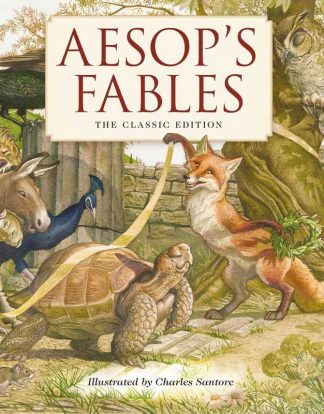
Aesop’s Fables
€17.50 Add to basket
Showing all 3 resultsSorted by latest